
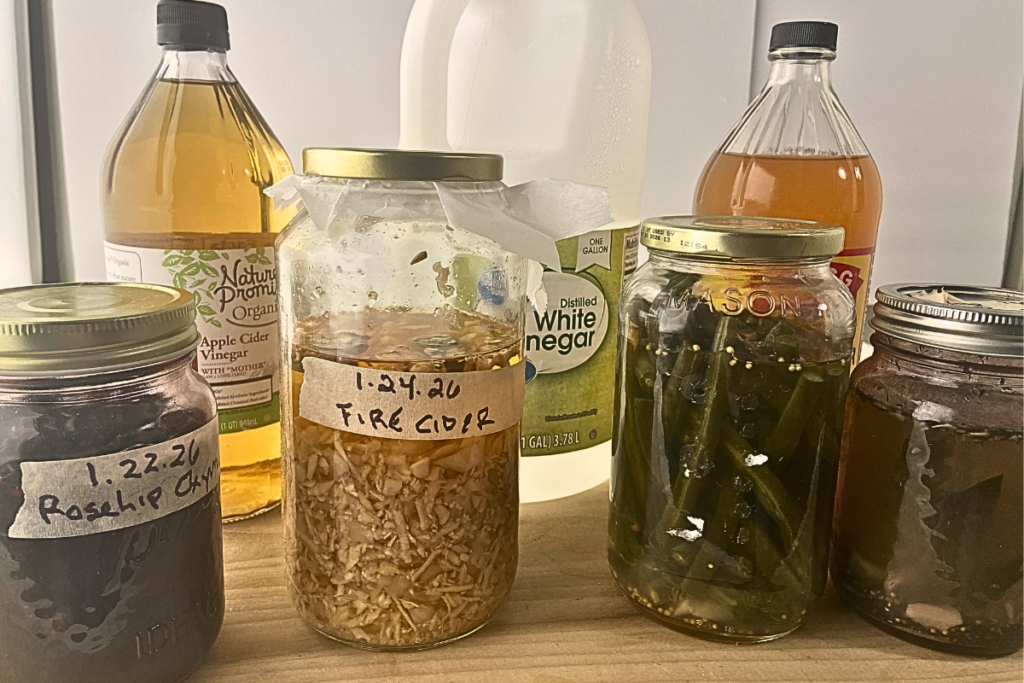
8 Simple and Safe Vinegar Health Hacks (Back by Science)
Walk into any health-food store or scroll through wellness social media, and you’ll see apple cider vinegar pitched as the answer to just about everything—weight loss, glowing skin, boundless energy, or even the ability to leap tall buildings.
Here’s the thing: apple cider vinegar is pretty remarkable. I always have a bottle of apple cider vinegar on hand to use in so many ways, but it’s not magic.
What it is, when used wisely, is a low-cost, chemical-free tool that can gently support blood sugar balance, digestion, weight management, and even add some luster to your skin and hair routine. The research is real, if modest, and civilizations have been leaning on vinegar for health for thousands of years. Both tradition and science agree – vinegar has properties that contribute to a healthy lifestyle.
So if, like me, you’re curious about simple ways to incorporate vinegar into your daily wellness habits without buying into every hyped-up claim, this page is for you. At ATV, we believe in experimenting, sharing our screw-ups and our triumphs, and sticking to what actually works. For a deeper dive into the research, see the Science of Vinegar Fermentation. For now, though, let’s dive in to discover 8 simple vinegar health hacks.
What Vinegar Won’t Do – Debunking Wellness Myths
Before we get to the good stuff, let’s clear the air. Vinegar is a wonderful supporting player in a healthy lifestyle, but it is not a miracle cure.
- It won’t replace medications. If you have diabetes, high blood pressure, or any chronic condition, vinegar is a complement to, and not a substitute for, your doctor’s advice. If you’re on a medication, check with your physician to be one the safe side, always.
- It won’t “detox” your body. Your liver and kidneys handle that quite nicely on their own. Vinegar can support digestion, but the word “detox” is mostly marketing.
- It won’t melt fat overnight. The research shows modest weight-loss support when combined with a calorie-controlled diet, but we’re talking a few extra pounds over 12 weeks, not a dramatic transformation. Diet and exercise remain the best weight loss solutions.
Now that we’ve set realistic expectations, let’s talk about what vinegar can actually do.
The Best Vinegar for Health Hacks
For most of these hacks, raw, unfiltered apple cider vinegar (ACV) “with the Mother” is your best friend. What a perfect name – “Mother” – for that collection of beneficial bacteria and enzymes that rests at the bottom of your raw ACV bottle and can be used again and again to give birth to new batches of homemade DIY vinegar. In terms of health, many believe the Mother provides extra gut-health benefits.
New to vinegar? My Vinegar 101 guide explains what acetic acid is and how different vinegars are made.

Other vinegars—like red wine, balsamic, or rice vinegar—have their own antioxidant and flavor benefits, but ACV has the most research behind it for these wellness applications.
One Non-Negotiable Rule for Drinking Vinegar
Always dilute vinegar before consuming it. Straight vinegar is highly acidic and can damage tooth enamel, irritate your throat, and upset your stomach. A good starting ratio is 1–2 tablespoons of ACV in a full glass (8 oz) of water. I use a small measuring shot glass so I’m not guessing about amounts (Comes in handy for oxymels too!)
INSERT CANVA GRAPHIC: “The Golden Rule: Always Dilute”
The Simple Eight Vinegar Health Hacks
Simple Tools for Safe Apple Cider Vinegar Health Hacks
Apple cider vinegar gives oxymels many of their health benefits and adds flavor and zest to the tonic.
Distilled white vinegar works well in many recipes without affecting the taste of the end product.
Provides sweetness and helps offset the acidic vinegar taste.
Take the ‘guestimate’ out of your vinegar drink amounts.
I like to the ability to make dressings fresh at the table and have a convenient way to store leftover in the same container.
I look for BPA-free jars with lids that are ideal for creating oxymels and preserving and pickling fruits and vegetables.
I can either compost the left over oxymel ingredients or save them in salads or sauces.
The Simple Eight Vinegar Health Hacks
Note: For these first three hacks, I keep a bottle of raw ACV, a glass tumbler, and a small measuring shot glass on my counter so adding vinegar to meals and enjoying vinegar diluted with water, tea, or juice is almost automatic.
Hack 1: The Blood Sugar Balancer
The Dilemma: Post-meal blood sugar spikes can leave you feeling sluggish, foggy, and reaching for more snacks. Over time, repeated spikes contribute to insulin resistance, weight gain, and increased risk of type 2 diabetes.
The Hack: Taking 1–2 tablespoons of ACV diluted in water with or just before a carb-heavy meal can help flatten your blood sugar curve. The acetic acid slows down how quickly your stomach empties and may reduce the digestion of complex carbohydrates, leading to a more gradual rise in blood sugar.
The Science: Studies – including trials on people with type 2 diabetes and insulin resistance – have shown that vinegar can reduce post-meal blood glucose by around 20% and even lower fasting glucose and HbA1c (a marker of long-term blood sugar control) with regular use.

Hack 2: Feel Fuller Longer
The Dilemma: You eat a reasonable lunch, and two hours later you’re ravenous again. Constant hunger makes it hard to stick to any healthy eating plan.
The Hack: Adding ACV to your meals—whether in a salad dressing, drizzled over vegetables, or diluted in water before eating—may help you feel fuller longer. The acetic acid appears to slow gastric emptying and influence satiety signals.
The Science: One study found that people who consumed vinegar with a meal ate up to 200–275 fewer calories over the rest of the day without even trying. That’s not magic; it’s just feeling satisfied sooner.
Hack 3: The Gentle Weight-Loss Supporter
The Dilemma: You’ve tried every diet, and the scale barely budges. You’re looking for something simple to add to your routine that might give you an edge without extreme restrictions.
The Hack: Incorporating 1–2 tablespoons of ACV daily, combined with a modest calorie reduction, has been shown to support slightly greater weight loss than diet alone.
The Science: A 2024 study on young adults with obesity found that those who consumed ACV lost an average of 8.8 pounds over 12 weeks, compared to 5 pounds in the control group who only reduced calories. Researchers also saw improvements in cholesterol levels. A Japanese study showed similar results: both the 15 mL and 30 mL daily vinegar groups lost more weight, body fat, and had lower triglycerides than the placebo group.
The Reality Check: We’re talking about a few extra pounds, not dramatic transformations. Vinegar is a supporting player, not a leading role. But for something this cheap and easy? That’s a pretty good return.
Hack 4: The Digestive Kickstarter
The Dilemma: Bloating, sluggish digestion, or that “heavy” feeling after meals can put a damper on your day.
The Hack: A tablespoon of ACV diluted in water 15–20 minutes before a meal may help “prime” your digestive system. Some people find it reduces bloating and helps them digest heavier foods more comfortably.
The Science: While large clinical trials are limited, the theory is that the mild acid supports stomach acid production and may help break down food more efficiently. Raw ACV with the mother also contains trace probiotics and enzymes that could support gut health—though the amounts are modest compared to dedicated probiotic supplements.
Hack 5: The Gut Microbiome Friend
The Dilemma: You’ve heard that gut health affects everything from mood to immunity, but fermented foods and expensive probiotic supplements aren’t always convenient or affordable.
The Hack: Regularly consuming small amounts of raw ACV and vinegar-fermented foods (like pickles and pickled vegetables) can gently support your gut microbiome as part of a fiber-rich diet.

The Science: Animal and early human studies suggest that traditional vinegars can help modulate gut bacteria—including increasing beneficial species like Akkermansia—and influence metabolites related to inflammation and metabolism. It’s still early days for this research, but the trend is promising.
Hack 6: The Natural Hair Rinse
The Dilemma: Product buildup, hard water minerals, and oil can leave your hair looking dull, feeling heavy, or flaking like you haven’t washed it in weeks and specialized shampoos don’t provide any solutions.
The Hack: An ACV rinse after shampooing can help clarify your scalp, remove buildup, restore shine, and balance your scalp’s pH. Mix 2–4 tablespoons of ACV in 1 cup of water, pour over your hair after shampooing, let it sit for a minute or two, then rinse thoroughly. A squeeze bottle or applicator bottle makes it easy to get the rinse right onto your scalp without wasting vinegar.
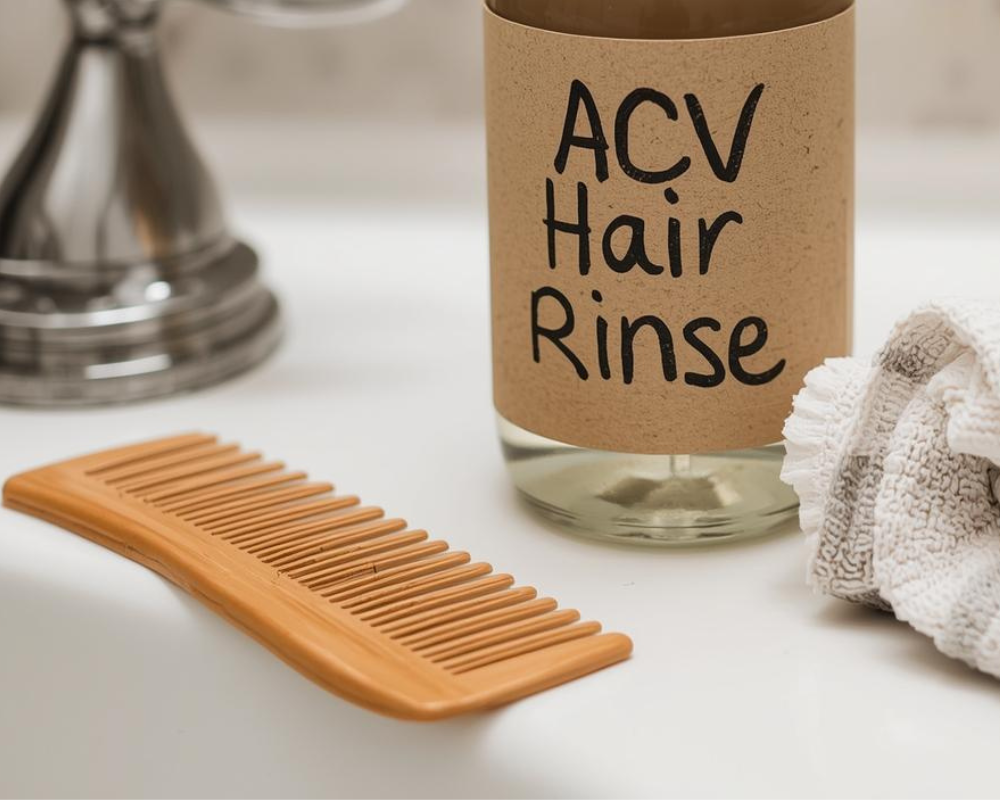
The Science: The mild acidity helps close hair cuticles (making hair look shinier and feel smoother) and can dissolve mineral deposits from hard water. Some people also report relief from itchy scalp and dandruff.
Hack 7: The DIY Skin Toner
The Dilemma: You want clear, balanced skin without spending a fortune on products with ingredient lists longer than a legal contract.
The Hack: Diluted ACV can work as a simple, natural toner for oily or acne-prone skin. Mix 1 part ACV with 2–3 parts water (or even more diluted for sensitive skin), apply with a cotton pad after cleansing, and let it dry before moisturizing.

The Science: ACV’s acidity may help restore the skin’s natural pH balance and has mild antibacterial properties that could help with acne-causing bacteria. However, dermatologists caution that there’s limited clinical research, and ACV can irritate sensitive skin or cause burns if used undiluted or too frequently.
Hack 8: The Sore Throat Soother
The Dilemma: You feel that scratchy tickle in your throat that signals a cold is coming, and you want to do something before it gets worse.
The Hack: Gargling with a mixture of 1 tablespoon ACV in a glass of warm water may help soothe a mildly sore throat. Some people add a teaspoon of raw honey for taste and extra soothing properties. Vinegar oxymels like the lemon-ginger oxymel pictured below can also soothe and comfort a sore throat.

The Science: Vinegar’s mild antibacterial properties and acidity may help create an inhospitable environment for some throat-irritating bacteria. This is more folk remedy than clinical gold standard, but many people swear by it for early-stage throat discomfort.
Important Safety Notes
- Always dilute. Straight vinegar can erode tooth enamel, burn your esophagus, and irritate your stomach. Mix 1–2 tablespoons into a full glass of water or incorporate it into food.
- Protect your teeth. Consider drinking diluted ACV through a straw and rinsing your mouth with plain water afterward to minimize contact with tooth enamel.
- Start small. If you’re new to vinegar, begin with 1 teaspoon and work up to 1–2 tablespoons to see how your body responds.
- Talk to your doctor. If you take diabetes medications, diuretics, or other prescriptions, check with your healthcare provider before adding daily vinegar—it can interact with certain drugs or affect potassium levels.
- Don’t overdo it. More is not better. Stick to 1–2 tablespoons per day. Excessive vinegar consumption has been linked to low potassium, digestive upset, and other issues
Learn More
- Curious about the chemistry? Read our page on the Science of Fermentation and Pickling to see how acetic acid works its magic in food and in your body.
- Want to make your own ACV? Check out our step-by-step DIY Apple Cider Vinegar Guide and join the fermenting fun.
- Looking for delicious ways to add vinegar to meals? Browse our Vinegar Recipes for dressings, shrubs, marinades, and more.
- Get the “Mother” of all newsletters: Join our community for weekly health tips, recipe experiments, and the latest research on vinegar’s benefits.