
Nightly Kitchen Reset with a Simple Vinegar Spray
Turn end‑of‑day dishes into a simple nightly reset with a diluted vinegar spray, quick counter and table wipe‑downs, and a calm kitchen that’s ready for breakfast instead of yesterday’s mess.
This post contains affiliate links to products and books I genuinely use and love. If you buy through my links, I may earn a small commission as an Amazon Associate or through my affiliation with other retailers from qualifying purchases that you make at no extra cost to you.
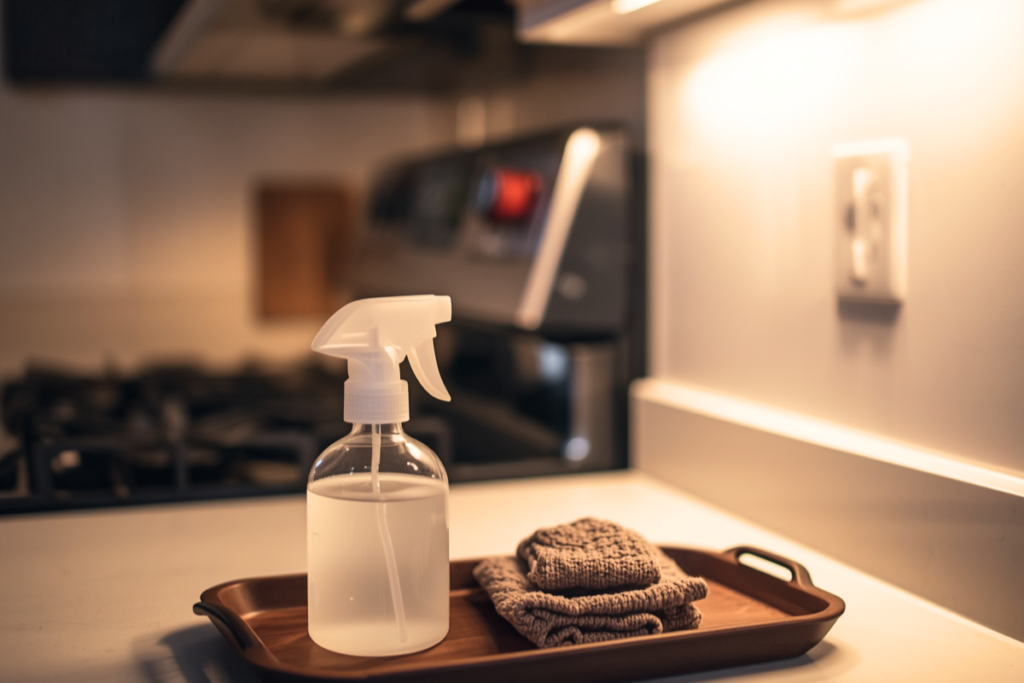
There’s a particular kind of quiet I love at the end of the day in the kitchen. The pots are stacked to dry. The last glass has been rinsed. The overhead light is a little softer or maybe only the lamp in the corner is on. The hum of the fridge is suddenly noticeable because everything else has calmed down.
In those few minutes between “done with dishes” and “I’m officially calling it a night,” there’s an opportunity to give the kitchen a reset that makes tomorrow feel much easier. Not a deep clean. Not a scrub‑every‑surface marathon. Just a quick, consistent wipe‑down of the spaces that worked hard all day: counters, the table, the sink area, and those high‑touch spots that collect fingerprints and smears.
Ending the day with a clean, quiet kitchen can feel like a gift you’re leaving for your future self. Instead of waking up to sticky counters, mystery smears, and a sink that already looks tired, you step into a space that’s calm, clear, and ready to handle breakfast.
My favorite way to do this is with a simple diluted vinegar spray and a cloth. It’s fast, it’s budget‑friendly, and it keeps crumbs, splatters, and daily grease from building up.
Why a Nightly Kitchen Vinegar Cleaning Reset Makes Mornings Calmer
Sometimes it really feels like you’re a short order cook in a diner and you’re pushing your kitchen to the limit. It handles breakfast chaos, lunch assembly, snacks, dinners, late‑night tea, and every “I’ll just put this here for now” moment in between. If you let every one of those tiny events pile up unaddressed, morning becomes the time when the mess presents its invoice.
A nightly reset changes that story. It:
- Clears away crumbs and smears so you don’t start the day cleaning up yesterday.
- Keeps sticky spots and splatters from hardening overnight into scrub‑worthy problems.
- Makes it easier to see what you actually need to cook, rather than getting distracted by clutter and streaks.
There’s also an emotional piece. When the kitchen looks reasonably put together, mornings feel more manageable. You start the coffee brewing, pull a clean cup from the cupboard or dish tray, and jump into your morning routine. You’re starting from neutral instead of from “behind.”
The goal isn’t perfection. It’s a gentle, repeatable habit that keeps your kitchen in a steady, livable state.
Why Vinegar Works So Well for a Nightly Kitchen Cleaning Routine
A single diluted vinegar spray bottle is one of the easiest ways to maintain that steady state. Distilled white vinegar:
- Helps dissolve light grease and film.
- Cuts through many everyday smears and food residues.
- Leaves surfaces fresh without a heavy chemical scent.
Used properly, it makes nightly wipe‑downs simple and safe for most hard surfaces. It’s not the solution for everything (we’ll talk about what to avoid), but for counters, tables, and many sink surrounds, it earns its place.
You can also tailor the scent. If straight vinegar doesn’t thrill you, adding a bit of citrus peel or a few drops of essential oil makes nighttime cleaning feel more like a small ritual and less like a chore.
Simple Nightly Kitchen Vinegar Spray Formula

- 1 cup distilled white vinegar
- 1 cup water
- Optional: a strip of lemon or orange peel, or 5–10 drops of an essential oil you enjoy (like lemon, orange, or lavender)
Add everything to a clean spray bottle and shake gently. Label it so you remember what’s inside.
Use this spray on:
- Most laminate, tile, and sealed wood counters (spot‑test first).
- The kitchen table, if it’s finished with a durable, sealed surface.
- Stainless steel or enamel sink surrounds.
- High‑touch areas like knobs and appliance handles.
Avoid using it on natural stone (marble, granite, limestone) and unfinished or waxed wood, where acids can damage the surface over time.
The Nightly Kitchen Vinegar Cleaning Routine (5 Easy Steps)
Think of this as a short, calm sequence that fits at the very end of your day, once dishes are done and the last snack has been claimed. Five basic steps can handle most kitchens.
Step 1: Clear Kitchen Surfaces Before Spraying
Before you spray anything, give counters and the table a quick declutter.
- Put away obvious out‑of‑place items (mail, toys, random tools).
- Return pantry ingredients to their shelves.
- Move cutting boards and clean pans off the main work zones.
You’re not organizing your entire life here; you’re just creating enough clear space to wipe without dodging clutter.
Step 2: Spray and Wipe Kitchen Counters with Vinegar
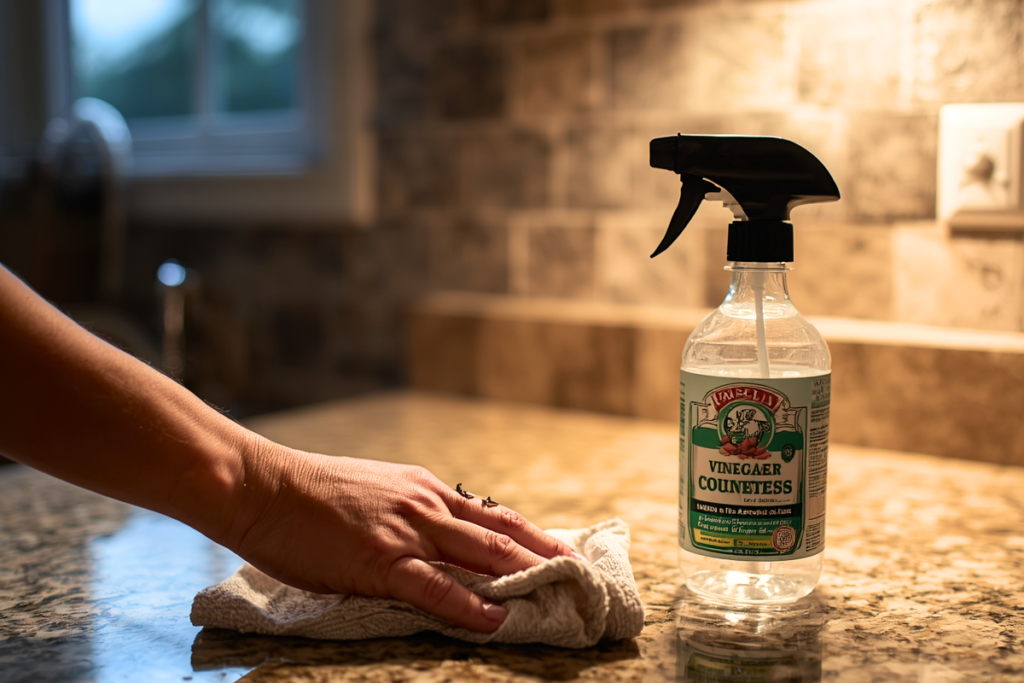
Starting with your main prep area and working outward:
- Lightly mist the counter with your vinegar spray. You don’t need puddles—just a soft mist.
- Let it sit for 30 seconds to a minute on sticky spots.
- Wipe with a cloth or sponge, using gentle pressure to lift stains and crumbs.
- For stubborn smudges, a second quick spray and wipe usually does the trick.
As you move, think of it as closing out each zone: the cutting area, the space by the stove, the landing strip near the fridge.
Step 3: Reset the Kitchen Table with a Vinegar Wipe‑Down
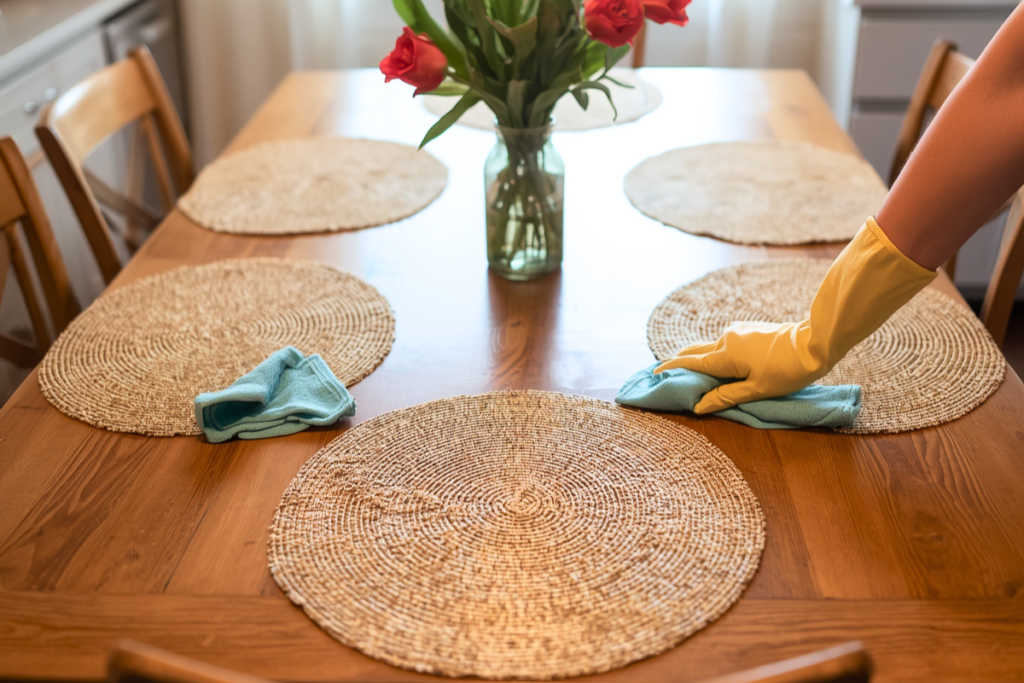
The kitchen table quietly collects everything: meal crumbs, drink rings, dropped bits of sauce, and the day’s paperwork.
- Brush off crumbs or shake out a placemat first.
- Mist the table surface lightly with your vinegar spray.
- Wipe from one end to the other so you don’t chase crumbs in circles.
If the table is painted wood, laminate, or another sealed surface, vinegar works nicely. If it’s natural wood with a delicate finish, you may want a separate cleaner designed for that surface and keep vinegar for tougher, more forgiving areas.
Step 4: Quick Vinegar Pass for the Sink and Surrounding Counter
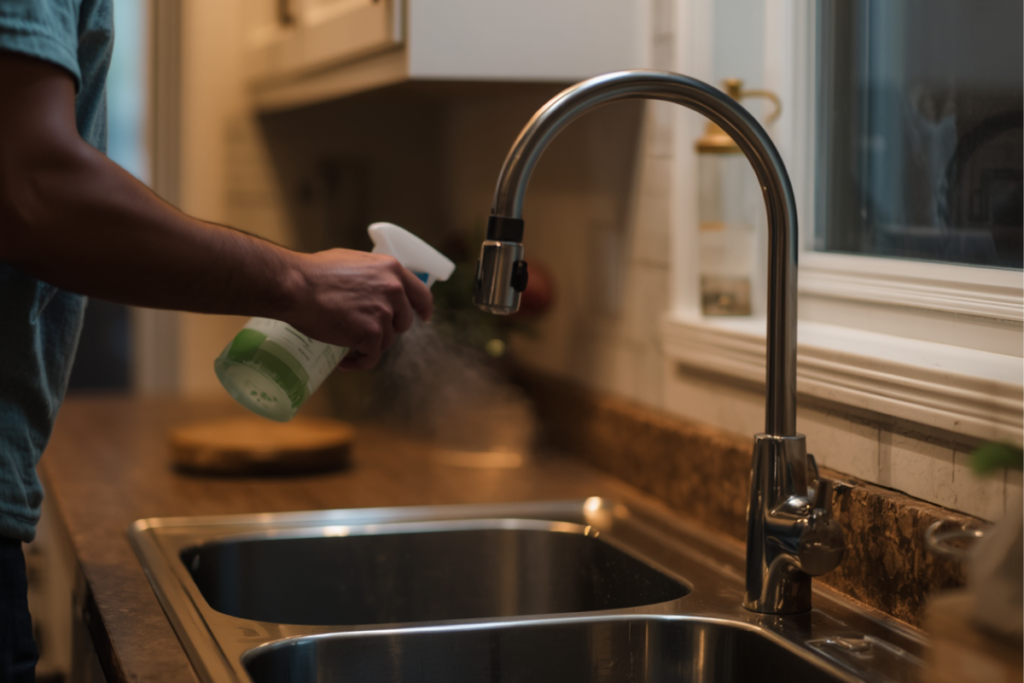
The sink is the kitchen’s workhorse, and it shows it. Even when the dishes are done, the sink often has soap film, tiny food bits, and water spots.
For a nightly reset:
- Rinse out obvious debris.
- Spray the sink sides and the counter right around it with your vinegar solution.
- Wipe down the rim, faucet, and handles, paying attention to splashes and soap residue.
This doesn’t replace a deeper scrub once in a while, but it keeps the sink from becoming the thing you dread looking at in the morning.
Step 5: Hit High‑Touch Kitchen Spots with Vinegar
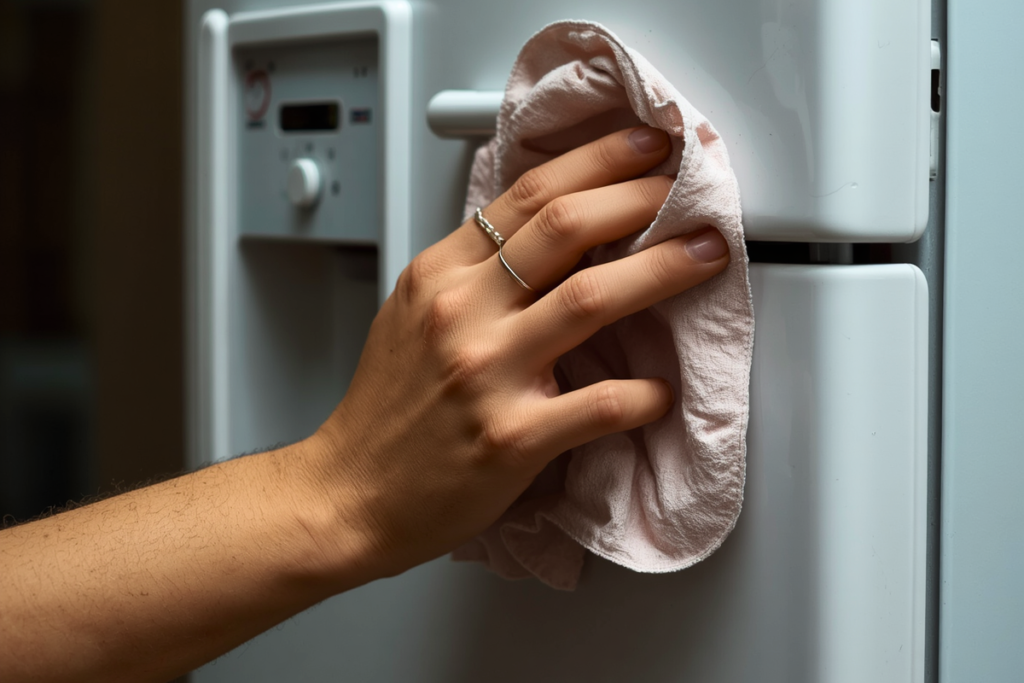
High‑touch areas are easy to overlook and easy to fix.
- Appliance handles (fridge, oven, microwave).
- Stove knobs and frequently used cabinet pulls.
- Light switches near the kitchen entrance.
Mist a cloth with vinegar spray rather than spraying directly, then wipe each handle and switch. It takes under a minute and removes fingerprints, food smears, and the slight stickiness that can build up over a busy day.
Keeping a Nightly Vinegar Cleaning Routine Gentle and Sustainable
My Summer Kitchen Cleaning with Vinegar Toolkit
- Distilled White Vinegar – The hero of your vinegar cleaning solutions.
- Apple Cider Vinegar – For those who want a fruitier scent when cleaning with vinegar
- Baking Soda – Excellent when mixed with vinegar for especially stubborn messes.
- Cleaning Bucket – I like heavy duty buckets that are easy to pour when emptying.
- Glass Spray Bottle – I can always find dozens of uses for multifunctional, recyclable spray bottles.
- Non-Scratch Sponges – These eco friendly sponges gently remove grease and grime from all surfaces.
- Microfiber Cloths – Ideal for all of your summer outdoor cleaning needs.
- Glass Measuring Cup – For accurate measurements when mixing vinegar kitchen cleaning solutions
- Rubber Gloves – Even though the acid volume in vinegar cleaning solutions is modest, it doesn’t hurt to protect your hands.
- Essential Oil – Give your vinegar cleaning solutions a fresh scent with the essential oil of your choice.
The point of this nightly routine isn’t to make you feel like you need to earn your rest. It’s to make rest feel more restful because the space around you is calmer.
A few ways to keep it sustainable:
- Limit the scope.
You’re focusing on surfaces, not the inside of the oven or organizing the junk drawer. Save bigger projects for another day.
- Keep tools ready.
Store your vinegar spray and a clean cloth where you can reach them easily so that you don’t have to hunt for supplies every night.
- Pair the reset with something soothing.
A short playlist, a favorite podcast, or even just the sound of the dishwasher running can make the routine feel like part of winding down rather than another task.
Over time, this becomes muscle memory. You finish dishes, you mist and wipe, you straighten a few handles, and you’re done.
A Small Nightly Vinegar Habit with a Big Impact
What I like most about a nightly vinegar reset is that it’s small enough to be realistic and consistent. It doesn’t demand a Saturday’s worth of energy every day. It just asks for a few deliberate minutes and rewards you later with counters that don’t greet you with dried oatmeal, the table that doesn’t feel sticky, and a sink that looks like it’s on your side.
It’s comforting to know that while you sleep, the kitchen is quietly ready for whatever tomorrow brings and that it only took a simple spray bottle, a soft cloth, and one quick nightly reset to get it there.
Three FAQs for a Nightly Vinegar Cleaning Routine
How long should a nightly kitchen vinegar reset actually take?
Most nights, this routine can be done in 10–15 minutes. Once dishes are finished, you clear obvious clutter, mist and wipe the main counters, reset the table, give the sink area a quick pass, and hit appliance handles and light switches. Keeping the scope small—just the surfaces that worked hardest during the day—helps the habit stay realistic and consistent.
Is vinegar safe for all kitchen surfaces in a nightly wipe‑down?
Vinegar is great for many everyday kitchen surfaces, including most laminate, tile, and sealed‑wood counters, finished kitchen tables, stainless or enamel sinks, and appliance handles, especially when diluted with water. You’ll want to avoid using vinegar on natural stone like marble, granite, or limestone, and on unfinished or waxed wood, where acids can etch or dull the finish. When in doubt, spot‑test a small area or reserve vinegar for your “tough but forgiving” zones.
Can I use a nightly vinegar routine instead of deeper kitchen cleaning?
A nightly vinegar routine is meant to complement deeper cleanings, not replace them entirely. Those few minutes at the end of the day keep crumbs, light grease, and everyday smears from building up, which makes your weekly or monthly deep cleans much easier. You’ll still want occasional focused sessions for ovens, inside refrigerators, and more stubborn messes, but your surfaces will start out closer to “already pretty clean” thanks to the nightly reset.