
Vinegar in Japanese Meals and Drinks: A Beginner’s Guide to Rice Vinegar, Sushi, and Everyday Flavor
Meet komezu, kurozu, and akazu — the rice vinegars behind sushi rice, cucumber sunomono, and ponzu — plus three beginner-friendly Japanese recipes anyone can make on a weeknight.
This post contains affiliate links to products and books I genuinely use and love. If you buy through my links, I may earn a small commission as an Amazon Associate or through my affiliation with other retailers from qualifying purchases that you make at no extra cost to you.
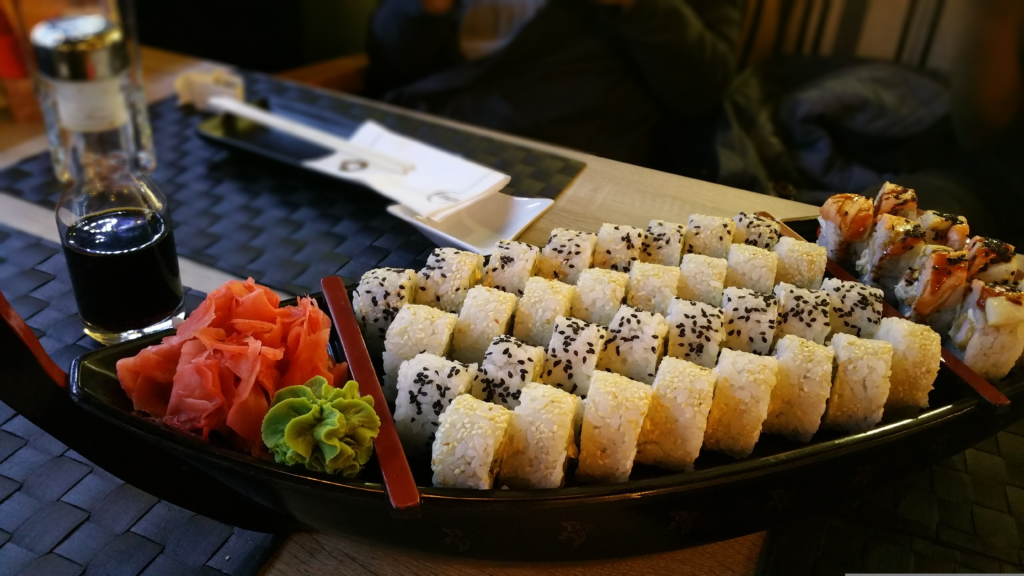
I really get a kick out of walking into my local international market and wandering down the Japanese food aisle. Judging by vinegar shelf, the Japanese culture takes vinegar very seriously. There is clear rice vinegar, dark rice vinegar, seasoned sushi vinegar, ponzu, and fruit drinking vinegar.
I used to be a little intimidated using vinegar in Japanese meals, but no more. I decided to dig in and try my hand at creating a few Japanese food items that use vinegar even if I can’t read the label on the bottle. I’m not opening a Japanese restaurant any time soon, but I’ve learned to work with some basic Japanese recipes that use vinegar.
Japanese vinegar, or su, is one of the quiet builders of flavor with vinegar in Japanese food. It rarely crashes into a dish like wasabi. Instead, it brightens rice, balances salty soy sauce, keeps pickles lively, cuts richness in grilled foods, and gives a bowl of cucumber salad that little spark that makes you go back for another bite.
The good news is that I found out it’s not necessary to have sushi-chef training, a rice-paddle collection, or a tiny Tokyo apartment kitchen to enjoy vinegar in Japanese meals. A bottle of good rice vinegar can get you started with easy, satisfying dishes that fit into an ordinary weeknight.
How Vinegar Came to Japan: From China to Sushi’s Beginnings
Vinegar-making technology arrived in Japan from China around the fourth or fifth century, alongside techniques for brewing sake. Since rice was Japan’s major crop, it makes sense that rice vinegar—komezu—became the country’s defining vinegar in Japanese meals much the same way wine vinegar grew naturally in grape-growing parts of Europe.
By the Nara period, from 710 to 794, historical records show vinegar being made alongside sake by a government brewing office. The Manyoshu, an early anthology of Japanese poetry, also includes what is considered one of the oldest references to namasu: a dish of fish or vegetables dressed with vinegar.
For much of its early history, vinegar was costly enough to be a special ingredient. Over time, brewing improved, vinegar became more available, and it moved from preservation and formal dishes into ordinary cooking with vinegar in Japanese meals. During the Edo period—1603 to 1867—vinegar became widely used as a seasoning, and sushi as we recognize it began to take shape.
That history of vinegar in Japanese meals makes sense when you taste it. Vinegar was useful for preserving seafood and vegetables before refrigeration, but it was also delicious. It made rice more interesting, gave vegetables an appetite-opening snap, and balanced the rich flavors of fish and grilled foods. Practical and flavorful is a pretty good recipe for culinary staying power.
The Main Types of Vinegar in Japanese Meals

Japanese vinegar is not one-note. You can begin with one everyday bottle, then branch out when a recipe or your curiosity calls for it.
Komezu: Japanese Rice Vinegar
Komezu is made from fermented rice and has a mild, rounded flavor. It is the bottle I would recommend first for anyone building a Japanese-inspired pantry. It works in sushi rice, dressings, cucumber salads, quick pickles, dipping sauces, marinades, and more.
Compared with distilled white vinegar, rice vinegar is gentler and a little sweeter tasting. It is not actually sweetened unless the label says “seasoned,” but it does not hit you with the same sharp slap across the face.
Awasezu: Seasoned Rice Vinegar for Sushi
Awasezu means blended or seasoned vinegar. It commonly combines rice vinegar with sugar and salt, and it is especially useful for sushi rice.
This is a wonderful shortcut if you want to make sushi bowls, onigiri-style rice, or casual hand rolls. The label matters here: if you buy seasoned rice vinegar, do not add the full amount of sugar and salt called for in a recipe written for plain rice vinegar in a Japanese meal. That is how a pleasant rice bowl can take a sudden turn into dessert-sushi territory.
Kurozu: Black Rice Vinegar
Kurozu is a dark, aged vinegar traditionally made from fermented brown rice. It has deeper, earthier, more malty notes than clear rice vinegar and works beautifully in hearty sauces, noodle dishes, braises, and marinades.
It is not the same as Chinese black vinegar, although the two can occupy a similar “dark and complex” corner of the pantry. If you are new to kurozu, use it as a finishing splash in a sauce or vinaigrette before trying to build a whole meal around it.
Akazu: Red Sushi Vinegar
Akazu, or red vinegar, is made from sake lees—the flavorful yeast-rich byproduct of sake making. It has an amber-to-reddish color and a mellow, savory depth that sushi chefs often use in signature sushi-rice blends.
This is the more adventurous bottle for a home cook. You do not need it to make tasty sushi rice, but if you enjoy making rice bowls and want to experiment, it brings remarkable depth without requiring fancy technique.
Japanese Fruit Drinking Vinegars: How to Enjoy Them Safely
Japanese fruit vinegars are often blended with fruit juices, honey, or sugar and designed to be diluted in water or sparkling water. Vinegar drinks have been part of Japanese food culture for centuries, though modern bottled versions have made the ritual especially convenient.
If you try one, use it as a flavor-forward beverage, not a wellness dare. Dilute it generously, enjoy it with a meal, and do not confuse “tart” with “the more the better.”
If you explore Japanese fruit drinking vinegars, keep the same common-sense guidelines you would use with any acidic drink. Dilute them well, avoid straight shots, and pay attention to your teeth and stomach. People with GERD, ulcers, enamel erosion, kidney concerns, or medications that affect blood sugar or potassium should check with a clinician before making vinegar drinks a regular habit.
Everyday Ways to Use Vinegar in Japanese Meal
What I love about vinegar in Japanese meals is that it usually works in harmony. It does not have to be loud to be important.
You will find it in:
- Sushi rice, where vinegar, sugar, and salt season cooked rice and give it its unmistakable character.
- Sunomono, light vegetable salads—often cucumber—dressed with a sweet-tart vinegar mixture.
- Tsukemono, quick-pickled vegetables served as a crisp contrast to rice, noodles, or grilled dishes.
- Ponzu-style sauces, where vinegar joins soy sauce and citrus to create a salty, bright dipping sauce.
- Marinades and finishing sauces, where a small amount balances rich grilled fish, chicken, tofu, mushrooms, or eggplant.
Using vinegar in Japanese meals is a lesson in balance. You do not have to put it in everything. You just use enough to make the other ingredients wake up.
Popular Japanese Vinegar Brands to Know
You do not need to chase down the most elusive artisan bottle of Japanese vinegar to cook well, but a few widely available names are worth knowing if you want to use vinegar in Japanese meals.
- Mizkan is one of Japan’s leading rice-vinegar brands and has produced sauces and vinegars for Japanese cooks and chefs for more than two centuries. The brand’s plain rice vinegar and seasoned sushi vinegar are easy starting points.
- Marukan has been brewing rice vinegar since 1649 and offers plain, organic, seasoned, and brown-rice options, along with ponzu-style products.
- Kikkoman is another common U.S. grocery-store option for rice vinegar and Japanese pantry staples, although more a more popular brand for soy sauce.
- Iio Jozo is a respected Kyoto-area artisan producer that makes premium rice vinegar, brown-rice vinegar, sushi vinegar, ponzu, and specialty vegetable- and fruit-based vinegars.
For your first bottle, look for unseasoned rice vinegar. It gives you the most flexibility to use vinegar in Japanese meals . Once you fall in love with the flavor, add seasoned sushi vinegar or a deeper brown-rice vinegar to your shelf.
Toolkit for Using Vinegar in Japanese Meals
- Plain (unseasoned) rice vinegar – Mizkan or Marukan, your recommended “first bottle.”
- Seasoned sushi vinegar (awasezu) — for readers who want the shortcut version.
- Black rice vinegar (kurozu) — for readers ready to branch out into sauces and braises
- Ponzu sauce — for readers who’d rather buy the finished product than mix their own.
- A rice paddle (shamoji) — the tool named right in your sushi rice recipe.
- Short-grain sushi rice — pairs directly with your sushi rice recipe.
- Small dipping bowls — for serving ponzu, styled the way your photo idea describes.
- Toasted sesame seeds — called for in the sunomono recipe.
- A wooden mixing bowl (hangiri) or wide shallow bowl — for the “fold, don’t mash” sushi rice step.
- Fruit drinking vinegar (e.g., a Japanese plum or yuzu vinegar) — for readers curious about the drinking-vinegar section.
Three Easy Japanese Vinegar Recipes for Beginners
These are beginner-friendly recipes to use vinegar in Japanese meals for regular home kitchens.
1. Japanese Cucumber Salad (Sunomono)
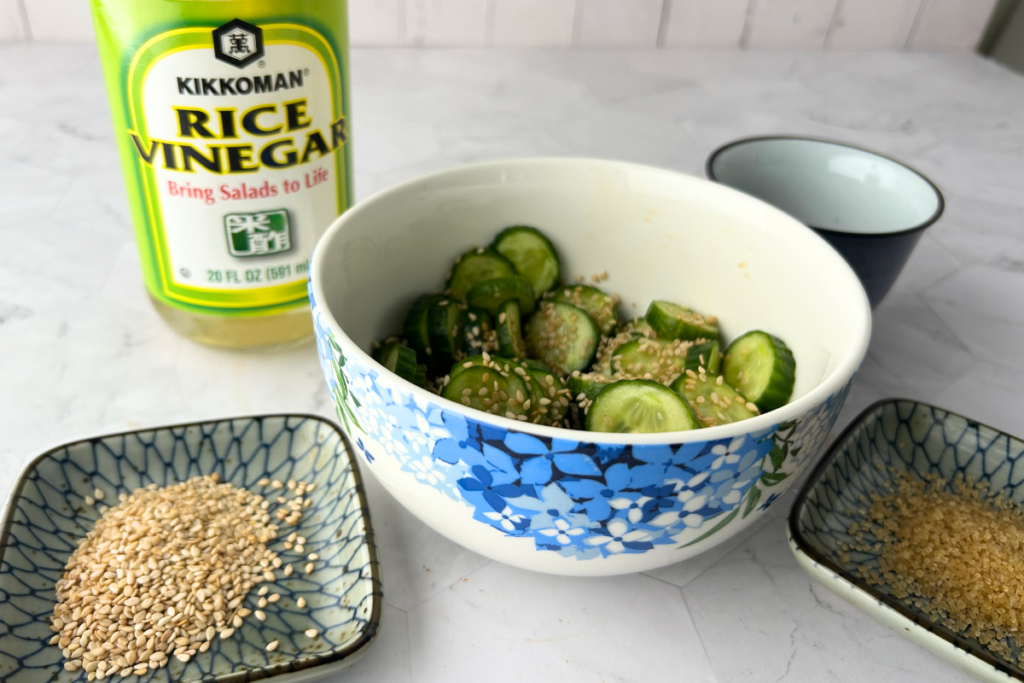
This is the dish that convinces people that cucumbers can be more than something you push around your plate next to a sandwich.
Ingredients
- 2 Persian or small cucumbers, thinly sliced
- 1/2 teaspoon salt
- 3 tablespoons unseasoned rice vinegar
- 1 tablespoon sugar
- 1 teaspoon soy sauce
- 1 teaspoon toasted sesame seeds
Directions to use vinegar in Japanese meals:
- Toss cucumber slices with salt and let sit for 10 minutes.
- Gently squeeze out excess water and place cucumbers in a bowl.
- Whisk rice vinegar, sugar, and soy sauce until the sugar dissolves.
- Pour over cucumbers and toss.
- Sprinkle with sesame seeds and chill for 10 to 15 minutes before serving.s
2. Easy Sushi Rice for Bowls and Hand Rolls
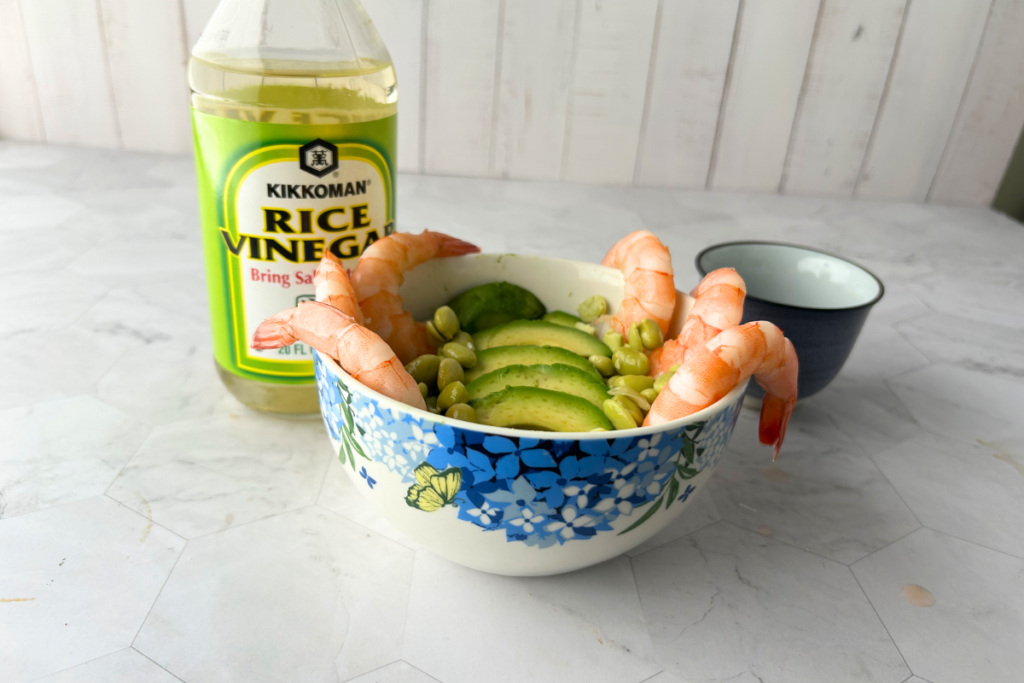
This is not a command to become a sushi master by Thursday. It is a simple way to include vinegar in Japanese meals and make rice bowls taste special.
Ingredients
- 2 cups cooked short-grain rice, warm
- 2 tablespoons unseasoned rice vinegar
- 1 tablespoon sugar
- 1/2 teaspoon fine salt
Directions to use vinegar in Japanese meals:
- Combine vinegar, sugar, and salt in a small bowl. Stir until dissolved.
- Place warm rice in a wide bowl.
- Drizzle the vinegar mixture over the rice.
- Use a rice paddle or broad spatula to gently fold and slice through the rice until glossy and evenly seasoned. Do not mash it.
- Serve in bowls with avocado, cucumber, cooked shrimp, tofu, salmon, edamame, seaweed, or whatever makes you happy.
3. Quick Ponzu-Style Dipping Sauce
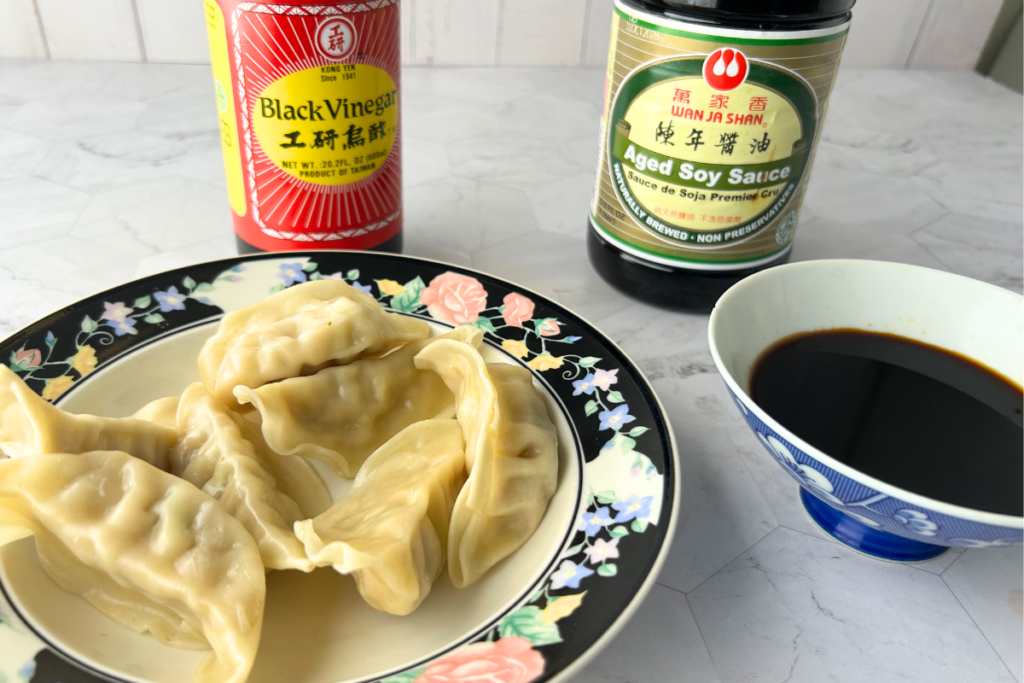
Real ponzu can involve specialty citrus and dashi, but this beginner version gives you the bright, salty idea without sending you on a three-store scavenger hunt to use vinegar in Japanese meals.
Ingredients
- 2 cups cooked short-grain rice, warm
- 2 tablespoons unseasoned rice vinegar
- 1 tablespoon sugar
- 1/2 teaspoon fine salt
Directions to use vinegar in Japanese meals:
- Whisk all ingredients together in a small bowl or jar.
- Taste. Add a little more citrus for brightness or a tiny bit of honey if it feels too sharp.
- Serve with dumplings, grilled tofu, roasted mushrooms, salmon, chicken skewers, or steamed vegetables.
Classic awasezu sauces often use rice vinegar as their base, and ponzu traditionally combines vinegar, soy sauce, citrus, and dashi.
A Final Word on Japanese Vinegar in Meals
For everyone else, the real joy is not in treating vinegar like medicine. It is in using it the way Japanese meals so often do: as a graceful tool for balance. A little sweetness, a little salt, a little umami, and just enough tang to make a simple bowl of rice, cucumbers, or vegetables feel like something you planned on purpose.
Frequently Asked Questions About Vinegar in Japanese Meals
Rice vinegar, called komezu or simply su in Japanese, is the everyday vinegar most closely associated with vinegar in Japanese meals. It has a mild, lightly sweet flavor that works beautifully in sushi rice, cucumber salads, quick pickles, dipping sauces, and dressings. Japanese cooking also uses kurozu—a darker, more deeply flavored black rice vinegar—and seasoned sushi vinegar, which contains added sugar and salt.
Can you drink Japanese vinegar?
Yes, vinegar drinks have a long history in Japan. Fruit-infused drinking vinegars and aged black rice vinegar are often mixed with still or sparkling water, rather than taken as harsh shots. A gentle starting point is about 1 tablespoon (15 ml) of drinking vinegar in a full glass of water or sparkling water; adjust to taste and keep it well diluted. If you have reflux, ulcers, sensitive teeth, or take medications that may interact with acidic drinks, check with a clinician before making vinegar drinks a regular habit.
What are easy recipes with vinegar in Japanese meals to make at home?
Three beginner-friendly recipes are sunomono, sushi rice, and a simple ponzu-style dipping sauce. Sunomono is a refreshing cucumber salad dressed with rice vinegar, sugar, soy sauce, and sesame seeds. Sushi rice combines cooked short-grain rice with a mixture of rice vinegar, sugar, and salt. For a quick ponzu-inspired sauce, combine rice vinegar, soy sauce, citrus juice, and a little dashi or water; serve it with dumplings, grilled vegetables, tofu, or fish.