
What Is the Mother in Apple Cider Vinegar?
The mother in apple cider vinegar is a cloudy, stringy, or gelatinous collection of fermentation-related material that may form during vinegar production. It can include cellulose, acetic-acid bacteria, yeasts, and other compounds from fermentation. The mother is common in raw or unfiltered vinegar, but it is not required for vinegar to work in cooking, recipes, pickling, or cleaning. Vinegar with the mother is not automatically more nutritious, more acidic, or more effective than filtered vinegar.
Apple cider vinegar is produced through two fermentation stages, and the cloudy material commonly called the mother may contain natural bacteria and yeasts. However, evidence for broad health claims remains limited.
How does the mother in apple cider vinegar form?
Apple cider vinegar is generally made through two main fermentation stages:
- Yeast converts sugars in apple juice or cider into alcohol.
- Acetic-acid bacteria convert the alcohol into acetic acid.
During the process, fermentation-related material may collect and form the substance commonly called the mother. The exact appearance and composition depend on the starting ingredients, microorganisms, oxygen exposure, fermentation conditions, filtration, and storage.
What does the mother in apple cider vinegar look like?
The mother may look different from one bottle to another.
It can appear as:
- Brown or beige strands
- A cloudy sediment
- A translucent film
- A gelatinous disk
- Floating particles
- A thin layer near the surface
The mother may become more visible after the bottle is opened or stored for an extended period. Its appearance is not always attractive, but appearance alone does not determine whether the vinegar is good or bad.
Is the mother in apple cider vinegar the same as mold?
Usually, no.
The mother is generally smooth, stringy, cloudy, or gelatinous. Mold is more likely to look fuzzy, powdery, hairy, or unusually colored.
Discard the vinegar if you see:
- Fuzzy growth
- Green, blue, black, pink, or unusual colored mold
- A rotten or putrid odor
- Unexpected bubbling or pressure
- Sliminess that seems unlike a normal mother
- Signs of contamination around the cap or bottle
Do not taste questionable vinegar to determine whether the material is the mother or mold.
Is the mother in apple cider vinegar safe to consume?
In commercially produced food-grade vinegar, the mother is generally considered part of the product rather than a sign of spoilage. However, the mother does not make every vinegar safe to consume in unlimited amounts.
Vinegar is acidic and may irritate the mouth, throat, stomach, or teeth, particularly when consumed undiluted or frequently. Use the vinegar according to the label and dilute it when preparing a beverage. People with reflux, dental erosion, sensitive digestion, or regular medications should seek professional guidance before consuming vinegar routinely.
Does the mother in apple cider vinegar contain probiotics?
The mother may contain fermentation-related bacteria and yeasts, but the organisms, amount, and viability can vary by product and processing. The presence of the mother does not establish that the vinegar provides a clinically meaningful probiotic benefit and should not automatically be treated as a standardized probiotic supplement.
Does the mother in apple cider vinegar contain enzymes?
The mother may contain fermentation-related compounds, but enzyme content varies and should not be presented as a guaranteed health benefit.
Is apple cider vinegar with the mother better?
Not automatically.
Vinegar with the mother may be preferable if you enjoy:
- A cloudy appearance
- A stronger or more complex flavor
- Less-filtered products
- Visible fermentation material
Filtered vinegar may be preferable if you want:
- A clear appearance
- A smoother texture
- Less sediment
- More consistent presentation
- Easier use in sauces, dressings, or drinks
The mother is a product characteristic, not a universal measure of quality.
Is vinegar with the mother more nutritious?
Not necessarily. The nutritional differences depend on the product, serving size, filtration, processing, and any additional ingredients.
Apple cider vinegar generally contributes very few calories and nutrients in ordinary serving sizes. The mother may contain fermentation-related material, but that does not mean the vinegar is a significant source of vitamins, minerals, protein, or probiotics.
Does the mother in apple cider vinegar make vinegar more acidic?
No. The mother does not automatically make vinegar more acidic.
Acidity is determined by the concentration of acetic acid and should be assessed from the product label or a reliable measurement—not by the presence, size, or appearance of the mother. A filtered apple cider vinegar and an unfiltered apple cider vinegar may have similar labeled acidity.
Does the mother in apple cider vinegar improve the taste?
It can affect the appearance, aroma, texture, and flavor, but taste preferences vary.
Vinegar with the mother may taste:
- Earthier
- More fermented
- More complex
- Slightly yeasty
- More intense
Filtered vinegar may taste cleaner or more consistent. The mother is not automatically a sign that a vinegar tastes better.
Can I use vinegar with the mother in cooking?
Yes. Vinegar with the mother can generally be used in:
- Salad dressings
- Marinades
- Sauces
- Chutneys
- Slaws
- Pickled foods
- Baking
- Drinks and shrubs
If you prefer a smooth texture, strain the vinegar before using it. The mother may settle, float, or disperse during cooking. This does not necessarily affect the recipe.
Can I use vinegar with the mother for pickling?
It depends on the recipe.
For ordinary refrigerator pickles or culinary preparations, vinegar with the mother may be used if the flavor and appearance are acceptable.
For shelf-stable pickling or canning:
- Use vinegar with clearly labeled acidity.
- Follow a tested recipe.
- Do not rely on the presence of the mother.
- Do not use homemade vinegar of unknown acidity.
- Do not alter the vinegar-to-water ratio casually.
The mother does not replace the acidity requirements of a tested preservation recipe. Oregon State University Extension pickling guidance emphasizes using vinegar with the acidity specified by the recipe, commonly 5% acidity. (Oregon State University Extension (OREGONSTATE))
Can I use vinegar with the mother for cleaning?
Yes, but it is usually less convenient than filtered distilled white vinegar.
Vinegar with the mother may contain:
- Sediment
- Cloudiness
- Color
- Fermentation particles
- A stronger odor
These qualities can leave residue or make the cleaning result less predictable.
Do not use vinegar with the mother on:
- Marble
- Limestone
- Travertine
- Other acid-sensitive stone
- Sensitive appliance components
- Electronics
- Finishes that prohibit acidic cleaners
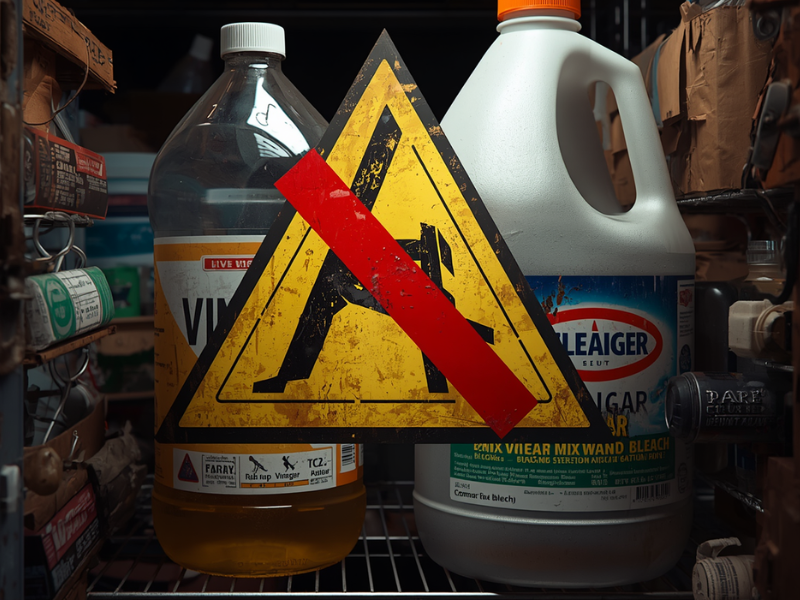
Never mix vinegar with bleach, ammonia, drain cleaner, or unknown cleaning products.
Should I shake vinegar with the mother?
You do not need to shake it.
If the mother has settled and you want to distribute it through the vinegar, gently swirl the bottle. Avoid vigorous shaking if the bottle is full or the contents appear pressurized. For most recipes, the vinegar can be poured without redistributing the sediment.
Can the mother grow in vinegar after opening?
It may become more visible during storage, particularly in raw or unfiltered vinegar. Exposure to oxygen and continued fermentation activity can affect the appearance.
A developing mother is not automatically spoilage. However, discard the vinegar if the change is accompanied by:
- Fuzzy mold
- A rotten odor
- Unexpected bubbling
- Pressure
- Sliminess
- Contamination
- A damaged container
Does filtered vinegar still work?
Yes. Filtered vinegar still provides acidity and can be used in recipes according to the label and recipe instructions.
Filtering primarily changes the vinegar’s appearance and suspended material. It does not mean the vinegar is ineffective.
Filtered apple cider vinegar can be used in:
- Cooking
- Dressings
- Sauces
- Marinades
- Beverages
- Shrubs
- Oxymels, when the product is food-grade
Does pasteurized vinegar still work?
Yes. Pasteurization or additional processing may reduce or remove some microorganisms and fermentation material, but the vinegar can still provide acidity and flavor.
Do not assume that pasteurized vinegar is inferior or that raw vinegar is automatically healthier.
Can I add the mother to another vinegar?
It is possible to use vinegar mother in fermentation projects, but this should not be presented as a guaranteed or simple way to produce safe vinegar.
Home vinegar production requires control of:
- Ingredients
- Alcohol content
- Oxygen exposure
- Temperature
- Fermentation time
- Acidity
- Contamination
Do not use homemade vinegar of unknown acidity for canning or shelf-stable pickling.
What happens if the mother in apple cider vinegar settles at the bottom?
That is normal for many raw or unfiltered vinegars.
You can:
- Leave it settled
- Gently swirl the bottle
- Pour the clearer vinegar from the top
- Strain it through a clean filter
- Use it as-is in a recipe
The choice depends on your preferred texture and appearance.
Recommended comparison table
| Feature | Vinegar with the mother | Filtered vinegar |
|---|---|---|
| Appearance | Cloudy, stringy, or sediment-containing | Usually clear |
| Fermentation material | More likely to remain visible | Usually reduced or removed |
| Flavor | May be earthy or complex | Often cleaner and more consistent |
| Acidity | Not determined by the mother | Check the label |
| Cooking use | Suitable for most recipes | Suitable for most recipes |
| Beverage use | May require straining | Smoother texture |
| Health claims | Not automatically proven | Not automatically inferior |
| Storage | Follow the label | Follow the label |