
How to Make Apple Cider Vinegar from Fresh Apple Cider
Turn a jug of fresh apple cider into bright, tangy apple cider vinegar with just a jar, a starter, and some patience—perfect for dressings, shrubs, quick pickles, and everyday cooking.
This post contains affiliate links to products and books I genuinely use and love. If you buy through my links, I may earn a small commission as an Amazon Associate or through my affiliation with other retailers from qualifying purchases that you make at no extra cost to you.
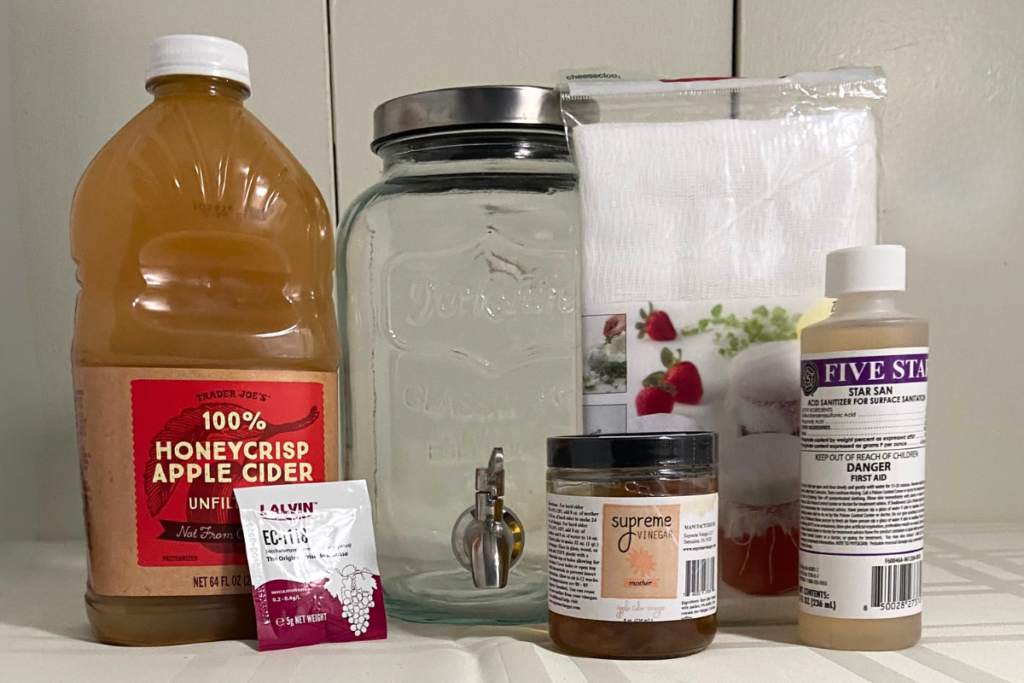
There’s something especially satisfying about making apple cider vinegar from fresh apple cider because you get to watch the whole transformation happen from almost the very beginning. It’s one step removed from pressing the apples yourself, and it feels a little like kitchen magic in slow motion. Sweet cider turns yeasty and boozy, and then, with oxygen, patience, and the help of the right microbes, it becomes bright, tangy vinegar that can wake up dressings, shrubs, sauces, and quick pickles.
Making apple cider vinegar from fresh apple cider involves fermenting the cider first into alcohol and then allowing beneficial bacteria to convert that alcohol into acetic acid. This guide explains the process, the supplies you need, how long it takes, and how to recognize finished vinegar.
If you’ve already made apple cider vinegar from hard cider, this version will feel familiar but not identical. Hard cider gives you a head start because the alcohol is already there. Fresh cider asks you to let the whole story unfold: first the sugars ferment into alcohol, then acetic acid bacteria convert that alcohol into vinegar. It takes a little longer, but the payoff is a finished vinegar that tastes especially orchard-like and layered.
Why Apple Cider Vinegar Is So Popular
If it seems like apple cider vinegar is everywhere, that’s because it pretty much is. It has become one of the most visible and commercially successful specialty vinegars, and in home kitchens it sits near the top of the popularity ladder along with distilled white, red wine, and balsamic vinegars. Part of the reason is that ACV lives in two worlds at once: it has a strong identity in cooking and a very shiny reputation in wellness culture.
For me, DIY apple cider vinegar’s real appeal is more practical than trendy. Apple cider vinegar is fruity but not sweet, punchy but not punishing, and flexible enough to slip into both savory and sweet recipes without feeling out of place. It can sharpen a slaw, perk up a vinaigrette, balance a pan sauce, and bring life to a shrub or sippable drink. Once you have a homemade batch you really like, you start finding excuses to use it.
Fresh Apple Cider vs. Hard Cider for Homemade ACV
When you start with hard cider to make apple cider vinegar, you’re beginning with alcohol, so your main job is to encourage acetification by giving the liquid oxygen and a good starter culture. When you start with fresh apple cider, there is no alcohol yet, so the batch has to go through two fermentations. First, yeast turns sugar into alcohol. Then acetic acid bacteria turn that alcohol into acetic acid.
That means fresh cider vinegar asks a bit more from you:
- You need to watch for bubbling and foam during the first stage.
- If you’re using chopped apples or scraps, you need to keep solids submerged so mold doesn’t get ideas.
- You probably won’t see the mother right away, because the alcohol phase needs to get going before vinegar really takes shape.
The upside is flavor. Starting with sweet cider can give you a softer, rounder, more appley vinegar than some hard-cider batches, especially if your cider is fresh and flavorful to begin with.
My Toolkit for Making Apple Cider Vinegar From Apple Cider
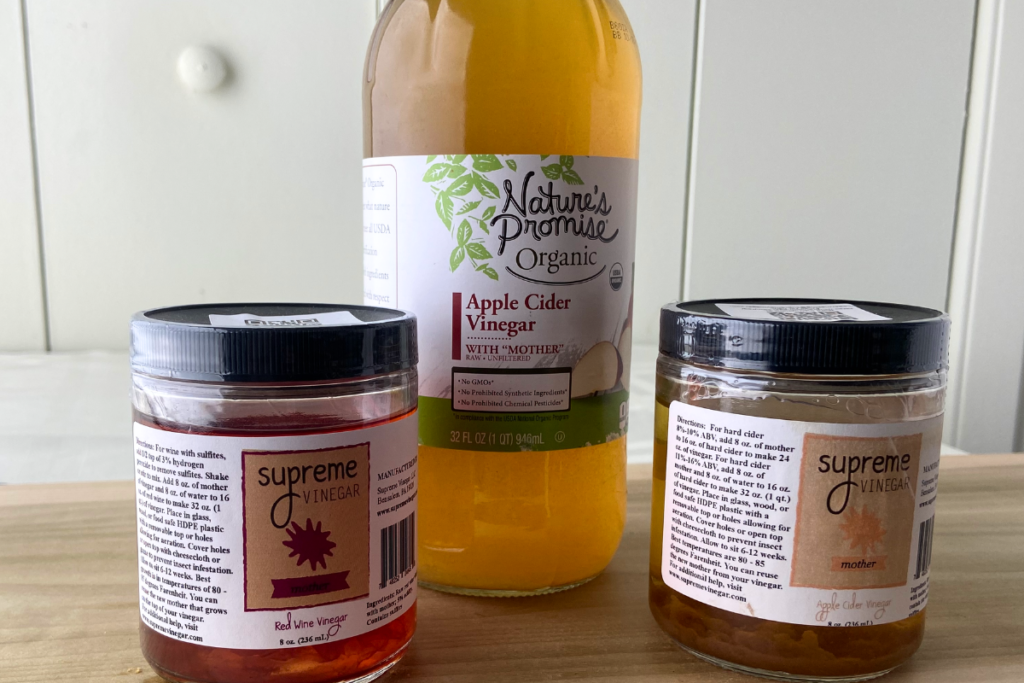
To make apple cider vinegar from fresh cider, you don’t need fancy equipment, but a few basics help everything go more smoothly.
- Unfiltered Apple Cider – Find organic apple cider that has no preservatives.
- Champagne Yeast – Turns the cider into alcohol through fermentation.
- ‘Mother’ of Vinegar – You can use ACV with mother, but I prefer to buy mine. One thing to keep in mind that it doesn’t matter what type of vinegar the mother comes from. The vinegar principally derives its flavors from the fruits and herbs so it’s okay to use an ACV, white wine vinegar, or red wine vinegar ‘mother’ to kick things off.
- Glass Beverage Dispensers – I have several dispensers and prefer ones that have spouts. Being able to easily pour my finished vinegar out without disturbing the ‘mother’ lets me continue to add more wine and water and reuse the ‘mother’ over and over.
- Spring Water – Avoid using chlorinated water because it disrupts the fermentation chemistry. Chloramines that many municipal water systems now use are even worse.
- Cheese Cloth – Ideal for letting air in and keeping fruit flies and other insects out.
- One Gallon Glass Jug – I prefer glass gallon jugs that are reusable, durable, and helps reduce waste and mycarbon footprint.
- Bubble Airlock for Fermenting – Look for an airlock that is fully transparent for easy monitoring, features an airtight seal to prevent oxidation, and automatically releases pressure during fermentation.
- Star San Sanitizer – This high foaming, acid-based, no-rinse sanitizer is effective and easy to use,
One important caution when you make apple cider vinegar: if your cider contains preservatives like potassium sorbate or sodium benzoate, fermentation may stall before it really begins because those additives are designed to stop microbial activity.
Step‑by‑Step: How to Make Apple Cider Vinegar from Fresh Cider
- Sterilize all equipment with Star San sanitizer – Prevent risk of contaminating your batch.
- Start the first fermentation – Pour your fresh apple cider into a clean glass jug, leaving some headspace at the top. Add yeast as directed and plug top of jug with airlock that is filled with Star San sanitizer.
- Let the yeasts get to work – Store the jug in a dark, room-temperature spot. Over the next several days, you may see bubbles, foam, or cloudiness, and the smell may shift from sweet cider to something a little cidery, funky, or lightly boozy. Those are encouraging signs. This is your first fermentation quietly doing its job.
- Transfer fermented cider to beverage dispenser and add the mother or starter – When the bubbling in the airlock has slowed way down or stopped, pour the cider into a wide-mouthed beverage dispenser (I prefer ones with a spigot) withyour mother of vinegar or a generous splash of raw ACV with the mother. This helps the acetic acid bacteria get established and usually makes the process more predictable.
- Let it acetify – Cover the beverage dispenser with cheesecloth to allow air circulation but protect from fruit flies and return it to its cozy corner. Over the next few months, the alcohol in the cider will continue transitioning into vinegar. At some point, you may notice a pale, jelly-like layer forming on top. That odd-looking layer is the mother, and despite its alien appearance, it’s usually a very good sign.
- Taste for readiness – Start tasting after about 4 weeks, but don’t be surprised if it takes 6 to 8 weeks or longer. Temperature, sugar level, and the strength of your starter all affect timing. It’s ready when it smells sharply vinegary and no longer tastes sweet or alcoholic. If it still tastes like hard cider’s shy cousin, give it more time. I like to compare a fermenting batch to one that’s already finished or even a store-bought ACV to get a good sense of how far along my vinegar is.
What to Watch for While Your Apple Cider Vinegar Ferments
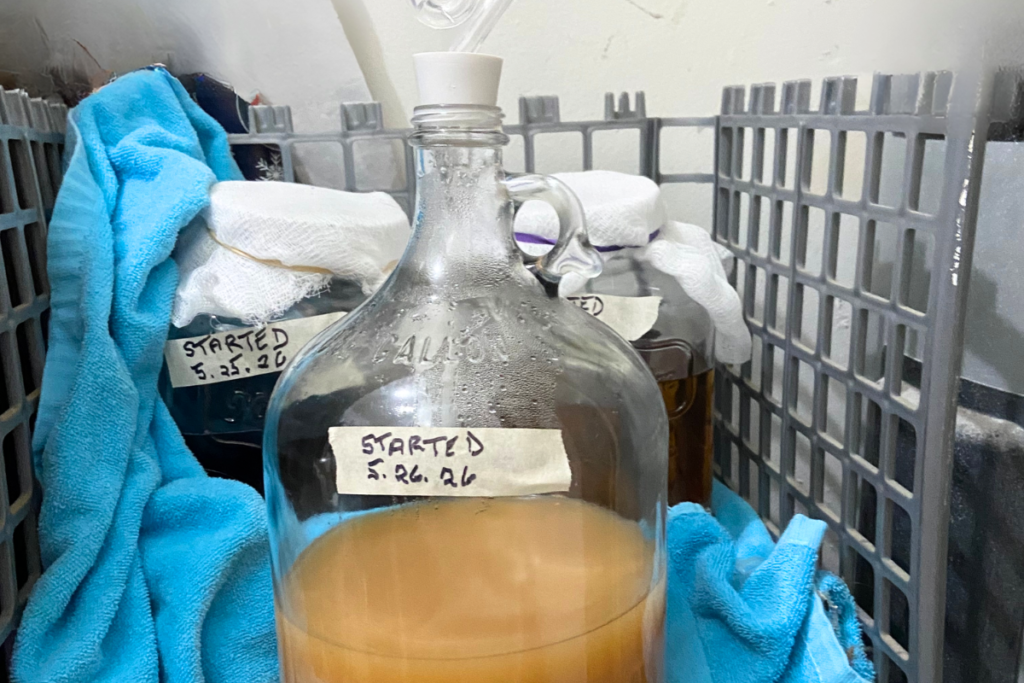
It’s only natural to feel a little nervous the first few times you make apple cider vinegar from apple cider, and you may find yourself doubting yourself, but hang in there. It takes time but it’s tried and trusted process, and when you get the hang of it you’ll want to make your own red wine vinegar, white wine vinegar, or malt vinegar.
The only time I failed was when hairline cracks developed in my beverage dispenser when I sterilized it with hot water. Now when I make apple cider vinegar I use Star Sans to sanitize all of my vinegar making tools and haven’t have a problem.
Good signs include:
- Bubbles or foam early on
- Cloudiness
- A smell that shifts from sweet to boozy to tart
- A white, beige, or pale gray mother forming on top
Signs that the batch has gone sideways include:
- Fuzzy blue, green, black, or pink mold
- Rotten, putrid smells
- Fruit pieces floating above the liquid long enough to mold
In short: gelatinous, floppy, weird-looking mother is often fine. Fuzzy mold is not fine, and that’s your cue to toss it and begin again.
Why Cooks Love Using Apple Cider Vinegar
Apple cider vinegar earns its keep because it brightens food recipes without flattening it. It cuts through richness in pork, roasted vegetables, beans, and creamy slaws, but it also brings gentle fruit notes that distilled white vinegar simply doesn’t have. It plays especially well with mustard, maple, honey, ginger, garlic, cinnamon, and fresh herbs, which is one reason it’s so easy to work into everyday cooking.
It’s also useful in baking, where its acidity helps activate baking soda, and in shrubs, oxymels, and other sippable drinks where even a small splash can make fruit flavors taste more awake.
Health Benefits: The Realistic Version
Apple cider vinegar has a bigger wellness halo than most vinegars, but it still isn’t Superman. The most grounded, believable claims are fairly modest: it may help a bit with blood sugar response in some people, and it can fit into a generally healthy pattern of eating. What it definitely does not do is replace medical care, cure chronic conditions, or deserve to be knocked back in straight shots like some kind of sour wellness punishment.
In fact, caution is warranted. ACV is acidic enough to irritate your throat, stomach, and tooth enamel if taken straight, so it’s best diluted in food or drinks. Honestly, one of its best real-world “health benefits” is simply that it makes vegetables, grain bowls, salads, beans, and lighter meals taste better, which might make you want to eat those foods more often.
Please Note: Homemade vinegar should not be assumed to have the standardized acidity required for home canning or food-preservation recipes. Use commercially tested vinegar for canning unless the acidity of your homemade vinegar has been properly verified.
Storing Homemade Apple Cider Vinegar Safely
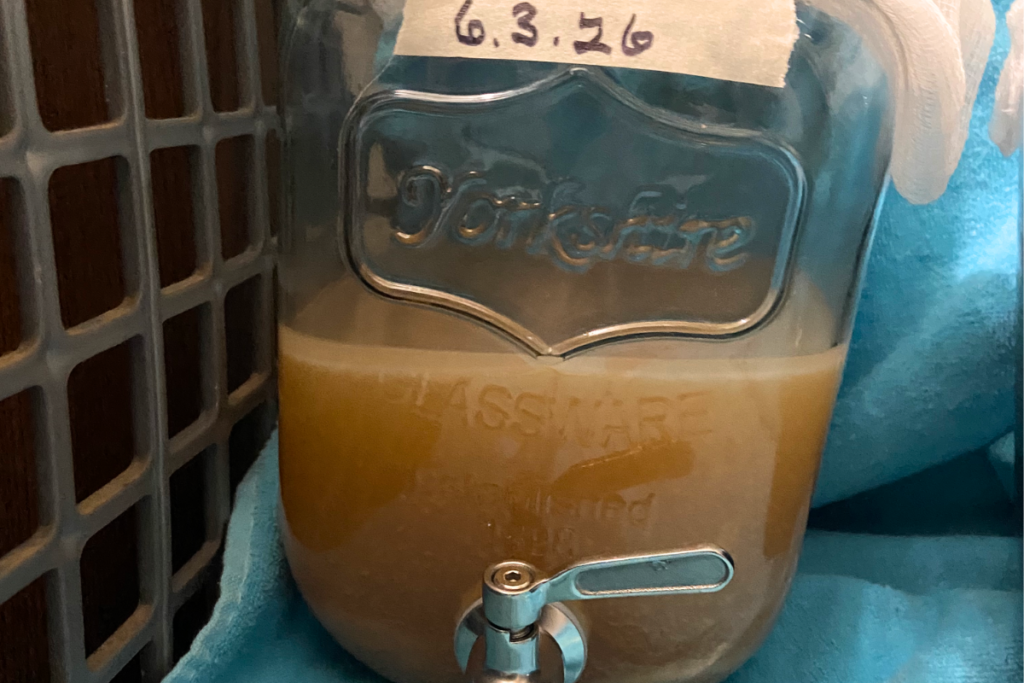
Once your vinegar tastes right, strain it if you want it clearer and pour it into clean glass bottles with tight lids. Store it in a cool, dark cupboard or pantry. Refrigeration isn’t necessary, though it won’t hurt anything.
You may notice new mothers forming in the bottle over time. That’s harmless. You can strain them out, shake them in, give them to vinegar-curious friends, or save them to start another batch.
One caution still matters here: homemade vinegar should not be used for shelf-stable canning unless its acidity has been professionally tested, because home batches may not reliably reach standardized acidity levels.
Three Recipes for Your Homemade Apple Cider Vinegar
Once you have your homemade apple cider vinegar finished, the real fun can begin – using it in vinaigrettes, shrubs, and for pickling. Here are three recipes to try
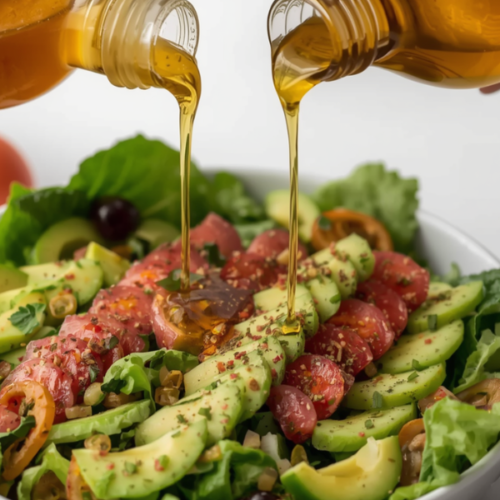
Simple Homemade Blackberry/Raspberry Oxymel Vinaigrette
Equipment
- 1 Glass storage bowl
- 1 Measuring cup
- 1 Wire whisk
- 1 Measuring spoons
- 1 Salad Dressing Shaker Jar
Ingredients
- 2 tbsp Homemade Apple Cider Vinegar
- 2 tsp Dijon mustard
- 3 tbsp Olive Oil
- 1 1/2 tsp Maple Syrup, Honey, Agave or Sweetener of Choice
- pinch Salt
Instructions
- Whisk ingredients together in bowl.
- Pour contents into shaker bottle and use as desired on salads, grilled vegetables, and for marinades
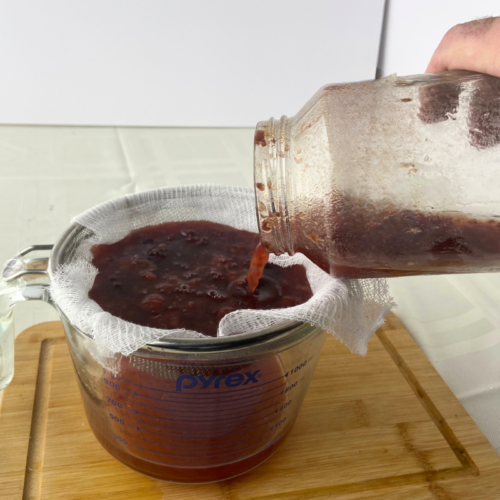
Blueberry-Basil ACV Shrub
Equipment
- 1 Glass storage bowl
- 1 Masher
- 1 Mason jar for storage
- 1 Mesh strainer
Ingredients
- 1 cup Blueberries
- 1/2 cup Sweetener of choice
- 1 cup Raw Organic Apple Cider Vinegar
- Basil leaves, torn roughly
Instructions
- In a glass bowl, lightly mash the blueberries with the sugar and torn basil leaves.
- Cover and refrigerate for 8 to 24 hours, until the berries release plenty of juice.
- Strain through mesh strainer into mason jar.
- Stir in the apple cider vinegar and shake well to mix.
- Refrigerate another 12 to 24 hours so the flavors can mingle.
- Strain through a fine mesh strainer into a clean bottle or jar, pressing gently on the solids.
- To serve, add 1 to 2 tablespoons of the shrub to a glass of ice and top with water or sparkling water. Add lemon if you like a brighter finish.
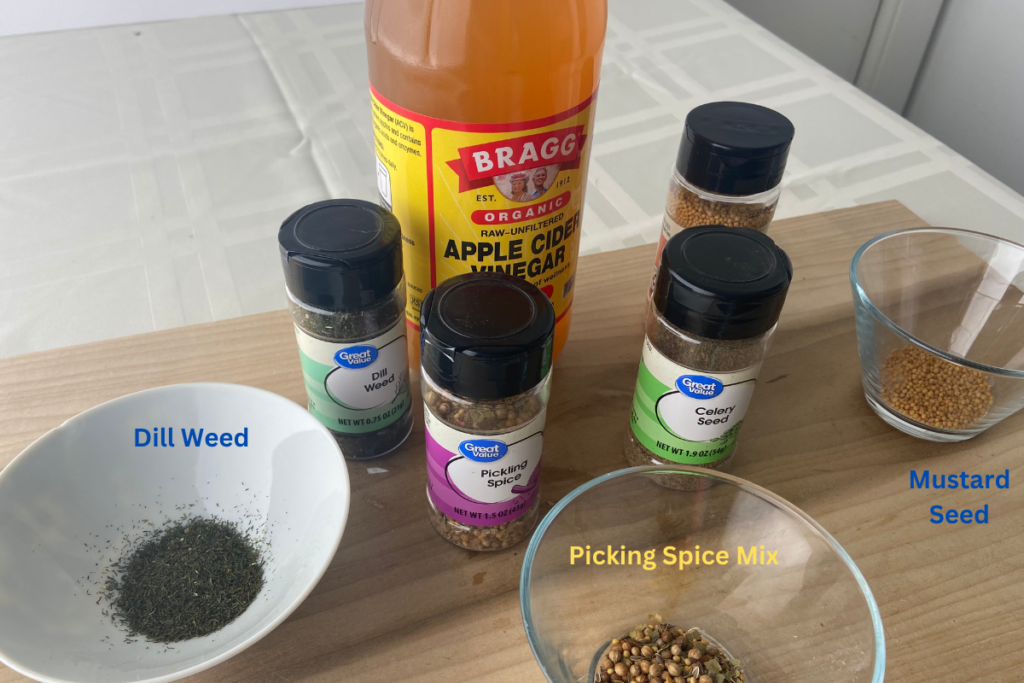
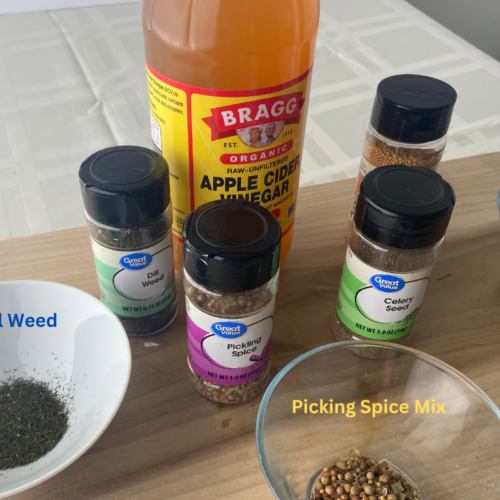
ACV Pickled Cucumbers
Equipment
- Mason jar for storage
- 1 Measuring cup
- 1 Measuring spoons
Ingredients
- Kirby cucumbers, quartered
- 2 tbsp Dill Weed
- 2 tbsp Pickling Spice
- 2 tbsp Celery Seed
- 2 tbsp Mustard Seed
- 1 cup Apple Cider Vinegar
- 3/4 cup Boiling water
- 2 tsp sugar or sweetener of choice
Instructions
- Place spices in mason storage jar.
- Pack cucumbers tightly into jar.
- Boil water. Pour apple cider vinegar and how water over cucumbers, leaving space at the top for expansion.
- Allow jar to cool. Place in refrigerator and enjoy.
Frequently Asked Questions When Making Apple Cider Vinegar from Apple Cider
How long does it take to make apple cider vinegar from fresh apple cider?
t depends a bit on your kitchen and your starter, but I generally plan on several weeks for the full journey from sweet cider to tangy vinegar. The first fermentation—when yeast turns sugar into alcohol—usually takes a week or two, depending on temperature and how lively your yeasts are. The second fermentation—when acetic acid bacteria turn that alcohol into vinegar—often takes another 4 to 8 weeks. I start tasting around the four‑week mark and keep going until it smells sharply vinegary and no longer tastes sweet or boozy.
Do I have to use a mother of vinegar or raw ACV as a starter?
Technically, wild microbes can do the job on their own, especially if your kitchen already has a lot of fermenting projects going on, but using a mother of vinegar or a generous splash of raw, unpasteurized ACV with the mother stacks the deck in your favor. It helps the “good” acetic acid bacteria move in quickly and makes the process more predictable. If you skip a starter, just know you may wait longer and you’ll want to watch the batch a little more closely for off smells or mold. Plus you can use a ‘mother’ for any vinegar, not only an ACV ‘mother’ because the vinegar assumes the flavor of the alcohol.
How do I know if my homemade apple cider vinegar is safe to use?
First, trust your senses. Good signs include a shift from sweet to gently boozy to clean, tart vinegar; a pleasant, sharp smell; cloudiness; and a jelly‑like mother forming on top. Red flags include fuzzy blue, green, black, or pink mold and truly rotten, putrid odors—those batches are better off composted than rescued. Once your vinegar tastes right, it’s fine to use in dressings, shrubs, and quick pickles, but I avoid using homemade ACV for shelf‑stable canning unless the acidity has been professionally tested, because home batches don’t always hit standardized acidity levels.