
Descaling with Vinegar: Coffee Makers, Kettles, Dishwashers, Humidifiers, Diffusers, and Showerheads
This post contains affiliate links to products and books I genuinely use and love. If you buy through my links, I may earn a small commission as an Amazon Associate or through my affiliation with other retailers from qualifying purchases that you make at no extra cost to you.
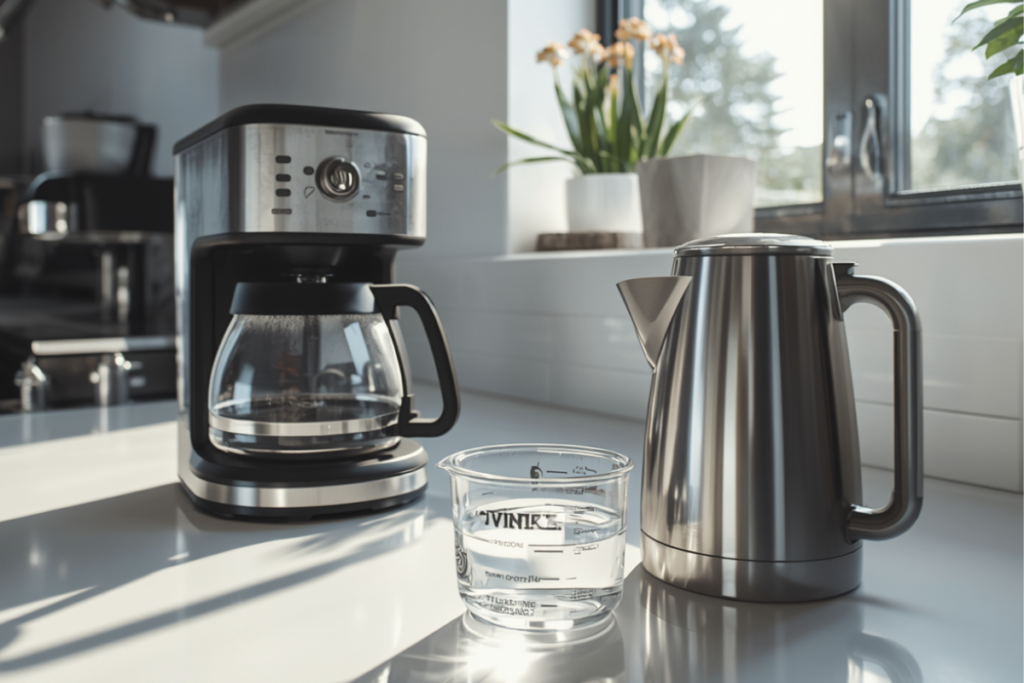
If you live with hard water, you know what it’s like to wage a constant batter against limescale, that chalky, white or tan film that creeps into coffee makers, kettles, dishwashers, humidifiers, and showerheads.
Over time, that buildup slows water flow and makes appliances work harder and leaves coffee tasting flat or bitter, and tea a little “off”. Over time, the stuff can shorten the life of heating elements and pumps. There’s an easy and safe solution to the problem. You can descale your coffee maker and humidifier, de-odorize your dishwasher, and clean showerheads with vinegar.
Descaling with Vinegar: Fight Back Against Hard Water Buildup
Vinegar’s mild acidity makes it a natural match for mineral deposits, but there’s a fine line between “gentle household acid” and “does your coffee taste a little ‘rubbery’ too?” In other words, we want enough vinegar to dissolve scale, not so much that we slowly degrade seals, hoses, or finishes, especially on expensive or newer appliances.
Descaling with vinegar is one of those “small, boring” habits that quietly saves your coffee, your tea, and your appliances. Used correctly, it can dissolve mineral buildup without wrecking rubber seals or delicate finishes and the key is exact dilution, timing, and rinse steps.
This post walks through step‑by‑step vinegar descaling routines for four heavy hitters—coffee makers, kettles, dishwashers, and showerheads—with exact dilutions and realistic “how often” guidelines.
General Rules Before You Descend into the Descaling
Before we go appliance‑by‑appliance, a few global rules:
- Always check your manual or manufacturer site first. If they specifically say “no vinegar,” respect that and switch to a manufacturer‑approved descaler.
- Use plain 5% white distilled vinegar, not cleaning vinegar or stronger versions.
- Never mix vinegar with bleach or chlorine‑based cleaners. Never. Ever.
- Finish every descaling session with at least one thorough water‑only rinse cycle (sometimes more).
Think of vinegar as a guest in your appliance: it comes in, does its job, then leaves completely. After all, it is an acid, and you don’t want it lingering on your metal and rubber parts of appliances where it can corrode and degrade them over time.
How to Descale a Coffee Maker with Vinegar
We’re talking classic drip or single‑serve machines with a water tank—not espresso machines with fancy internal boilers (those often require special products).
Tools You Can Use for Coffee Maker Descaling
This is the workhorse I reach for when I’m descaling my coffee maker and general cleaning use around the kitchen. Buying it by the gallon keeps costs low and means you’re not constantly running out mid‑laundry day.
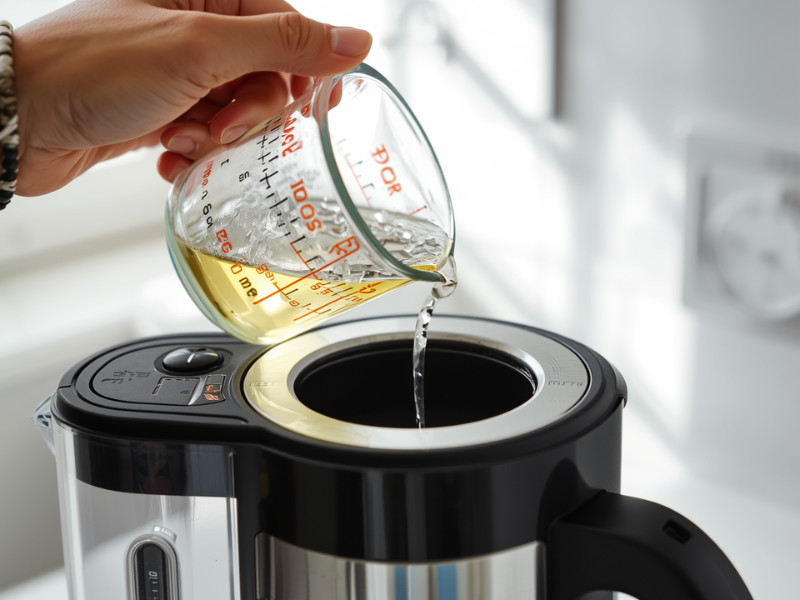
Guessing “about a cup” of vinegar is an easy way to overdo it. A little measuring cup or a clearly marked pour bottle makes it simple to add the right amount to your rinse compartment every time without splashing all over the place.
Ideal for reaching crevices and hard to clean areas of the coffee maker or kettle where mineral deposits or grime has built up.
I like keeping a smaller, easy‑to‑grab spray bottle of vinegar in the kitchen for special stains and uses.
Dilution and Frequency
- Dilution: 1 part white vinegar to 1 part water
- How often: Every 1–3 months, depending on how hard your water is and how often you brew
If your coffee takes forever to drip or tastes slightly metallic or muddy, it’s probably time. You actually may have become accustomed to the effect the buildup has on your coffee until after you clean it and enjoy the “new” taste.
Step‑by‑Step Coffee Maker Descaling
- Empty the machine.
Remove used grounds and rinse the filter basket or pod holder. - Mix your solution.
Combine equal parts vinegar and water (for a standard home coffee maker, this is usually about 4–6 cups total). - Fill the reservoir.
Pour the vinegar‑water mix into the water tank. - Run a half brew cycle.
- Start a brew cycle and let it run until the machine has pulled through about half the solution. Then pause and let it sit for 20–30 minutes so the acid can work on the internal mineral deposits.
- Finish the cycle.
After the soak, resume the cycle and let the rest of the solution run through completely. - Rinse cycle #1.
Discard the carafe contents, rinse it, then fill the reservoir with fresh water only. Run a complete cycle. - Rinse cycle #2 (and maybe #3).
Repeat with fresh water until there’s no vinegar smell or taste left. Two full water‑only cycles is usually enough, but you can go to three if your nose is sensitive.
When Not to Use Vinegar in Coffee Makers
Skip vinegar if:
- The manual explicitly warns against it
- You have a high‑end machine or espresso maker that specifies only manufacturer‑approved descaler
- There are aluminum parts that might react poorly with acids
In those cases, use the branded descaling solution and follow their instructions to the letter.
How to Descale a Kettle with Vinegar
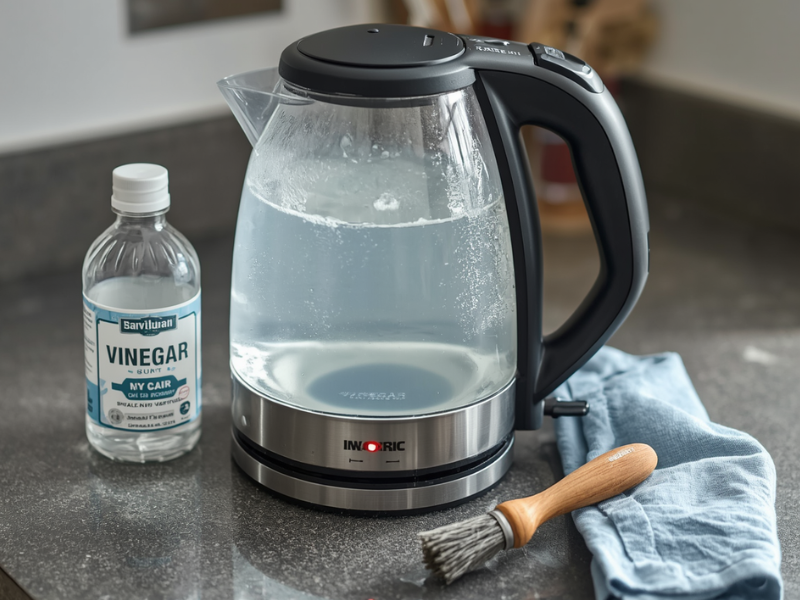
Kettles are little scale magnets, especially if you boil water several times a day. The bad news is that you can’t easily see the extent of the buildup in the kettle. The good news is that they’re also the easiest thing in your kitchen to descale.
Dilution and Frequency
- Dilution: 1 part white vinegar to 1 part water
- How often: Every 1–2 months, or whenever you see a visible ring or flakes of limescale on the bottom or sides
Step‑by‑Step Kettle Descaling
- Unplug and cool.
If it’s electric, unplug it and let it cool completely. - Mix your solution in the kettle.
Fill the kettle halfway (or enough to cover the scale) with equal parts vinegar and water. - Heat the mixture.
Bring it to a gentle boil (or to its “click‑off” point if it’s electric), then turn off the heat. - Let it soak.
Leave the hot vinegar‑water mix in the kettle for 20–30 minutes. Crazy‑thick scale may want up to an hour, but check periodically. - Dump and scrub.
Carefully pour the solution out. If any limescale remains, wipe it away with a soft sponge or cloth—no aggressive metal scrubbing, especially on coated interiors. - Rinse thoroughly.
Fill with clean water, bring to a boil, then discard the water. Repeat once more if you still smell vinegar.
Kettle Cautions
- Avoid vinegar on kettles whose manuals specifically say “no vinegar.”
- Don’t leave vinegar sitting overnight; extended soaks aren’t necessary and can be rough on coatings or seals.
How to Descale a Dishwasher with Vinegar
Dishwashers get a double whammy: mineral deposits and detergent film. A gentle descaling rinse can help, but you want to keep the vinegar away from rubber parts as much as possible.
Dilution and Frequency
- Dilution: Vinegar is diluted by the wash water inside and we’ll keep the amount modest.
- How often: Every 2–3 months, or when you see film on glassware and white buildup around spray arms or heating elements.
Step‑by‑Step Dishwasher Descaling
- Empty the dishwasher.
No dishes, no utensils—just racks. - Clean the filter and trap first.
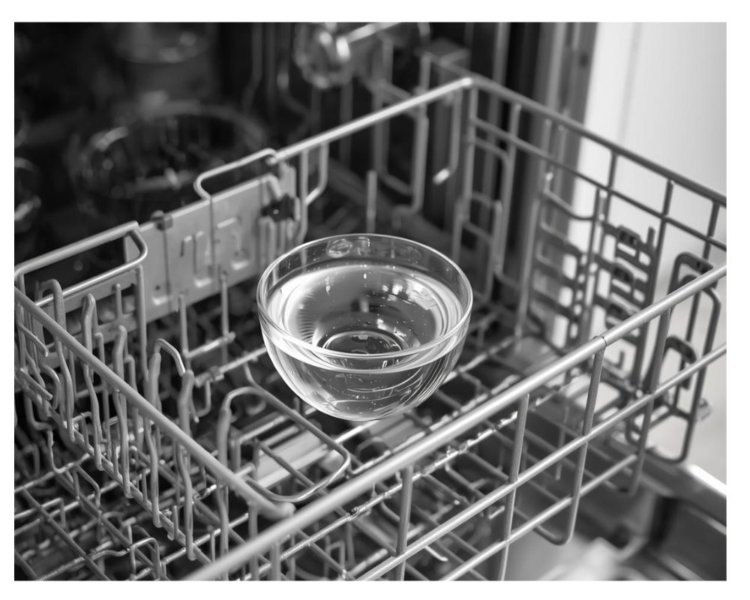
Remove and rinse any food filters or traps so you’re not descaling on top of gunk. - Place vinegar in a dishwasher‑safe cup or bowl.
Fill a sturdy, top‑rack‑safe cup or bowl with 1–2 cups white vinegar. - Run a hot cycle.
Put the cup on the top rack, upright, and run the dishwasher on a hot or “clean” cycle with no detergent. The vinegar will slowly overflow and circulate through the machine with the water. - Optional: follow with a baking soda freshen.
After the vinegar cycle and once the tub is dry, you can sprinkle a light layer of baking soda on the bottom and run a short, hot cycle (no vinegar present) to help with odors. (Keep them separate: first vinegar cycle, later a standalone baking soda cycle.)
Dishwasher Cautions
- Do not dump vinegar straight into the bottom of the dishwasher and let it sit in contact with rubber or metal for hours.
- Avoid using vinegar in every single load; over time, repeated acid exposure can age seals and hoses.
- If your manual recommends only specific dishwasher cleaners, stick with those instead and use vinegar for other jobs.
Descale Humidifiers and Diffusers With Vinegar
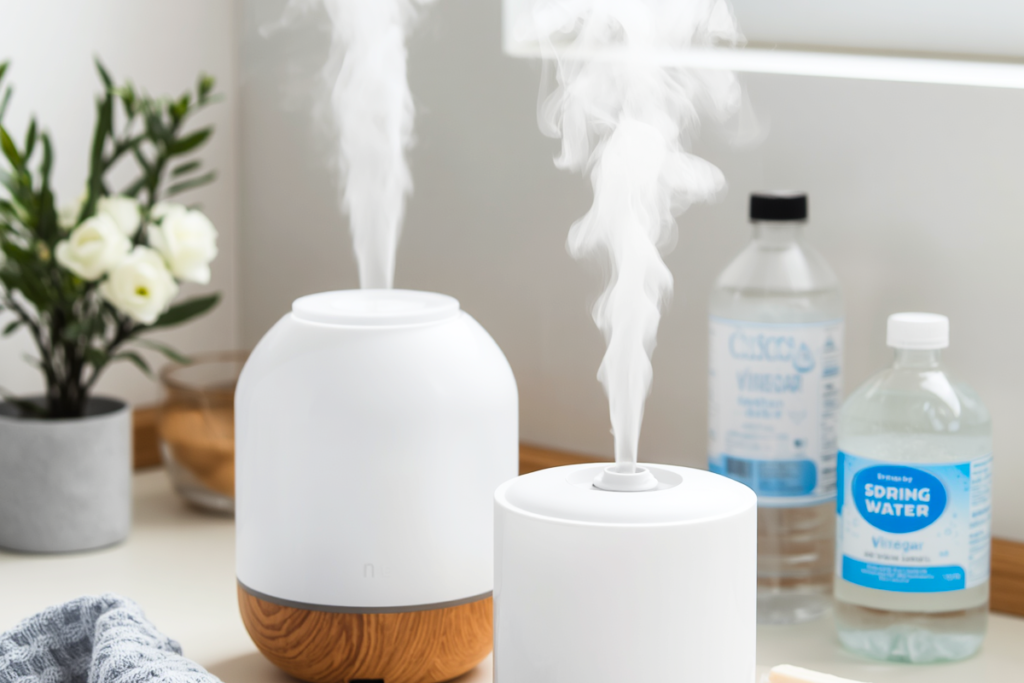
Humidifiers and diffusers are great for comfort and atmosphere, but they’re also little magnets for mineral buildup and sludge. When hard water dries inside their tanks, lines, and misting parts, it leaves behind deposits that can clog nozzles, change the way mist sprays, and even make the device look cloudy or dirty. A carefully diluted vinegar soak is one of the simplest ways to clear that buildup—if you keep the acid where it belongs and rinse very thoroughly afterward.
General Rules Before You Start
- Always read the manufacturer’s manual first—some explicitly say “no vinegar” and you’ll want to respect that.
- Unplug the device and empty all water before cleaning.
- Never pour vinegar into the base where electronics live; it’s for removable tanks, reservoirs, and soak‑safe parts only.
Basic Vinegar Descaling Routine for Humidifiers
For many tabletop cool‑mist units:
- Remove and empty the water tank.
- Mix equal parts white vinegar and water (for example, 1 cup vinegar + 1 cup water).
- Fill the tank with this solution and let it sit for 20–30 minutes to loosen mineral deposits.
- Swish gently, then pour out the solution.
- Use a soft cloth or brush to wipe visible buildup from accessible surfaces—no metal scouring pads on delicate plastics.
- Rinse several times with clean water until you no longer smell vinegar.
Some manufacturers also allow you to place a small amount of diluted vinegar in the base’s water channel or tray (never the electronics) for a short soak. Only do this if the manual gives the okay.
Diffusers: Extra Care for Delicate Parts
Essential oil diffusers have more fragile components than most humidifiers, so go even gentler:
- Empty any remaining water and oils.
- Wipe the bowl or reservoir with a 1:1 vinegar‑water mix on a soft cloth—do not flood the electronics or use undiluted acid on plastic.
- Let it sit for a few minutes on stubborn mineral rings, then wipe again.
- Rinse with clean water and dry fully before the next use.
For devices that specifically warn against vinegar, stick with manufacturer‑approved cleaners or plain water wiping instead.
Rinse, Dry, and Don’t Overdo It
The key with both humidifiers and diffusers is to treat vinegar like a visitor, not a roommate. It comes in, loosens deposits, then leaves completely:
- Follow every vinegar soak with multiple fresh‑water rinses so no acid lingers in pump lines or misting parts.
- Let the tank and any removable pieces air‑dry before reassembling.
- Avoid weekly vinegar blasts; a gentle descale every 1–3 months is usually enough, depending on your water hardness and how often you run the device.
Used this way, vinegar quietly keeps mist paths clear and mineral buildup under control—without roughing up seals or delicate components—and helps your “comfort machines” stay genuinely comforting instead of slowly gummed up inside.
How to Descale a Showerhead with Vinegar
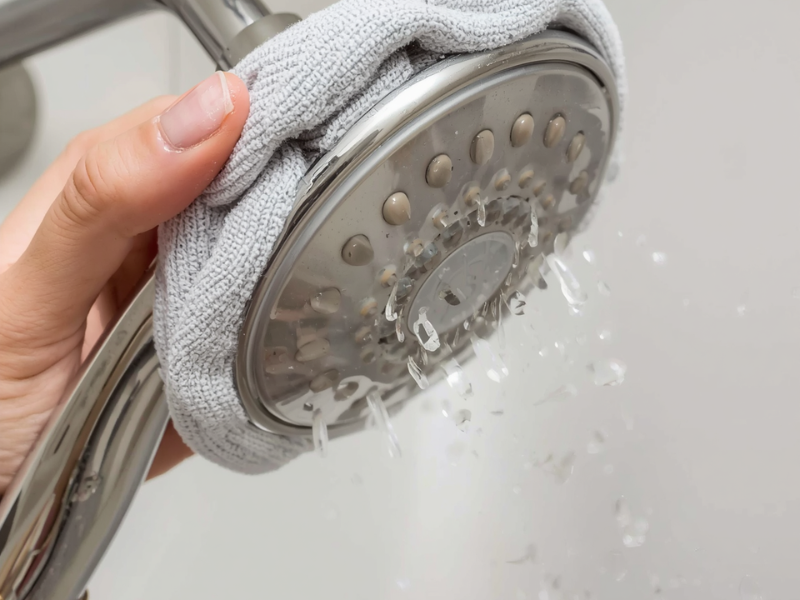
This is the most visibly satisfying job. A freshly descaled showerhead suddenly remembers how to be a shower instead of a half‑hearted drizzle.
Dilution and Frequency
- Dilution: Often undiluted or lightly diluted, but kept outside the plumbing lines.
- How often: Every 3–6 months, or when spray starts shooting sideways or losing pressure.
Step‑by‑Step Showerhead Descaling (Attached)
If you don’t want to remove the showerhead:
- Fill a plastic bag with vinegar.
Use undiluted white vinegar or a mix of 3 parts vinegar to 1 part water if you’re nervous about finishes. - Position the bag.
Place the bag over the showerhead so the nozzles are fully submerged in the vinegar. - Secure the bag.
Use a rubber band or twist tie around the neck of the shower arm to hold the bag in place. - Soak.
Let it sit for 30–60 minutes. For really crusty heads, you can go up to 2 hours but check occasionally. - Remove and flush.
Take the bag off, then run the shower on hot for a few minutes to flush out any loosened mineral bits. - Gently scrub if needed.
Wipe nozzles with a soft cloth or an old toothbrush to clear any remaining buildup.
Step‑by‑Step Showerhead Descaling (Removed)
If you’re comfortable removing the showerhead:
- Unscrew the head (protect the finish with a cloth if you’re using pliers).
- Soak the entire head in a bowl of vinegar or 3:1 vinegar‑water for 30–60 minutes.
- Rinse and brush, then reinstall with fresh plumber’s tape if needed.
- Run the water for a few minutes to flush.
Showerhead Cautions
- For fancy finishes (oil‑rubbed bronze, brass, etc.), use diluted vinegar and shorter soaks to avoid discoloration.
- Don’t run straight vinegar through the shower plumbing; keep it external (bag or bowl) so seals and internal components aren’t bathed in acid.
Quick Tips: Descaling with Vinegar
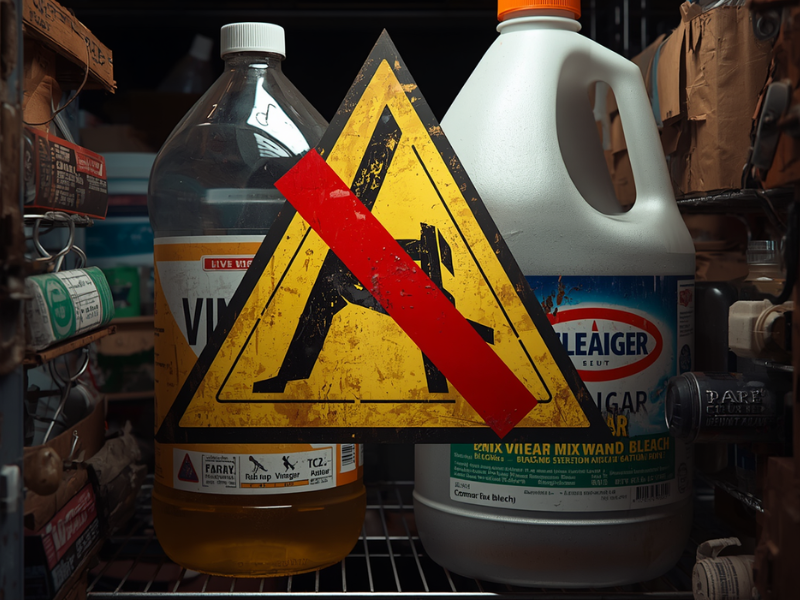
- Never mix vinegar with bleach or chlorine products.
- Always check your appliance manual before using vinegar.
- Use 5% white distilled vinegar only, not stronger “cleaning vinegar.”
- Coffee makers & kettles: 1:1 vinegar to water; soak 20–30 minutes, then rinse with at least 1–2 full water cycles.
- Dishwashers: 1–2 cups vinegar in a cup on the top rack, empty machine, hot cycle, every 2–3 months.
- Showerheads: bag or bowl soak, 30–60 minutes, then flush with hot water.
- Descale occasionally—monthly or quarterly—not every day, to protect seals and finishes.