
Does Vinegar Really Kill Weeds? How to Use It in Gardens and Driveways Without Harming What You Love
This post contains affiliate links to products and books I genuinely use and love. If you buy through my links, I may earn a small commission as an Amazon Associate or through my affiliation with other retailers from qualifying purchases that you make at no extra cost to you.
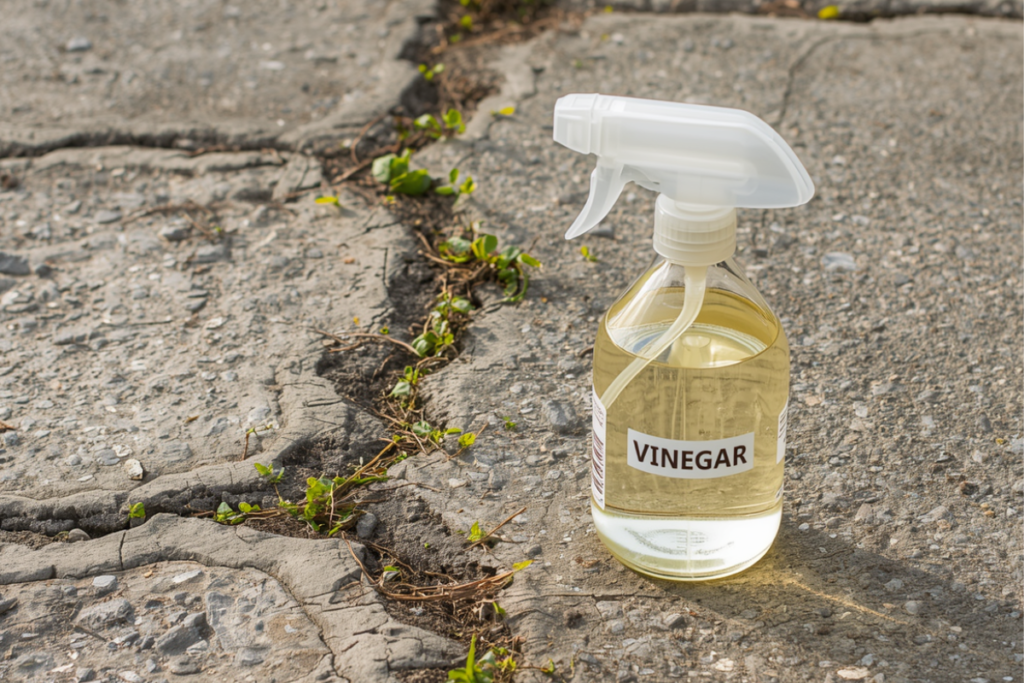
Maybe you’ve been reading about recent lawsuits linking a widely used weed killer to an increased risk of B-cell and T-cell non-Hodgkin lymphoma or are worried about ground water contamination from the chemicals you use to kill weeds in your lawn and driveway. You remember hearing somewhere that vinegar can kill weeds without harmful compounds so you fill a spray bottle with vinegar and begin attacking weeds with a vengeance and a sense of self-satisfaction that you’re doing your part to protect the environment.
Hold on a moment and put that spray bottle down for now. Vinegar is a weed killer, but not in the magic‑wand, “one mist and you never see them again” way the internet loves to promise. And if you’re not careful using vinegar to kill weeds, it’ll happily roast your favorite plants and sterilize your soil for a season or two while it’s at it. The real trick is understanding which vinegar does what, and where it actually makes sense to use it.
I’ve created this post as a sort of field guide and share when vinegar actually works on weeds, how to aim it so you only get the weed you’re after, and what you need to do to keep yourself (and your garden) safe while you’re at it.
Meet the Two Vinegars: Pantry Nice vs. Garden Spice
Let’s introduce the stars of the show.
Pantry vinegar: the friendly bottle you cook with. Usually 4–6% acetic acid, labeled as distilled white or cleaning vinegar. Pantry vinegar is the one you splash into salad dressing and pickle jars. It can singe tender weed leaves, especially if you give it a hot sunny day to help, but it’s more of a “poke” than a knockout punch for big, established weeds.
Horticultural vinegar is the intense cousin who “goes hard or goes home.” Often 20% or more acetic acid, sold as a weed killer or agricultural vinegar. Horticultural vinegar is not kitchen‑cute. It comes with warning labels, strong fumes, and the ability to burn skin and eyes if you get sloppy. It’s still technically vinegar, but we’re talking “strong acid you respect” and most definitely not product “thing you drizzle over cucumbers.”
So…Does Vinegar Kill Weeds or Not?
Yes—but with asterisks. Lots of them.
Vinegar kills by burning and drying out the soft green parts of a plant. Think of it as a very targeted sunburn. When you spray it on a little weed the leaves wilt, shrivel, and turn brown, and the top growth can die off fast, especially in full sun and warm temperatures.
But here’s the catch: vinegar is a contact treatment. It doesn’t travel deep into the roots like some synthetic herbicides do. That means vinegar can take the tiny, young weeds with shallow roots out very effectively, but deep‑rooted perennials and tenacious grasses will only experience a bad week before they send up new growth and pretend nothing happened.
So vinegar is not a silver bullet, even horticultural vinegar. It’s more like a quick, natural smackdown for weeds growing where you don’t care about long‑term soil health or planting anything lovely for a season or two.
Where Vinegar Weed Killer Actually Shines
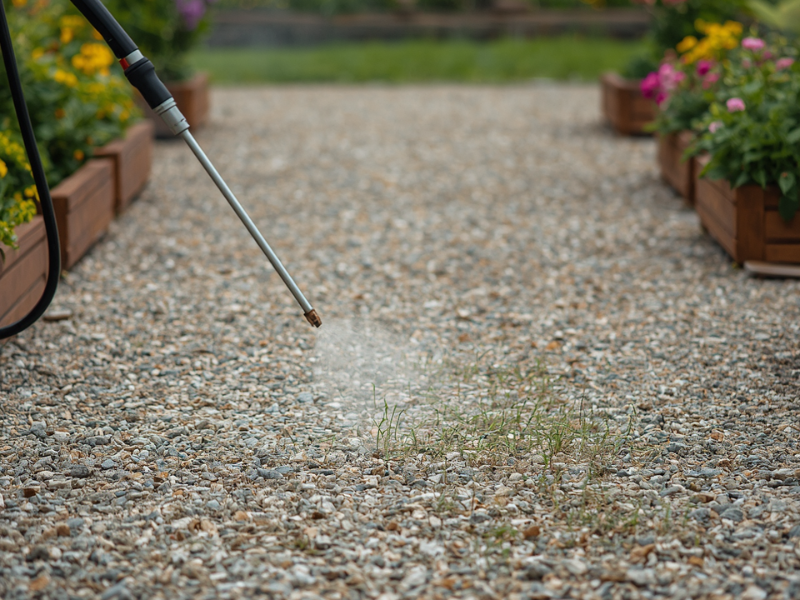
If you pick the right battleground, vinegar is fantastic.
Great places to use it:
- Cracks in driveways and sidewalks
- Gravel paths and in between pavers
- Along fence lines and edges far away from your veggie beds
- That little strip between the garage and the trash cans where only weeds dare to live
In these spots, you’re not trying to nurture rich, worm‑filled soil. You just want the green stuff gone fast, without reaching for something more synthetic.
- Vegetable beds
- Flower borders
- Anywhere your beloved plants are within drifting distance
Vinegar does not care that you paid $22 for that heirloom dahlia tuber. It will fry its leaves just as enthusiastically as it fries a dandelion.
Household Vinegar: How to Use the Bottle You Probably Have in Your Pantry
Let’s talk about the simple stuff first: ordinary 5% white vinegar. If you’re battling a chest‑high thistle that’s been there since the Obama administration, household vinegar will mostly just annoy it. For baby weeds, it’s a different story. Your best targets would be baby weeds (1–4 inches tall), soft‑leafed annual weeds, or the “green fuzz” that appears in cracks after a rain.
Simple Tools for Safer Vinegar Weed Control
This is the workhorse I reach for when I’m softening towels, tackling musty smells, or doing a quick washer clean‑out. Buying it by the gallon keeps costs low and means you’re not constantly running out mid‑laundry day.
Guessing “about a cup” of vinegar is an easy way to overdo it. A little measuring cup or a clearly marked pour bottle makes it simple to add the right amount to your rinse compartment every time without splashing all over the place.
Reduce mess and speed up lawn care with a versatile sprayer that easy is to refill and switches from a fine mist to a focused stream.
Even though vinegar is mildly acidic, I still like to protect my skin from drying out.
I like to keep a pair around for breezy days.
A Simple Vinegar Weed Routine (No Salt, No Drama)
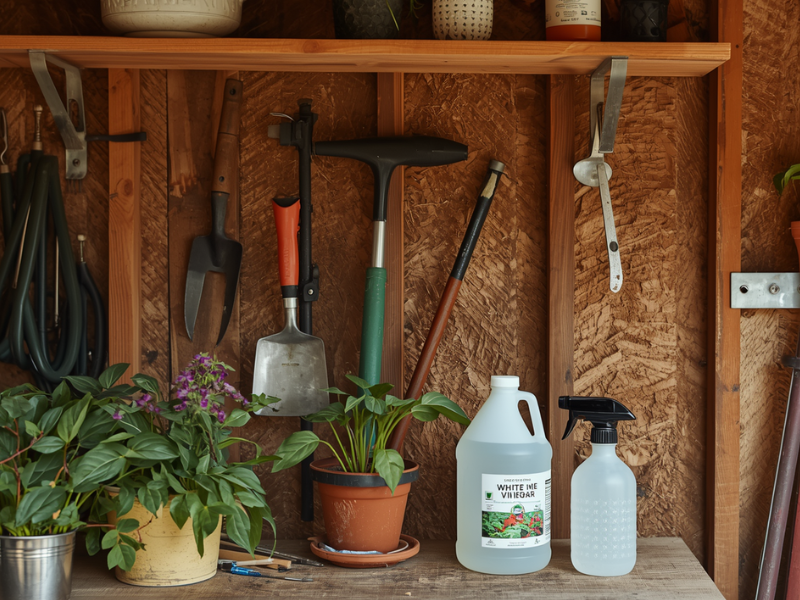
You’ve probably seen recipes on the internet that extol a mix vinegar, dish soap, and salt to eliminate weeds.
I’m going to be the boring voice of reason and say: hold the salt. Salt hangs out in soil and makes it hard for anything to grow there later, and runoff can hurt plants you actually like.
Instead, eschewing the salt, follow these steps:
- Pour undiluted white vinegar (5%) into a spray bottle. You can add a few drops of gentle, biodegradable dish soap to help it stick to glossy leaves.
- Wait for a hot, dry, sunny day because the heat of the sun plus acid equals the end is near for those small, pesky weeds.
- Shield nearby plants with cardboard, a board, an old cookie sheet or cover with a plastic sheet. Spray the weeds just until wet, focusing on the leaves and growing tips, not soaking the soil.
- Come back in 24–48 hours and admire the wilt and pull dead plants. Re‑spray any stubborn green bits.
You’ll probably need to re‑treat certain weeds every few weeks, especially those with deeper roots. That’s normal. Vinegar is a maintenance tool, not a one‑and‑done weapon.
Horticultural Vinegar: For When You Mean Business
Now, for the spicy stuff: 20% (or stronger) horticultural vinegar.
This is no longer “I spilled some salad dressing on my hand.” This is “I’m wearing goggles and gloves because I like my eyes.”
When It Makes Sense
- Stubborn weeds in driveway cracks and sidewalk seams
- Overgrown gravel areas you’re not planning to plant
- Places where you want as close to a scorched‑earth effect as you can get without synthetic herbicides
You still need to be careful with drift and runoff, and you should assume anything green that gets touched is going to have a very bad day.
Safety Gear (Seriously, Do This Part)
- Thick, chemical‑resistant gloves
- Goggles or safety glasses
- Long sleeves and pants
- Ideally, a mask or at least working upwind if fumes bother you
Safety Steps for Horticultural Vinegar
- Decant the horticultural vinegar into a coarse‑spray garden sprayer or use a sponge/brush for dabbing.
- Choose a calm, dry day—no wind, no rain in the immediate forecast.
- Treat only the weeds in cracks and hard surfaces, keeping it away from your beds and lawn.
- Expect fast, dramatic browning within hours on many weeds, and be prepared to scrape/pull once they’re crisp.
You’re trading convenience (no stooping to hand‑pull everything) for needing to treat this liquid with the respect you’d give any strong chemical.
What About Vinegar + Salt + Dish Soap?
Those “viral” DIY weed killer recipes that I mentioned and ‘pooh-poohed’ earlier look wonderfully thrifty, using only vinegar, salt, and dish soap shaken in a jug rather than an expensive commercial weed killer.
The trouble is the salt.
Salt doesn’t just disappear. It builds up in soil and makes it difficult for plants (including future ones) to take up water. Runoff from salted cracks can wash into your lawn, beds, or tree roots and cause damage over time. If you’re working in a spot where nothing will ever need to grow again and you feel fully informed about the risk, that’s your call. But if there’s even a 5% chance that you’ll someday want pansies, herbs, or a kid‑friendly patch of grass nearby, skip the salt. Vinegar alone, used carefully and repeatedly, can still do plenty.
How to Spot‑Treat Cracks Without Nuking Your Garden
Here’s a simple, sanity‑saving routine to follow to stay on top of those pesky, persistent weeds.
- For light, young weeds: 5% household vinegar, undiluted.
- For tougher weeds on hard surfaces only: 20% horticultural vinegar with safety gear.
Step 2: Wait for a Good Weather Window
- Dry day, no rain in the forecast.
- Little to no wind so you’re not misting your roses by accident.
- Use cardboard, a slab of wood, or even a baking sheet as a movable shield.
- Spray low and close to the target instead of waving the nozzle in the air like a victorious warrior.
- Hit only the leaves and crowns of the weeds.
- Don’t pour vinegar into the soil; you’re not dressing a salad.
Step 5: Follow Up with Elbow Grease
- After the weeds brown and dry, scrape or pull them out.
- If you want to really slow them down, refill cracks with polymeric sand or gravel so they have fewer cozy places to sprout.
This is the kind of routine that, once you do it a couple of times, becomes a quick maintenance habit instead of a huge seasonal battle.
A Friendly Reality Check for Garden Beds
If you’re picturing strolling down your veggie rows with a vinegar sprayer instead of hand‑weeding, I’m going to gently tap the brakes. In or near garden beds, vinegar is non‑selective (it’ll torch your lettuce just as happily as your purslane). Just like a weed probably just sees itself as another type of flower, vinegar only sees a plant and isn’t discerning. If it’s green, it’s gone.
Remember, vinegar is:
- Potentially rough on soil life if you use it heavily and often.
- A short‑term fix for top growth, not a deep‑root solution.
For beds and borders, hand‑pulling, hoeing, mulching, and dense planting are still your best long‑term allies. Vinegar’s job is to clean up the hard‑to‑reach cracks and hardscape, where the soil is more of a necessary evil and less of your pride and joy.