
Summer Kitchen Cleaning with Vinegar: Deodorizers & Degreasers
Tame trash smells, fridge funk, greasy stovetops, and stubborn drains with simple vinegar cleaning routines that keep your summer kitchen fresh without heavy fragrances or harsh chemicals.
This post contains affiliate links to products and books I genuinely use and love. If you buy through my links, I may earn a small commission as an Amazon Associate or through my affiliation with other retailers from qualifying purchases that you make at no extra cost to you.
Summer is a joy for fresh produce, grilling, and big icy drinks, but it can be rough on the kitchen. Warmer temperatures turn “slightly stinky” trash into “who left a science experiment in here?” in record time. A little bacon splatter plus a few days of humidity can make your stovetop feel like it’s wearing a sticky film. The fridge starts to smell like something you can’t quite pinpoint or determine which forgotten leftover container is the culprit. Sink and shower drains? Let’s just say they develop a personality of their own.
This is when I lean hard on vinegar as my go-to summer kitchen cleaning helper. Distilled white vinegar, especially, is one of the easiest, safest tools you can keep under the sink for deodorizing and degreasing in hot weather. It won’t do every job in the house, but for summer kitchen annoyances, it’s a workhorse.
Hot weather can make kitchen odors, greasy surfaces, damp towels, and food residue more noticeable. This summer kitchen cleaning guide explains how to use vinegar for suitable deodorizing and degreasing tasks while avoiding surfaces that can be damaged by acids.
Why Summer Smells Worse (and What Vinegar Can Do About It)
Summer is basically the perfect storm for kitchen odors and grease.
- Heat speeds up bacterial growth and food breakdown, so scraps in the trash or bits of sauce on the side of a container start to smell faster.
- Humidity holds smells in the air and makes sticky films cling more stubbornly to surfaces.
- Open windows and fans spread cooking odors farther instead of containing them.
Traditional cleaners can mask these issues with heavy fragrance, but they often leave behind residues and fumes that I don’t want around when I’m prepping food. Summer kitchen cleaning with vinegar takes a different approach. It:
- Cuts through light grease and film by dissolving mineral deposits and loosening fatty residues.
- Helps neutralize many everyday acidic or alkaline odors instead of just covering them with perfume.
- Evaporates cleanly without leaving behind a long‑lasting chemical scent.
It’s not a hospital-grade disinfectant, and it won’t magically erase every kind of smell, but for day‑to‑day summer kitchen problems, it earns its spot in my pantry.
A Few Quick Safety Notes for Summer Kitchen Cleaning
- Stick to glass, stainless steel, enamel, and most plastics.
- Avoid natural stone like granite and marble; vinegar can etch and dull the finish.
- Don’t use vinegar on raw cast iron or certain uncoated metals that might pit.
With that in mind, let’s get into the hotspots where vinegar is the summer kitchen cleaning hero.
My Summer Kitchen Cleaning with Vinegar Toolkit
- Distilled White Vinegar – The hero of your vinegar cleaning solutions.
- Apple Cider Vinegar – For those who want a fruitier scent when cleaning with vinegar
- Baking Soda – Excellent when mixed with vinegar for especially stubborn messes.
- Cleaning Bucket – I like heavy duty buckets that are easy to pour when emptying.
- Glass Spray Bottle – I can always find dozens of uses for multifunctional, recyclable spray bottles.
- Non-Scratch Sponges – These eco friendly sponges gently remove grease and grime from all surfaces.
- Microfiber Cloths – Ideal for all of your summer outdoor cleaning needs.
- Glass Measuring Cup – For accurate measurements when mixing vinegar kitchen cleaning solutions
- Rubber Gloves – Even though the acid volume in vinegar cleaning solutions is modest, it doesn’t hurt to protect your hands.
- Essential Oil – Give your vinegar cleaning solutions a fresh scent with the essential oil of your choice.
Deodorizing Trash Cans and Recycling Bins
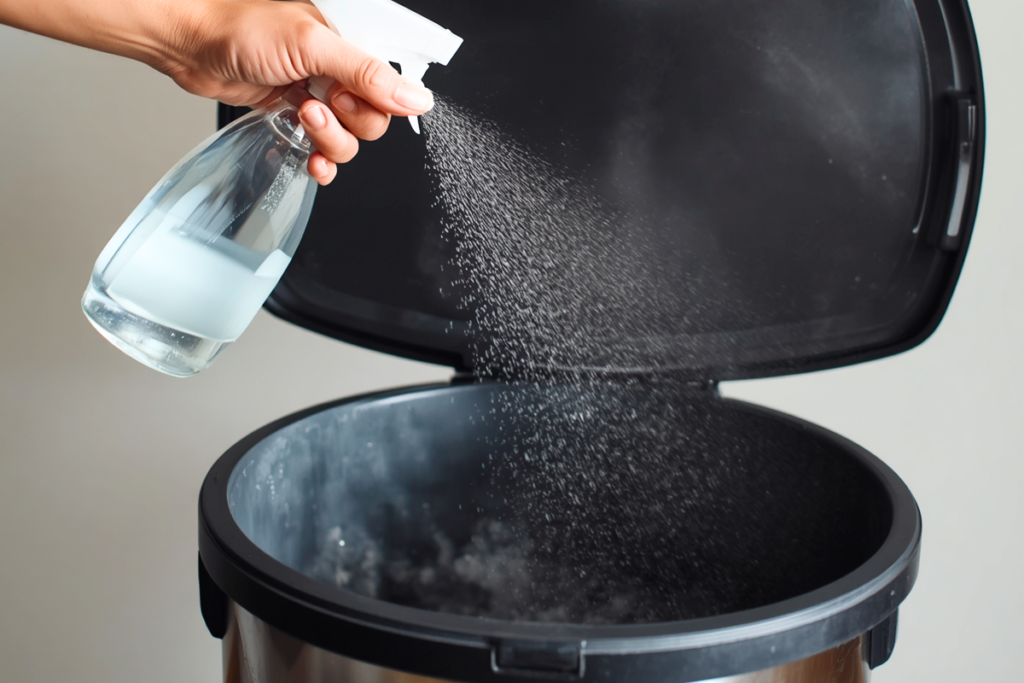
Trash is the most obvious summer troublemaker. Food scraps break down faster, and that sour, sweet, not‑quite‑right smell can fill a kitchen, especially in smaller homes.
A simple natural kitchen deodorizer with vinegar helps in two ways: it cuts down lingering residue in the bin itself, and it helps neutralize odors in the liner, especially if you add a drop or two of a favorite essential oil into the vinegar cleaning solution before your summer kitchen cleaning.
Quick Trash Can Reset with Vinegar Cleaner
- Take the bag out and dispose of it.
- Rinse the empty can or pull‑out bin with warm water.
- Spray generously with a mixture of equal parts white vinegar and water (and a drop or two of essential oil if desired).
- Let it sit for 5–10 minutes, then wipe dry with a cloth or paper towels.
- For extra deodorizing power, sprinkle a tablespoon or two of baking soda in the bottom before you add a new bag.
Do this once a week in summer (or any time you notice things getting ripe). It takes a few minutes and keeps that “what’s that smell?” feeling from becoming your kitchen’s default setting.
If you compost, you can use a similar spray for your countertop container between loads. Just make sure it’s fully dry before you line it again.
Keeping Summer Fridge Funk Under Control with Vinegar

Summer fridges work overtime and seem to overflow with abundance. There’s more fresh produce, always leftovers from barbecues, drink bottles, and maybe the occasional container you meant finish but that slipped out of sight behind the condiments.
You don’t need a complicated summer kitchen cleaning routine here. It only takes a gentle, regular wipe‑down that keeps spills, rings, and tiny mystery drips from building up.
Fridge Wipe‑Down Vinegar Solution (How‑to #1)
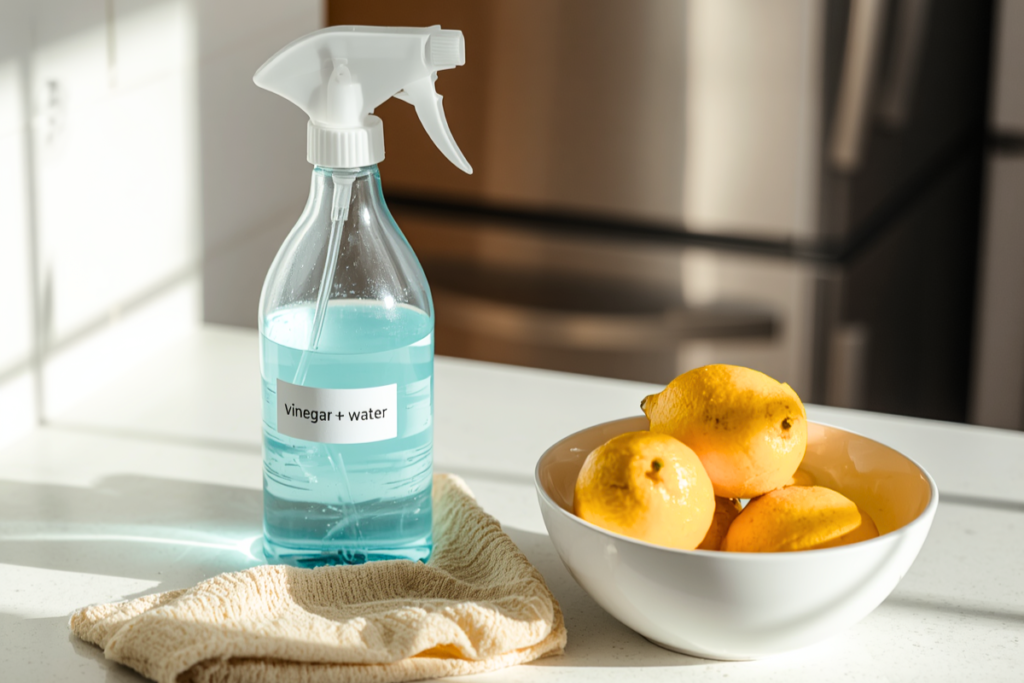
This is a simple mix you can keep in a labeled spray bottle just for the fridge and interior cabinets.
You’ll need:
- 1 cup distilled white vinegar
- 1 cup water
- Optional: a few drops of lemon or orange essential oil
To mix:
- Pour the vinegar and water into a clean spray bottle.
- Add optional essential oil if you want a lighter scent.
- Label the bottle so you remember what’s inside.
To use:
- Take out any old food and obvious offenders. Toss what needs to go.
- Remove fridge shelves or drawers that are heavily soiled and wash them in warm, soapy water in the sink.
- Spray the interior surfaces – walls, fixed shelves, and door bins – with your vinegar solution.
- Let it sit for a minute or two on sticky spots, then wipe with a soft cloth or sponge.
- Dry with a clean towel before putting everything back.
The vinegar helps cut through light greasy films and sugary spills, and it leaves the fridge smelling clean but not perfumey. You can use the same solution for pantry shelves and cabinet interiors (as long as they’re not unfinished natural stone).
Dealing with Greasy Summer Stovetops and Microwaves During Summer Kitchen Cleaning
Grease is a year‑round issue, but in warm weather it feels extra clingy. A little cooking oil plus airborne humidity and dust can turn your stovetop or hood into a sticky film that grabs every crumb.
Vinegar alone can handle light grease during a summer kitchen cleaning, and for heavier buildup this simple vinegar degreaser for stovetops pairs beautifully with dish soap or baking soda.
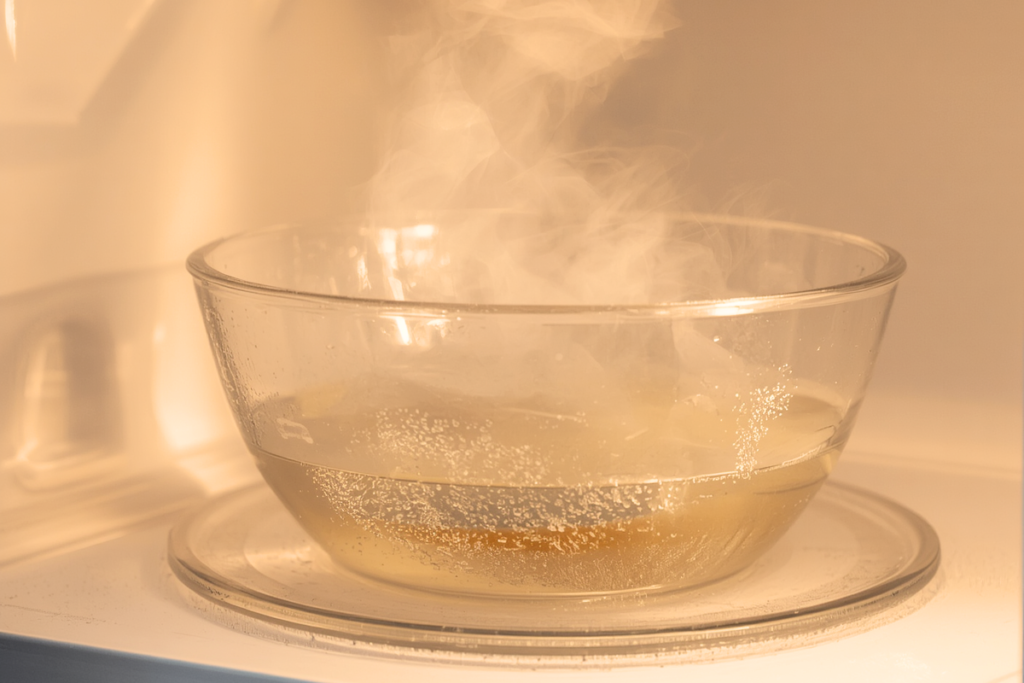
Vinegar Microwave Steam Clean (How‑to #2)
This is one of the easiest and most satisfying vinegar tricks for summer kitchen cleaning. It’s amazing how easily microwave messes clean up in one or two wipes.
You’ll need:
- 1 cup water
- 1 cup white vinegar
- Microwave‑safe bowl
- Optional: a few lemon slices
Steps:
- Combine the vinegar and water in the bowl. Add lemon slices if you like.
- Microwave on high for 3–5 minutes, until it’s boiling and producing lots of steam.
- Leave the door closed for a few more minutes so the steam can loosen splatters.
- Carefully remove the bowl (it will be hot).
- Wipe the interior with a sponge or cloth. Most grime should slide right off.
- If needed, dip your cloth in the hot vinegar mixture for stubborn spots.
The steam does most of the work, and the vinegar helps cut through greasy film and lingering food smells.
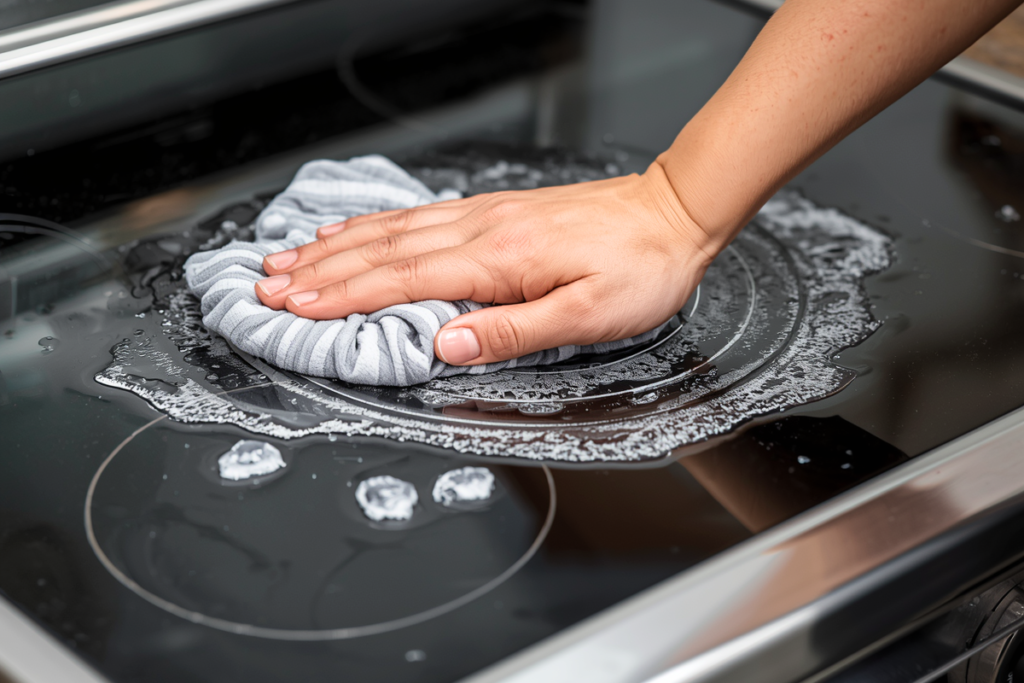
Quick Vinegar Stovetop and Hood Degreaser
For glass, enamel, or stainless stove surfaces:
- Wipe off loose crumbs first.
- Spray a 1:1 mix of vinegar and warm water over the surface.
- Let sit 2–3 minutes.
- Wipe with a soft cloth.
- For stuck‑on grease, sprinkle baking soda first, then spritz with vinegar and gently scrub.
Skip this on natural stone counters surrounding the stove; use a stone‑safe cleaner there instead.
Freshening Kitchen Drains with Baking Soda and Vinegar
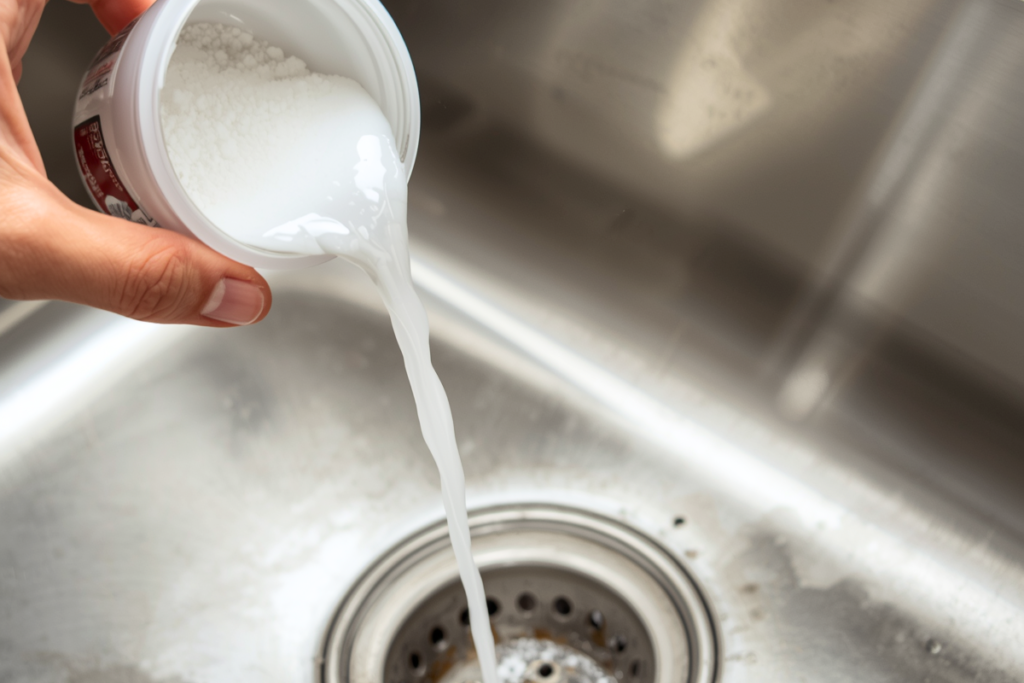
Warm weather drains can start to smell even when they’re technically “clean.” Bits of food, soap scum, and grease cling to the sides of pipes, and heat makes those odors more noticeable.
Vinegar won’t unclog a seriously blocked drain, but it pairs beautifully with baking soda for a gentle clean‑out and deodorizing when used for a summer kitchen cleaning.
Baking Soda and Vinegar Drain Freshener (How‑to #3)
his classic baking soda and vinegar drain freshener is a gentle way to keep summer smells in check.
You’ll need:
- ½ cup baking soda
- 1 cup white vinegar
- Hot water
Steps:
- Sprinkle the baking soda directly into the drain.
- Slowly pour the vinegar over it. It will fizz and foam—that’s normal and helpful.
- Let the mixture sit and do its thing for 10–15 minutes.
- Flush with hot water for a minute or so.
You can repeat this once a week as part of a summer kitchen cleaning routine or whenever you notice a hint of odor. It helps clear out some built‑up gunk on the sides of the drain and keeps things smelling fresher.
(A quick note: don’t do this right after using a commercial drain cleaner; mixing products can be unsafe.)
Putting It All Together: A Simple Summer Kitchen Routine → A Simple Summer Kitchen Cleaning Routine with Vinegar
You don’t have to turn summer kitchen cleaning into a second job. A light, regular routine beats heroic deep cleans every time, especially when it’s hot. If your summer life spills outside as much as it does through the kitchen, you might also like my guide to natural summer cleaning with vinegar for decks, grills, and outdoor gear, where I use the same simple vinegar solutions to tame patio grime and mildew.
Here’s one easy rhythm:
- Once a week:
- Wipe the fridge with your vinegar solution.Rinse and spray the trash can before swapping liners.
- Rinse and spray the trash can before swapping liners.
- Run the baking soda + vinegar freshener through your main kitchen sink drain.
- As needed:
- Steam‑clean the microwave after big splatters.Do a quick stovetop and hood wipe with warm vinegar solution whenever surfaces feel sticky.
- Do a quick stovetop and hood wipe with warm vinegar solution whenever surfaces feel sticky.
- Freshen compost and recycling bins with a vinegar spray and air‑dry in the sun.
The more you fold summer kitchen cleaning into your normal flow—after taking out trash, while something simmers on the stove, or before you sit down at night, the less your kitchen’s summer personality will veer into “mysterious smells and sticky surfaces.”
Vinegar won’t solve every cleaning problem, but for keeping the heart of your home feeling breathable, food‑safe, and calm through the hottest months, a jug or two and a couple of spray bottles can go a very long way.
if you’re already firing up the grill, my post on vinegar marinades for summer grilling (plus easy grill cleaning with vinegar) walks through flavor‑packed marinades and a few more ways to put that jug of vinegar to work outside.
Can I use vinegar to clean every surface in my summer kitchen?
Vinegar is wonderfully versatile, but it’s not an all‑terrain cleaner. It’s a great match for glass, stainless steel, enamel, many plastics, and the inside of most fridges and microwaves. Where I draw the line with vinegar during summer kitchen cleaning is natural stone like granite or marble, raw cast iron, and certain uncoated metals that can pit or dull over time. When in doubt, I spot‑test in a hidden corner or fall back on a cleaner made specifically for that surface.
Does vinegar really get rid of kitchen smells, or does it just cover them up after a summer kitchen cleaning?
Vinegar isn’t a perfume; it actually helps neutralize many everyday acidic or alkaline odors instead of just layering a new scent on top. A quick trash‑can reset, a fridge wipe‑down, or a baking‑soda‑and‑vinegar drain freshener can make a surprising difference in how a summer kitchen smells. That said, if something is truly rotten or moldy, summer kitchen cleaning is the second step, not the first. Step one is always to throw out the culprit and fix the underlying cause.
Is it safe to mix vinegar with other cleaning products in the kitchen?
Vinegar plays very nicely with simple partners like baking soda and a bit of mild dish soap for summer kitchen cleaning, which is what I stick to in my own kitchen. What I avoid is mixing vinegar with commercial cleaners, especially anything containing bleach or strong acids. Those combinations can create dangerous fumes or reactions. If you’ve recently used a commercial drain opener or heavy‑duty cleaner, skip the vinegar experiments in that spot until everything is thoroughly rinsed and flushed with plenty of plain water.