
How to Deodorize Summer Laundry and Household Odors with Vinegar
Tackle musty towels, sweaty gym clothes, pet bedding, and damp summer rooms with simple vinegar laundry rinses and fabric‑safe sprays that neutralize odors instead of covering them in heavy fragrance.
This post contains affiliate links to products and books I genuinely use and love. If you buy through my links, I may earn a small commission as an Amazon Associate or through my affiliation with other retailers from qualifying purchases that you make at no extra cost to you.
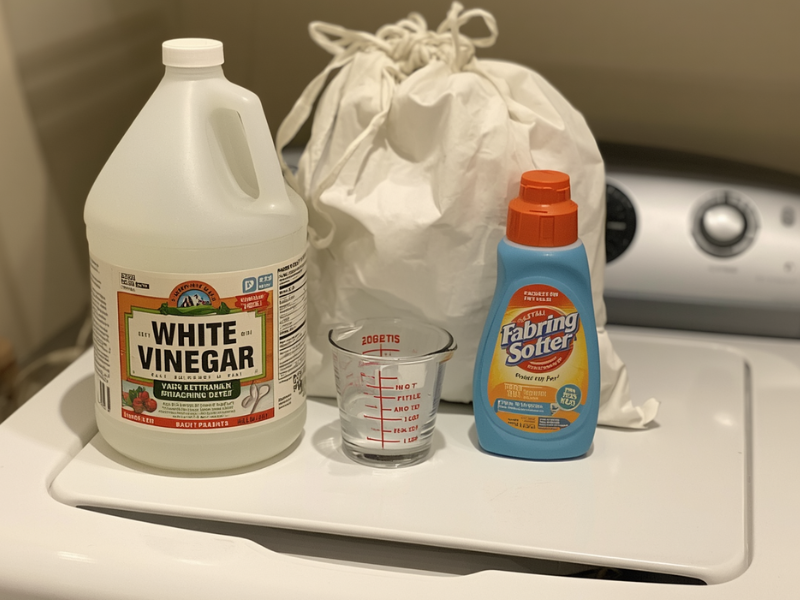
Summer odors have a way of taking over household areas and stopping you in your tracks.
One minute it’s a damp towel tossed over a deck chair that grows fusty in the summer heat. They grow by the door where somebody left sweaty gym gear. If you’ve got a dog, you can almost bet that at some point your furry friend will roll in something mysterious that must smell great to a canine but makes us humans gag. Of course, there’s the never-ending battle with the smells emanating from the laundry basket.
The good news is that vinegar is one of the simplest, cheapest ways I know to deodorize summer laundry and tackle those warm-weather smells without loading fabrics and rooms with heavy synthetic fragrance. When used properly, it helps neutralize odors, freshen washable items, and cut through the stale, musty funk that humidity seems determined to amplify all summer long.
How Vinegar Deodorizes Summer Odors in Laundry and Fabric
Warm weather makes everyday smells stronger for a few very basic reasons:
- Heat speeds up bacterial growth
- Humidity slows drying time
- Fabrics hold onto sweat, body oils, and dampness longer than they do the rest of the year.
That’s why gym shirts, bath towels, pet bedding, and even lightly worn summer clothes can develop that “not exactly dirty but definitely not fresh” smell so quickly.
This is where vinegar shines. Distilled white vinegar is a mild acid that helps dissolve residue, loosen odor-trapping buildup in fabrics, and deodorize cloth and surfaces without leaving behind the lingering chemical trail that many commercial products do. It’s also biodegradable, budget-friendly, and safe to use around families and pets when diluted and used with a little common sense.
Why Vinegar Can Deodorize Summer Laundry So Well
One of my favorite things about vinegar cleaning is how uncomplicated it is. If you can measure a quarter cup, fill a spray bottle, and remember a couple of “don’t use it on this” rules, you’re in business.
Vinegar helps deodorize summer laundry by rinsing away detergent residue, softener buildup, trapped body oils, and the kind of stale moisture that can make clean fabrics smell like they’ve been sulking in a basement. That matters even more in summer. Towels get used more often, swimsuits stay damp, pet bedding collects more dirt and dander, and workout clothes seem to absorb half the season into their fibers.
Instead of masking that buildup with perfume, to deodorize summer laundry vinegar helps strip away some of what’s causing the smell in the first place. I used to get frustrated when after washing a smelly sports top it comes out smelling fine, but the moment I begin sweating again, old odors return. That’s not the case when I add vinegar to the wash. The smells stay away without leaving an acetic scent behind.
My Toolkit to Deodorize Summer Laundry and Eliminate Odors with Vinegar
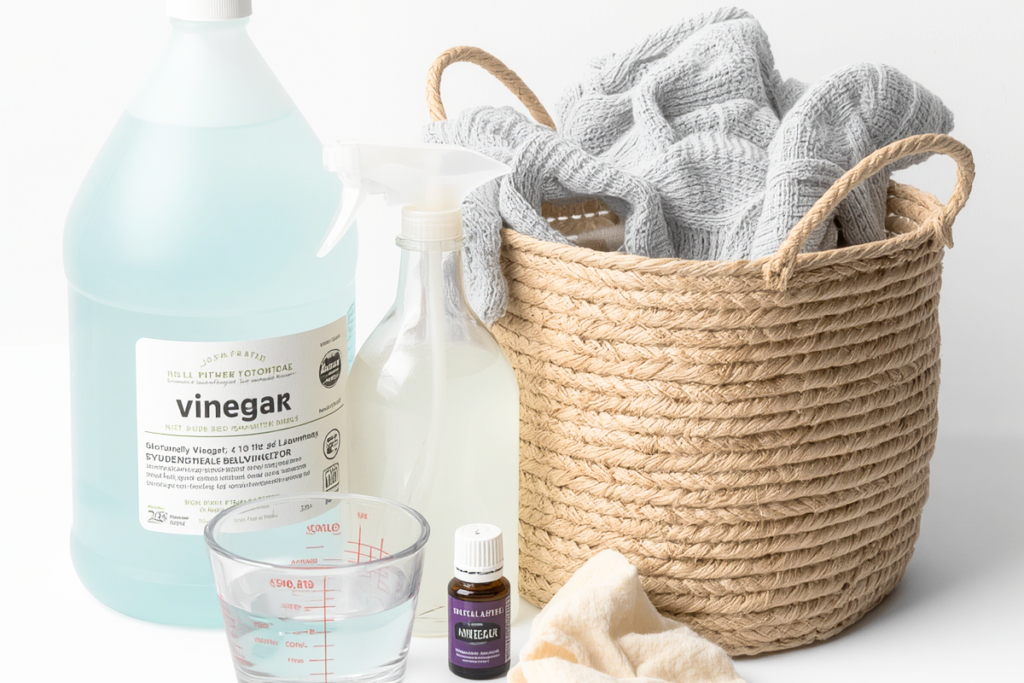
These are the tools I reach for most when I’m trying to keep summer smells from taking over the laundry basket and pet corners.
- Distilled white vinegar by the gallon – The backbone of everything to deodorize summer laundry is here: laundry rinses, fabric sprays, hamper wipes, and washer clean‑outs.
- Liquid measuring cup with clear markings – Makes it easy to pour 1/4 to 1/2 cup vinegar into the fabric softener dispenser or rinse cycle without guessing.
- Durable glass spray bottles (at least two) – One for light room/fabric mist, one for stronger pre‑laundry odor spray; labels keep you from mixing them up.
- Fragrance‑free or low‑residue laundry detergent – Plays nicely with vinegar and helps cut down on softener and perfume buildup in towels and activewear.
- Microfiber cloths and small cleaning towels – Handy for wiping hampers, laundry baskets, washer gaskets, and mudroom rugs with your vinegar solutions.
- Essential oils (lavender, lemon, or tea tree) – Just a few drops in fabric‑safe sprays give a light, natural scent without turning the house into a perfume counter.
- Washable pet bedding and covers – If you link to pet beds with removable, machine‑washable covers, this post is the perfect place to explain why they’re worth it.
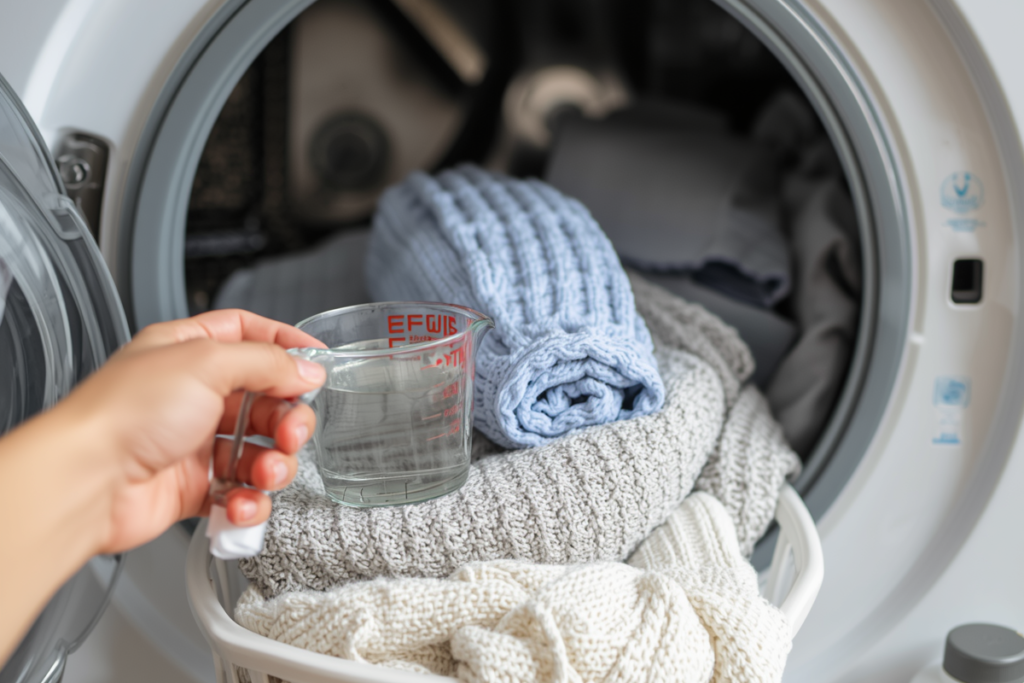
Laundry Rinse Ratio: How to Deodorize Summer Laundry and Towels with Vinegar
If you only use one vinegar trick when you deodorize summer laundry this summer, make it this one.
Vinegar Laundry Rinse
- 1/4 cup distilled white vinegar for a regular load[1]
- Up to 1/2 cup for heavily musty towels or extra-sweaty gym loads
- Add it to the fabric softener dispenser or the rinse cycle, not directly over dry clothes
This works especially well for:
- Bath towels that smell musty even after washing
- Gym clothes and synthetic activewear
- Washable pet bedding and blankets
- Dish towels and cleaning cloths that sour quickly in humid weather
The vinegar smell will usually disappear when you deodorize summer laundry as the load dries, especially if you dry items thoroughly and don’t let them sit in the washer for hours plotting their mildew comeback.
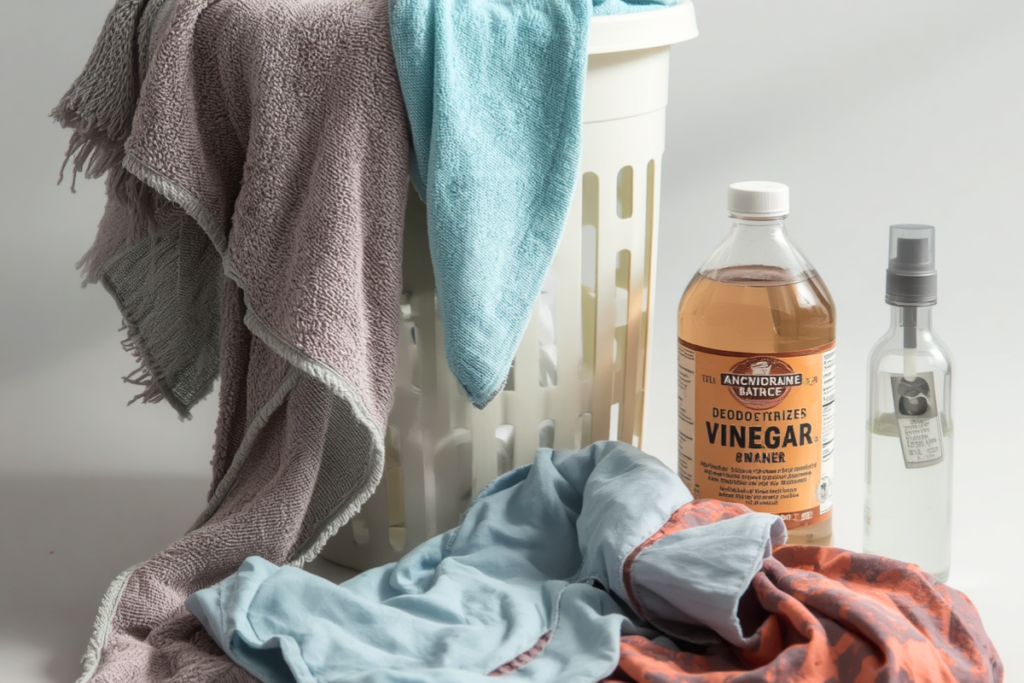
How to Fix Musty Towels and Smelly Gym Clothes with Vinegar
Summer towels are sneaky. They may look clean enough, but if they stay damp too long, they develop that unmistakable sour smell that no one wants near their face after a shower. Gym clothes are worse. Technical fabrics trap sweat and oils so effectively so that even freshly washed items can make it seem like you’ve just finished spin class.
A Simple Routine Helps Deodorize Summer Laundry
- Wash towels promptly rather than letting them pile up damp.
- Use hot water if the care label allows.
- Add the vinegar rinse ratio above.
- Dry completely before folding or tossing into a basket.
For especially stubborn towels, run a wash cycle with detergent, then run a second rinse with 1/2 cup vinegar before drying. For gym clothes, skip heavy fabric softeners because they can coat the fibers and trap odors more stubbornly over time. Vinegar is a much better solution all summer long.
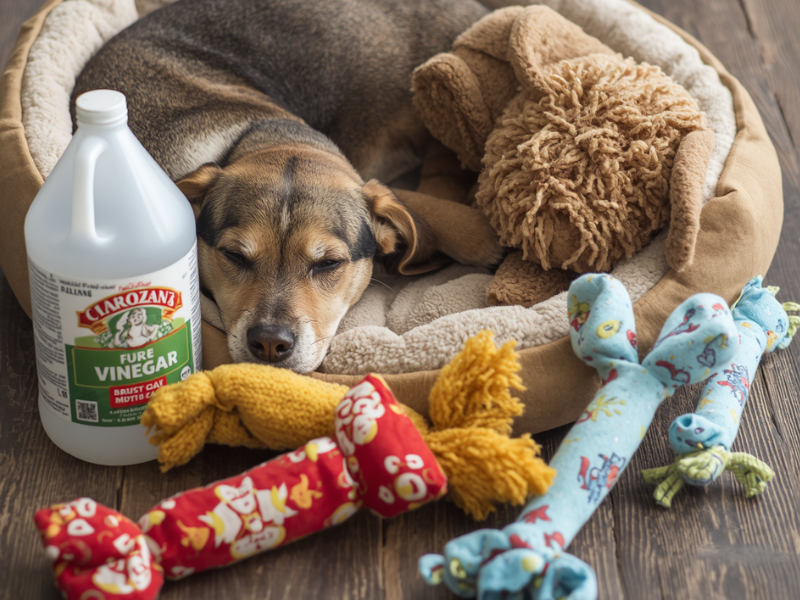
Using Vinegar to Deodorize Pet Bedding and Humid‑Weather Funk
I love my dog, but it seems the things that make him so much fun like the playfulness, the inquisitiveness, and that drive to explore every object we come across on our walks creates some problems in summer.
It’s those smells the dog leaves behind on bedding, blankets, and washable mats in July that take over his corner of the room. Summer pet smells tend to be a combination of fur, skin oils, outdoor dirt, drool, and that warm-weather “eau de dog” that seems to bloom the minute the humidity climbs.
Washable pet bedding benefits from the same vinegar rinse approach:
- Use your usual detergent.
- Add 1/4 to 1/2 cup distilled white vinegar to the rinse cycle.
- Dry thoroughly before returning it to your pet.
You can also lightly mist washable pet blankets with a diluted vinegar spray before laundering if they’ve picked up a particularly stubborn smell. Just test a small area first and don’t saturate them. The goal is to freshen, not pickle the dog’s favorite nap spot.
Vinegar Spray Ratios to Deodorize Household Rooms and Fabrics
Vinegar can also help freshen air-adjacent surfaces and fabrics in a room, especially when the odor is coming from damp fabric, stale upholstery, or a laundry basket that’s trying to become self-aware.
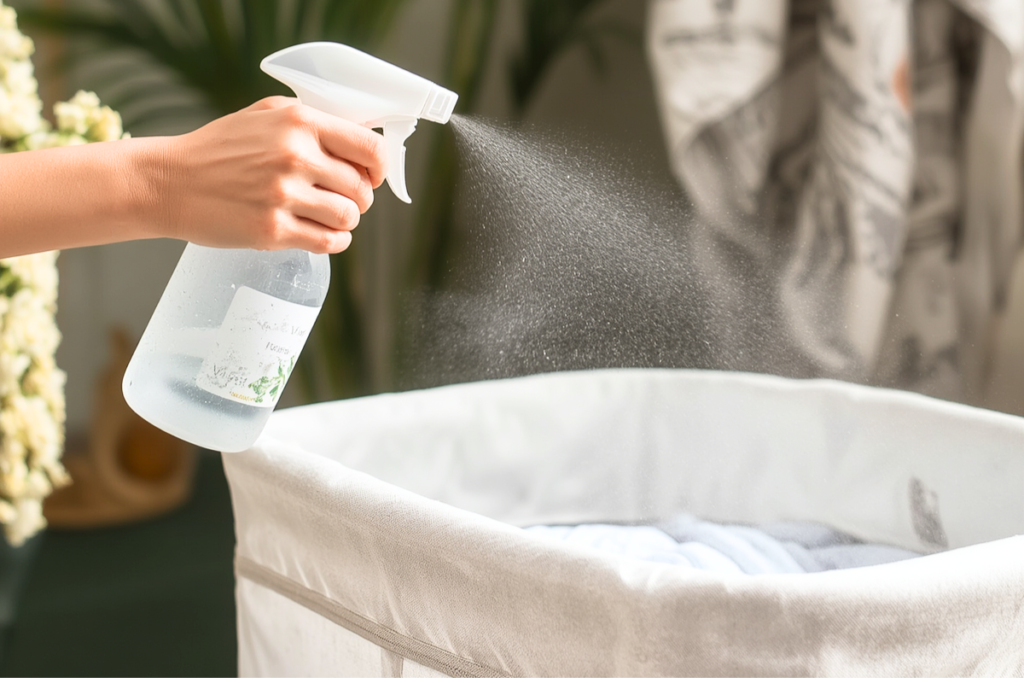
Simple Room and Fabric Freshening Spray
- 1 cup water
- 1/4 cup distilled white vinegar
- Optional: a strip of lemon peel or 5 drops of lavender, lemon, or tea tree essential oil
Add everything to a clean spray bottle and shake gently. Use it as a light mist on washable fabric surfaces, laundry hampers, mudroom rugs, pet areas, and non-delicate upholstery after spot-testing first. It’s particularly handy for:
- Fabric laundry baskets
- Musty bathroom rugs
- Washable entry mats
- Upholstered chairs that absorb summer sweat and sunscreen smell
- Pet sleeping corners
Keep the mist light. You want a refresh, not a soak.
Stronger Vinegar Pre‑Laundry Spray for Towels and Hampers
For truly stubborn warm-weather smells, you can go a bit stronger on items that are headed for the wash anyway.
Pre-Laundry Odor Spray
- 1/2 cup distilled white vinegar
- 1/2 cup water
Mist sweaty gym shirts, towel piles, pet blankets, or the inside of a laundry hamper and let sit for 10 to 15 minutes before washing. This is especially useful to deodorize summer laundry when you can’t run a load immediately but don’t want the smell to gain momentum.
Fabrics to Avoid When Deodorizing Summer Laundry with Vinegar
This is the part worth remembering, because vinegar is helpful, but it is not invited to everything. Avoid using vinegar on:
- Silk
- Rayon
- Acetate
- Delicate wool blends unless you know the garment tolerates acid well
- Vintage fabrics or anything with unstable dyes
- Leather, suede, or dry-clean-only materials
It’s also smart to be careful with elastic-heavy performance wear if you’re using very strong undiluted vinegar repeatedly. A diluted rinse now and then is generally fine for washable activewear, but constant heavy acid exposure is not the path to a long, happy relationship with your favorite leggings. As always, test first when in doubt.
Extra Summer Deodorizing Habits to Pair with Vinegar
Vinegar helps a lot, but it works best when paired with a few practical habits to deodorize summer laundry that keep smells from setting up permanent residence.
- Hang towels spread out so they dry quickly between uses.
- Wash swimsuits, gym clothes, and pet bedding more often in humid stretches.
- Leave the washer door open between loads so the machine itself doesn’t get musty.
- Run a cycle with half a cup of vinegar with hot water twice a month to prevent mold buildup
- Clean out hampers, laundry baskets, and mudroom bins once in a while with a quick vinegar wipe or spray.
- Dry items completely before folding, storing, or pretending you’ll “put them away later.”
Summer can be a very busy season, but taking the time to build a routine to deodorize summer laundry will be the difference between laundry that smells fresh and laundry that smells like it made a few poor life choices overnight.
Deodorize Summer Laundry with Vinegar to Keep Summer Smells from Settling In
What I like most about when I deodorize summer laundry with vinegar is that it’s easy.
You don’t need a shelf full of specialty odor eliminators for towels, pet bedding, sports fabrics, and mystery household funk. A jug of distilled white vinegar, spring water, some essential oils, a spray bottle, and a few simple ratios is enough to deodorize summer laundry and can carry a surprising amount of the load.
And in a season where everything feels a little warmer, damper, and more fragrant than necessary, that kind of simple solution is exactly what I want. Not a cloud of fake “linen breeze.” Just towels, gym clothes, pet bedding, and rooms that smell clean again—and like real life, only better.
FAQs About Hot To Deodorize Summer Laundry with Vinegar
Can I use vinegar in every load of laundry to control summer odors?
You don’t have to, but a regular vinegar rinse is perfectly fine for most everyday loads, especially towels, gym clothes, and pet bedding. For a typical summer laundry basket, I like to add 1/4 cup distilled white vinegar to the fabric softener dispenser or rinse cycle and bump up to 1/2 cup for extra‑musty towels or heavily sweaty workout gear. As long as you avoid delicate fabrics that don’t love acid, repeated use is generally safe and can actually help cut down on residue buildup when you deodorize summer laundry.
Will my clothes smell like vinegar if I use it to deodorize summer laundry?
They shouldn’t, as long as you’re using reasonable amounts and drying items thoroughly. The vinegar scent is strong in the washer, but it usually disappears as the load dries—especially if you don’t let clean laundry sit damp in the machine or pile up in a corner. If you’re nervous, start with 1/4 cup and work up, and reserve higher amounts for the stinkiest loads rather than daily basics.
Are there fabrics I should avoid when I deodorize summer laundry with vinegar?
Yes. Vinegar is great on sturdy everyday materials and terrific to deodorize summer laundry, but it’s not invited to everything. I steer clear of silk, rayon, acetate, delicate wool blends, vintage or unstable‑dye fabrics, leather, suede, and anything labeled dry‑clean‑only. I’m also cautious with elastic‑heavy performance wear if we’re talking about frequent strong undiluted vinegar soaks. A diluted rinse now and then is usually fine for activewear, but constant heavy acid exposure isn’t the friend your favorite leggings need, so when in doubt, test first or skip it.