
Vinegar for Dandruff, Itchy Scalp, and Hair Rinse: What Works and What’s Just Messy
This post contains affiliate links to products and books I genuinely use and love. If you buy through my links, I may earn a small commission as an Amazon Associate or through my affiliation with other retailers from qualifying purchases that you make at no extra cost to you.
If you’ve ever scratched your head (literally) while scrolling through “ACV for dandruff” hacks, you already know the problem. One person swears a vinegar rinse cured their flakes overnight and another says it fried their curls and left their scalp burning.
As someone who loves vinegar but also cares about safety and science, I want this to be a common-sense guide to what vinegar can realistically do for dandruff, itch, and hair shine, how to use it without wrecking your scalp barrier, and when it’s time to ditch the DIY and consult a dermatologist.
Why Vinegar Shows Up in Scalp and Hair Routines
Before we talk recipes, let’s talk “why” so you’re not just making your hair smell like salad dressing (temporarily) for no reason.
Your scalp and hair naturally sit in a slightly acidic pH zone (roughly 4.5–5.5). Many shampoos, hard water, and styling products tilt things more alkaline, which can leave hair cuticles raised and scalp feeling off. Apple cider vinegar and other vinegars are acidic (around pH 2–3) and can temporarily pull surface pH back toward where your scalp and hair like to live.
On top of that, lab and in‑vitro work suggest that vinegar promotes antifungal activity, including against Malassezia species tied to dandruff and seborrheic dermatitis. Vinegar has shown that it can help dissolve product buildup and excess oil and may smooth the hair cuticle, which can mean more shine and less frizz.
The catch? We have theory, lab data, and anecdotes but not one big, gold‑standard clinical trial showing that ACV rinses “treat” dandruff the way medicated shampoos do.
ACV for Dandruff and Itchy Scalp: What’s Real, What’s Hype
So, is there something scientific happening using vinegar for dandruff or is it all voodoo?
Where Vinegar Might Actually Help With Hair Care and Scalp
Dermatology and hair‑care sources are cautiously optimistic about a areas where the use of vinegar for scalp care shows promise.
Eliminating Mild Flakes and Itch
A diluted ACV rinse might help some people with mild, occasional flaking or itch by reducing surface yeast and restoring pH.
Cleansing Greasy, Product‑Loaded Scalps
The clarifying effect of a rinse helps remove residue that’s weighing hair down or clogging things up.
Adding Shine and Smoothness
By helping the cuticle lie flatter, vinegar can make hair look glossier and feel smoother, especially if you’re dealing with dullness from hard water or heavy products.
Where the Hype Gets Ahead of the Evidence
On the other hand, experts are pretty blunt about ACV’s limits.
Lack of Strong Research
There’s no strong clinical proof that ACV cures dandruff, seborrheic dermatitis, psoriasis, or serious scalp disease.
Stronger Proof for Medicated OTC Shampoos
Medicated shampoos with ingredients like ketoconazole, zinc pyrithione, selenium sulfide, or salicylic acid have far better evidence for treating moderate‑to‑severe dandruff.
A Helper, Not Necessarily a Hero
ACV should be seen as an adjunct or occasional helper for mild issues and not a primary treatment for anything serious. If your scalp is angry, inflamed, or shedding like crazy, it’s time for a professional.
The Dark Side of DIY: How Vinegar Can Damage Hair and Scalp
This is where the “fear of damaging hair” is totally valid.
Dermatologists and hair experts have seen real problems from overly enthusiastic ACV use:
- Scalp irritation and burning (especially with eczema, psoriasis, or broken skin)
- Chemical burns when undiluted vinegar sits on skin or scalp for too long
- Worsening redness and flaking in people already dealing with seborrheic dermatitis
- Dry, brittle hair, especially on bleached, color‑treated, or naturally dry textures
- Disrupted scalp barrier and increased moisture loss from the skin
One review even points out that acidic soaks can increase skin irritation and water loss when used incorrectly, which is the opposite of what you want when you’re already itchy.
Takeaway: vinegar belongs in the “use carefully and occasionally” category—not the “dump it on, leave it for an hour, and repeat every wash” category.
How to Use Vinegar on Hair and Scalp Safely
If your scalp is generally healthy and you’re curious about vinegary shine or a light reset, here’s a safer, dermatologist‑friendly pattern.
Step 1: Dilution is Everything
Most cautious sources recommend something around 1–2 tablespoons apple cider vinegar diluted in at least 1 cup (8 oz) of water in a glass spray bottle. If you’re sensitive, start at the gentlest end of the vinegar dose with 1 tablespoon ACV in 2–3 cups of water. Spray undiluted ACV directly on your scalp. Rub in and rinse after a minute or so.
Step 2: Use as a Quick Rinse, Not a Long Soak
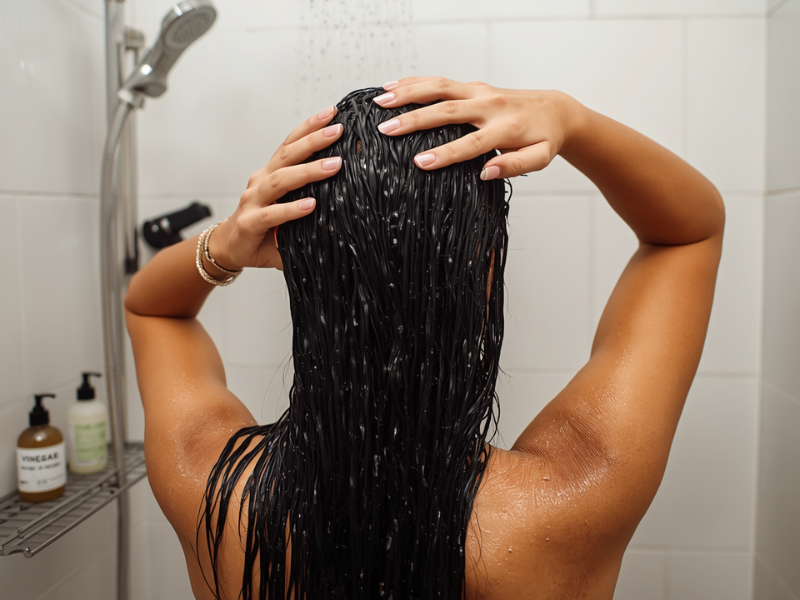
Shampoo as usual with a gentle cleanser or optionally condition mid‑lengths and ends (not the scalp if you’re flaky/greasy). Pour the diluted vinegar over scalp and hair, avoiding your eyes. Gently massage for 30–60 seconds. Rinse thoroughly with cool or lukewarm water. You’re aiming for a quick “reset,” not a 20‑minute soak.
Step 3: Limit How Often You Do It
To avoid over‑drying or irritating your scalp you can start using the vinegar hair and scalp rinse once a week at most. It shouldn’t take long to determine if your scalp and hair love it and you might use it every second or third wash. If you notice more itch, tightness, or dryness, scale back or stop.
And remember: your mid‑lengths and ends might need extra moisture (a light conditioner or leave‑in) afterward, especially if your hair is curly or color‑treated.
Simple Tools for Safer Vinegar Hair Rinses
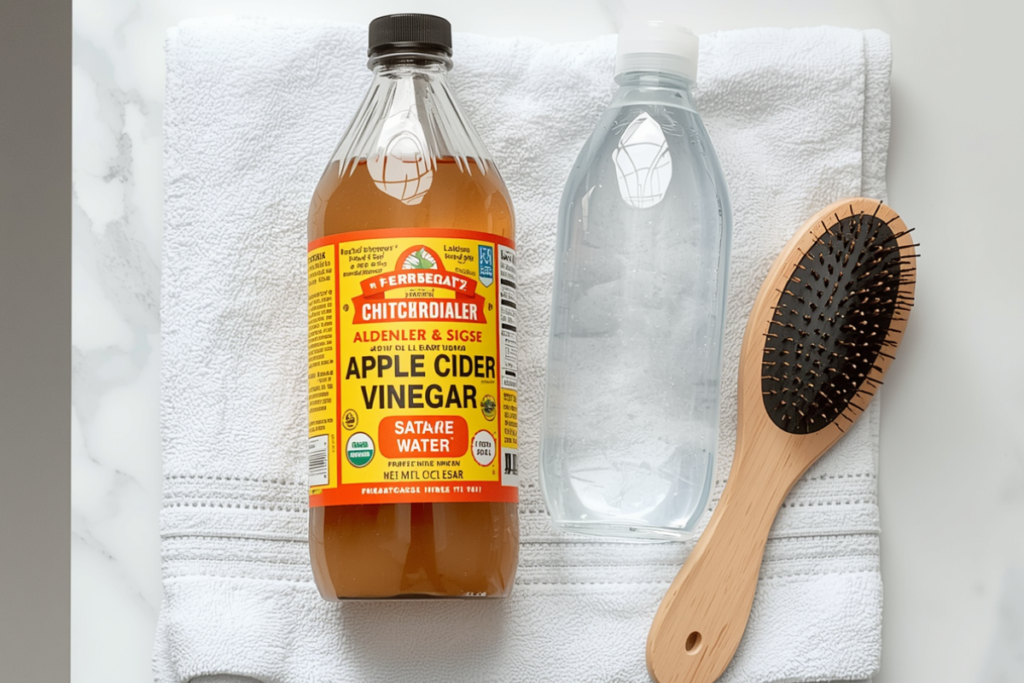
Keep these products on hand when you need a safe hair rinse.
I keep a bottle under the sink for the many uses of vinegar, a hair rinse being only one.
Guessing “about a cup” of vinegar is an easy way to overdo it. A little measuring cup or a clearly marked pour bottle makes it simple to add the right amount without splashing all over the place.
Help you get the perfect mixing ratios.
Simple Vinegar Rinse Recipes That Stay in the Safe Lane
Classic ACV Shine Rinse
Good for: occasional dullness, light buildup, mild itch on otherwise healthy scalps.
- 1–2 tablespoons raw apple cider vinegar
- 1–2 cups cool water
Stir in a jar or mix in an applicator bottle, apply after shampoo, massage briefly, and rinse well.
Extra‑Gentle Scalp‑Friendly Rinse
Good for: curious beginners, slightly sensitive scalps.
- 1 tablespoon ACV
- 2–3 cups water
Same method: shampoo, apply, 30–60 seconds, then rinse thoroughly. If you feel any sting or intense itch, that’s your sign to stop.
Pairing Vinegar Hair Rinses With Other Scalp‑Care Steps
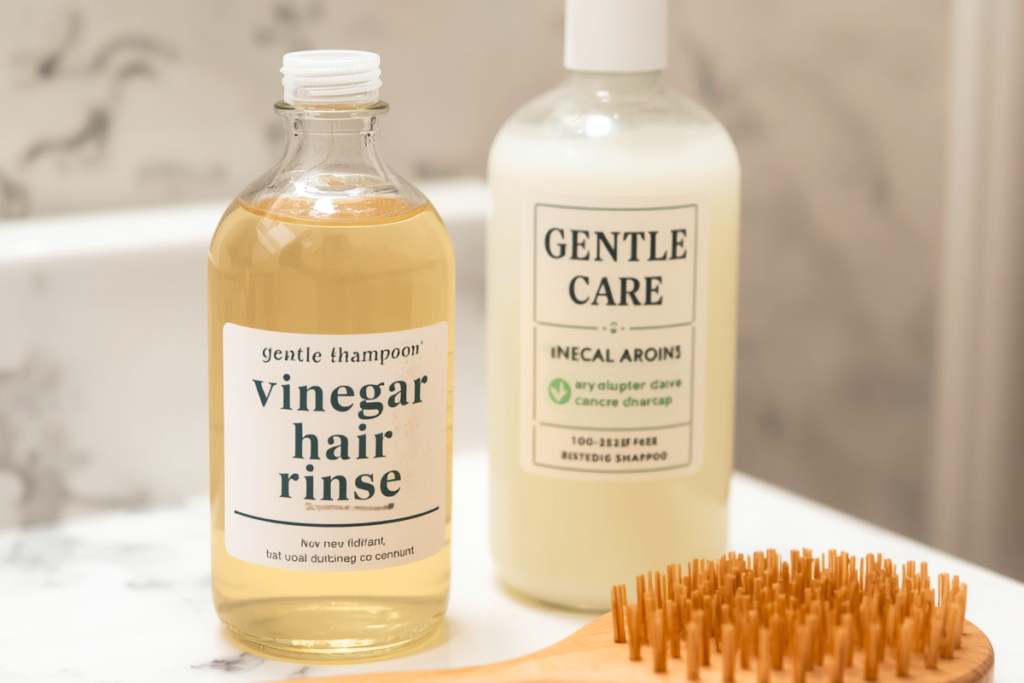
Even if vinegar rinses help your scalp feel calmer or less flaky, they’re only one piece of the puzzle. A balanced routine for dandruff or itchiness has several gentle steps working together—so you’re not relying on vinegar alone and certainly not using it as a stand‑in for proper care if something more serious is going on.
Keep Shampoo Simple and Gentle
Strong detergents and heavy fragrances can irritate the scalp, especially if it’s already dry or flaky. Pair your vinegar rinse with:
- A mild, non‑stripping shampoo formulated for sensitive or dry scalps.
- A light touch—focus shampoo on the scalp, but don’t scrub hard.
- Thorough rinsing with lukewarm water so product doesn’t linger and cause more itch.
The idea is to clean without over‑cleaning, then let vinegar be a light finishing step, not the main event.
Shorten Hot‑Water Time
Long, very hot showers can dry out the scalp and make dandruff or itch feel worse. As part of your routine:
- Use warm, not scalding, water.
- Keep “head under the stream” time shorter instead of standing in hot water for minutes at a stretch.
When you do your vinegar rinse, a brief, gentle pour or dip is enough. You don’t need to soak your scalp in acid to get the benefits you’re looking for.
Use Soft Tools and Kinder Habits
Mechanical irritation matters as much as products:
- Swap stiff, scratchy brushes for softer bristles that don’t dig into the skin.
- Avoid aggressive scrubbing with nails, both in the shower and when your scalp feels itchy.
- Detangle hair slowly, starting from the ends, to keep tugging on the scalp to a minimum.
A vinegar rinse after rough brushing won’t fix the irritation you just caused. The goal is to build a routine where each step is kind to your skin.
When Vinegar is Only a Supporting Player
Sometimes dandruff or chronic itch needs medicated products or a dermatologist’s input. In those cases, vinegar can be a minor, optional accent—used lightly and occasionally—while the main care plan comes from evidence‑based treatments.
That’s really the heart of this addition: vinegar rinses can be helpful, but they’re most useful in the context of a broader, balanced scalp‑care routine that includes gentle cleansing, reasonable water temperature, and soft tools—and an honest look at when it’s time to ask a professional for help instead of asking vinegar to solve everything on its own.
When Vinegar Might Help a Little vs. When to See a Dermatologist
“Maybe First Try a Rinse” Situations
A diluted ACV rinse might be worth a cautious experiment if:
- You have mild flaking or itch (think tiny snow, not a blizzard).
- Your scalp isn’t raw, cracked, or bleeding.
- You’re not dealing with known eczema, psoriasis, or seborrheic dermatitis.
- Your hair isn’t severely damaged or over‑processed.
Even then, make it a short trial—once weekly for a month—and pair it with gentle, evidence‑based basics like a mild shampoo and not over‑washing.
“Skip the Vinegar and Call a Dermatologist” Situations
Go straight to a professional instead of the pantry if you notice:
- Thick, greasy yellow scale that sticks to the scalp
- Intense redness, pain, or burning
- Oozing, crusting, or signs of infection
- Coin‑shaped bald patches, scarring, or sudden heavy shedding
- A known scalp diagnosis (seborrheic dermatitis, psoriasis, eczema) that’s flaring
Dermatologists see scalp conditions all the time, and they have tools (medicated shampoos, foams, lotions) with much better evidence behind them than anything we can whip up in a kitchen.