
Can You Use Apple Cider Vinegar for Cleaning?
Yes, apple cider vinegar can be used for some cleaning tasks, but distilled white vinegar is usually the better household choice. White vinegar is clear, relatively neutral in color, and less likely to leave fruit compounds, sediment, or food-related residue. Apple cider vinegar may still help with limited mineral residue or odors, but it can leave a stronger smell, color, or film.
Both apple cider vinegar and distilled white vinegar contain acetic acid, which may help loosen some mineral deposits, hard-water residue, and light buildup. However, the two products differ in color, aroma, ingredients, and residue.
Apple cider vinegar may contain:
- Apple-derived color
- Fruit compounds
- Sediment
- The mother
- A stronger food aroma
- Trace sugars, depending on the product
Distilled white vinegar is usually clear and has a simpler, more neutral profile. That makes it easier to use on surfaces where color or residue would be undesirable.
Neither vinegar is suitable for every surface or appliance. Do not use vinegar on marble, limestone, travertine, or other acid-sensitive stone, and never mix vinegar with bleach or unknown cleaning products.
Why is white vinegar usually preferred for cleaning?
Distilled white vinegar is often preferred because it is:
- Clear
- Inexpensive
- Easy to rinse away
- Less likely to discolor surfaces
- Less likely to leave fruit-related residue
- Relatively neutral in flavor and color
- Widely available
However, “preferred” does not mean “safe for every surface.” White vinegar is still acidic and can damage stone, metals, finishes, seals, and appliance components.
Is apple cider vinegar as acidic as white vinegar?
It may be, but acidity varies by product. Many food vinegars are labeled around 5% acidity, but you should check the bottle rather than assume that apple cider vinegar is weaker or that white vinegar is stronger. For cleaning, the vinegar’s acidity is only one consideration. The product’s color, sediment, added ingredients, and intended use also matter.
Apple cider vinegar may provide comparable acidity to some white vinegars, but distilled white vinegar is usually more convenient for cleaning because it is clear and less likely to leave visible residue.
What can apple cider vinegar clean?
Apple cider vinegar may be suitable for limited cleaning tasks when the surface manufacturer permits vinegar.
Possible uses include:
- Light mineral residue
- Some hard-water film
- Certain odors
- Light residue on washable surfaces
- Some kitchen surfaces confirmed to be vinegar-safe
Use a small amount, dilute it when appropriate, and test an inconspicuous area first. Do not assume that apple cider vinegar is suitable simply because a surface is labeled “washable.”
Can apple cider vinegar remove odors?
It may help with some odors, but it does not remove every odor source.
Persistent odors may come from:
- Food debris
- Mold or mildew
- Trapped moisture
- Pet accidents
- Dirty filters
- Drain buildup
- Laundry residue
- Decomposing organic material
Vinegar may temporarily alter or mask an odor without correcting the underlying problem. Investigate the source of the odor and take appropriate action with appropriate cleaners.
Does apple cider vinegar leave residue?
It can. Depending on the product, it may leave:
- A pale color
- Sediment
- Fruit compounds
- A sticky feel
- A food-like smell
- A cloudy film
This is one reason distilled white vinegar is usually more suitable for household cleaning. Raw or unfiltered apple cider vinegar may leave more visible material than filtered apple cider vinegar.
Can I use apple cider vinegar on countertops?
Only if the countertop material is confirmed to be compatible with vinegar.
Do not use apple cider vinegar on:
- Marble
- Limestone
- Travertine
- Other acid-sensitive stone
- Unsealed stone
- Some granite surfaces
- Waxed wood
- Some finished hardwood
- Sensitive laminates or coatings
For most natural-stone countertops, use warm water, a soft cloth, mild dish soap if approved, or a neutral stone cleaner.
Can I use apple cider vinegar on granite?
Routine vinegar use is best avoided unless the stone supplier or manufacturer specifically approves it.
Granite varies in mineral composition, and countertop sealers can also differ. Some granite may tolerate brief contact with mild acids, while other varieties or finishes may show dulling or damage. Do not use a vinegar test on a visible area to identify or test the stone. A test can leave a mark.
Can I use apple cider vinegar on marble?
No. Avoid using apple cider vinegar on marble.
Marble and similar calcium-based stones can react with acids. Vinegar may cause:
- Etching
- Dull spots
- Loss of shine
- Rough-feeling areas
- Cloudy marks
- Surface damage
Distilled white vinegar should also be avoided on marble. The problem is the acidity, not simply the type of vinegar.
Can apple cider vinegar clean glass?
It may help with some hard-water residue on ordinary, untreated glass, but distilled white vinegar is usually a better choice because it is clear and less likely to leave color or food-related residue.
Do not use vinegar automatically on:
- Coated glass
- Specially treated glass
- Electronic screens
- Optical lenses
- Delicate finishes
Follow the manufacturer’s instructions and test an inconspicuous area first.
Can I use apple cider vinegar in a coffee maker?
Only if the coffee-maker manufacturer permits vinegar.
Some machines allow vinegar for occasional descaling, while others require a specific descaling product. If vinegar is approved, distilled white vinegar is usually preferable because apple cider vinegar may leave color, odor, or residue.
After descaling, run the number of fresh-water rinse cycles specified by the manufacturer.
Can I use apple cider vinegar in a dishwasher?
Check the dishwasher manual before using any vinegar.
Some manufacturers permit occasional vinegar cleaning, while others warn that repeated exposure may affect internal components. If vinegar is approved, distilled white vinegar is generally more practical than apple cider vinegar.
Do not use apple cider vinegar or white vinegar:
- In every dishwasher cycle
- As a substitute for detergent
- As a routine replacement for rinse aid
- In the dispenser unless the manual specifically permits it
Can I use apple cider vinegar in a washing machine?
Do not assume that vinegar is safe for every washing machine. Some manufacturers caution against repeated vinegar use because acidity may affect seals, hoses, or other components.
If the manufacturer permits vinegar, white vinegar is usually preferable because it is less likely to leave color, sugar, or food-related residue. Vinegar does not replace laundry detergent.
Can apple cider vinegar clean hardwood floors?
Avoid routine use on hardwood floors unless the flooring manufacturer specifically approves it. Vinegar and excess moisture may affect some floor finishes. The risk depends on the wood, finish, dilution, and cleaning method. Use the floor manufacturer’s recommended cleaner instead.
Can apple cider vinegar disinfect surfaces?
Apple cider vinegar has no use as ageneral disinfectant. It may help with certain residues or odors, but it should not be treated as a substitute for a registered disinfectant. If disinfection is needed, use a product labeled for that purpose and follow the label directions.
Can I use apple cider vinegar in a spray bottle?
You can use a vinegar solution in a clean, clearly labeled spray bottle when the surface is confirmed to be vinegar-safe.
Follow these precautions:
- Do not mix it with bleach or ammonia.
- Do not add unknown cleaners.
- Do not spray near the eyes or face.
- Do not use it on electronics.
- Do not store the mixture indefinitely.
- Keep it away from children and pets.
- Rinse the surface when appropriate.
Never reuse a spray bottle that previously contained a chemical cleaner unless it has been properly replaced or safely decontaminated.
Apple cider vinegar versus distilled white vinegar
| Feature | Apple cider vinegar | Distilled white vinegar |
|---|---|---|
| Color | Pale gold to amber | Usually clear |
| Aroma | Fruity and noticeable | Sharp and relatively neutral |
| Possible residue | Sediment, fruit compounds, or color | Usually less visible residue |
| Cleaning practicality | Useful for limited tasks | Usually preferred |
| Acidity | Varies by product | Varies by product |
| Best general role | Food use and selected cleaning tasks | Food use and approved household cleaning |
| Main concern | May leave color or odor | May still damage acid-sensitive surfaces |
Neither vinegar is safe for every surface, and acidity should be checked on the product label.
Can cleaning vinegar be used instead?
Cleaning vinegar may have a higher acidity than ordinary food vinegar, but it is not intended for cooking, drinking, or food preparation.
Do not use cleaning vinegar in:
- Food
- Drinks
- Oxymels
- Shrubs
- Pickling
- Salad dressings
Also avoid horticultural vinegar, industrial acetic acid, and products labeled “not for consumption.” A stronger vinegar is not automatically a better household cleaner. Higher acidity can increase the risk of surface damage, skin irritation, and eye injury.
Never mix vinegar with bleach
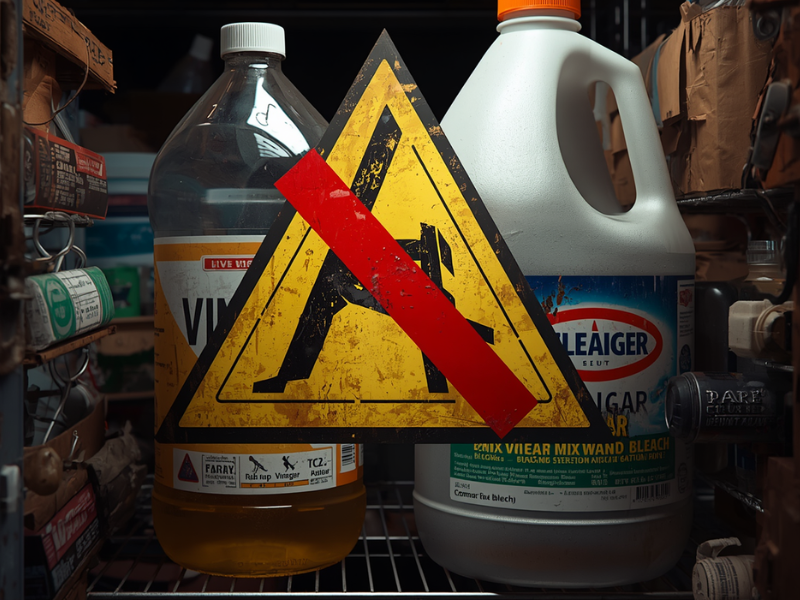
Never mix apple cider vinegar, white vinegar, or any vinegar with chlorine bleach or products containing bleach. The combination can release chlorine gas, which may seriously irritate the eyes, throat, and lungs.
Do not mix vinegar with:
- Ammonia
- Drain cleaner
- Toilet-bowl cleaner
- Oven cleaner
- Unknown cleaning products
- Other products unless the manufacturer specifically says the combination is safe
Use one product at a time and rinse the surface before using another product.
Can apple cider vinegar clean kitchen counters?
Only if the counter material is confirmed to be vinegar-safe. Do not use it on marble, limestone, travertine, or other acid-sensitive stone.
Can I use apple cider vinegar in my coffee maker?
Only if the manufacturer allows vinegar. Distilled white vinegar or the manufacturer’s recommended descaler is usually preferable.
Can I use apple cider vinegar in my dishwasher?
Check the dishwasher manual first. If vinegar is approved, plain distilled white vinegar is generally more practical.
Can I use apple cider vinegar in laundry?
Do not assume it is safe for every washer or fabric. Follow the manufacturer’s instructions, and do not use it as a detergent replacement.
Can apple cider vinegar remove mold?
Do not rely on it as a universal mold-removal treatment. The correct method depends on the material, amount of mold, and moisture source.
Can I use apple cider vinegar on wood?
Avoid routine use on finished wood or hardwood floors unless the manufacturer specifically approves it.
Can I mix apple cider vinegar with baking soda?
The ingredients react and neutralize much of each other’s original chemistry. The fizz does not create a stronger cleaner. Never seal the reacting mixture in a container.