
Thanksgiving Kitchen Cleanup With Vinegar: 7 Easy Fixes for Post-Feast Messes
From greasy stovetops and microwave splatters to leftover containers and refrigerator shelves, these simple vinegar cleaning tips can help refresh your kitchen after Thanksgiving dinner.
This post contains affiliate links to products and books I genuinely use and love. If you buy through my links, I may earn a small commission as an Amazon Associate or through my affiliation with other retailers from qualifying purchases that you make at no extra cost to you.
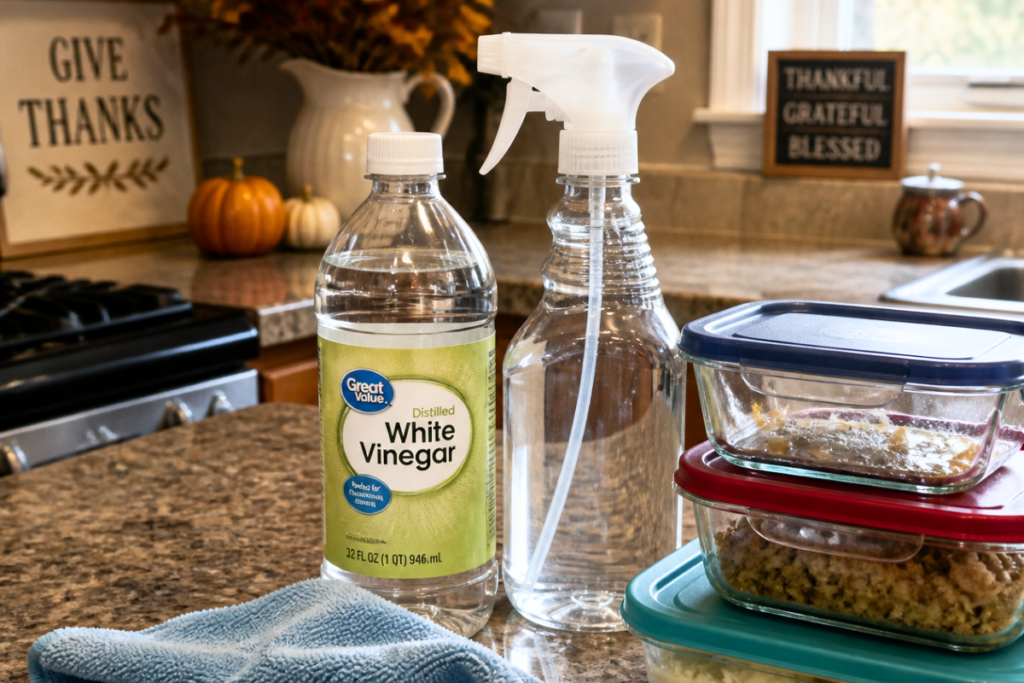
Thanksgiving is one of my favorite holidays because it gives permission to gather around a table and get down to some serious eating business. We can finally dig into the turkey, roast or ham that we’ve been smelling for hours, have way too many helpings of delicious sides like stuffings, garlic-mashed and sweet potatoes sloshed with gravy, and pretend that a second slice of pie is simply part of the main course.
But once the plates are cleared and the last guest heads home, the kitchen can look, as my mother loved to say, like a cyclone hit it.
There are greasy stovetops, stuff splattered in the microwave, refrigerator shelves crowded with leftovers, messy countertops, and a sink that has seen more potato peels than any sink should ever have to see. Add in a roasting pan, piles of pots and plates, and stacks of plates, and the cleanup makes me wonder why I ever did it in the first place.
The good news? A Thanksgiving kitchen cleanup with vinegar is one of the simplest ways I know to get the room back under control without filling the counter with specialty sprays. Distilled white vinegar, warm water, a few microfiber cloths, maybe a drop or two of scented oils, and a little patience can handle many of the everyday messes that follow a big holiday meal.
This is not a “scrub your kitchen until midnight” plan. It is a practical, post-feast reset for real people who would rather be enjoying leftovers than negotiating with a greasy stovetop.
Simple Vinegar Cleaning Kit for Post-Thanksgiving Cleanup
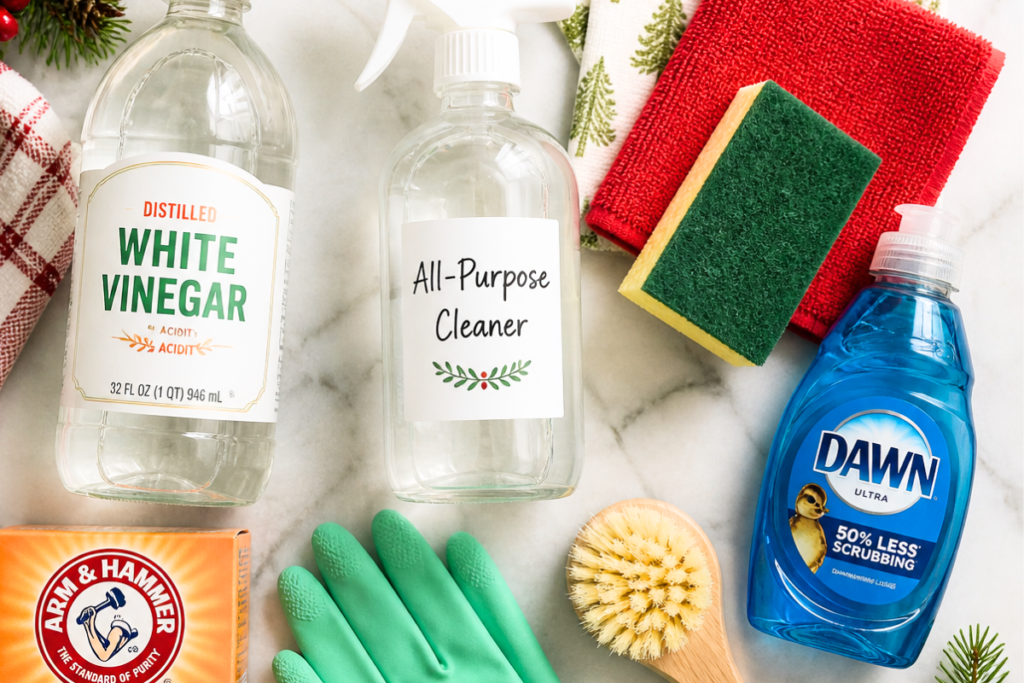
Your Compact Autumn Vinegar Cleaning Companions
- A labeled glass or sturdy plastic spray bottle.
- Two or three washable microfiber cloths.
- A soft scrub brush or old toothbrush for corners and faucet bases.
- Rubber gloves, especially if vinegar bothers your skin.
- Baking soda for occasional gentle scrubbing—used separately from vinegar, not mixed into one fizzing science project.
- One pet-safe enzyme cleaner for repeat pet accidents, because vinegar is helpful but cannot do every job.
- A small under-sink caddy or handled bin to keep it all together.
For most vinegar-safe kitchen surfaces, I use this simple all-purpose mixture:
- 1 cup distilled white vinegar
- 1 cup water
Pour it into a clearly labeled spray bottle and give it a gentle shake. If the vinegar smell is not your favorite holiday fragrance (fair enough), you can add a strip of orange or lemon peel to the bottle. Just remember that a citrus peel makes it smell fresher—it does not make it a stronger cleaner.
Also, a quick but important reminder: vinegar is useful for everyday cleaning and deodorizing, but it is not a registered disinfectant. If raw turkey juices touched a surface, wash it promptly with hot, soapy water and use an appropriate kitchen-safe disinfecting product if needed. Never mix vinegar with bleach or ammonia. That combination can create dangerous fumes, and nobody needs a chemistry experiment after hosting Thanksgiving.
1. Clean a Greasy Stovetop With Vinegar
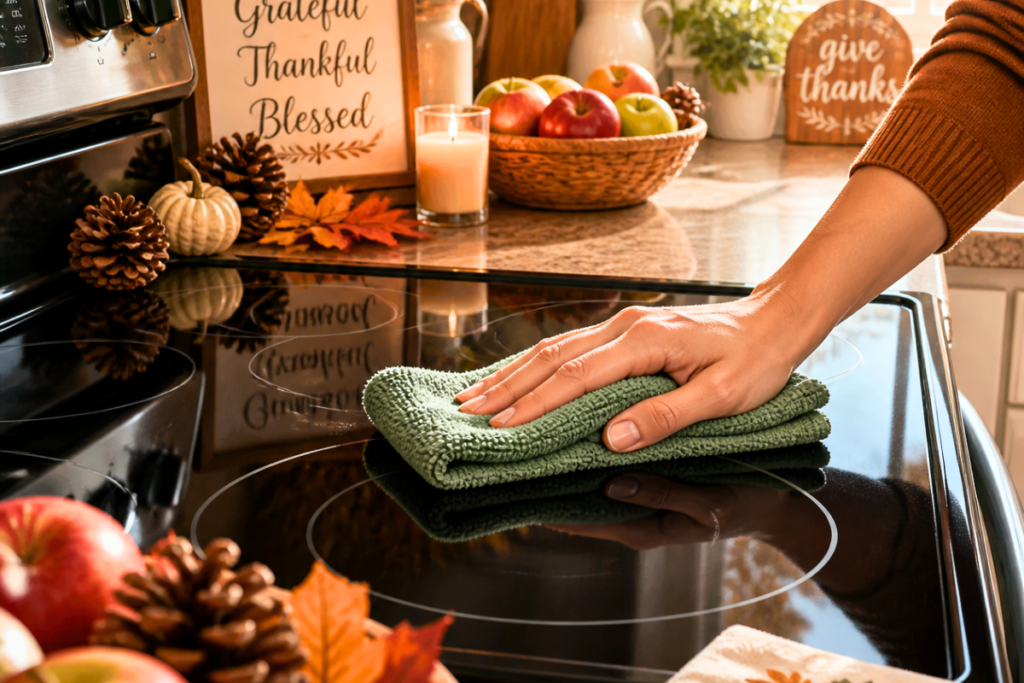
Thanksgiving stovetops work hard. There are bubbling pots of potatoes, gravy that decides to escape at exactly the wrong moment, butter sizzling in pans, and at least one burner that somehow ends up wearing a coat of grease.
Once the stovetop is completely cool, start by removing loose crumbs and food bits with a dry cloth or paper towel. Then lightly spray a vinegar-and-water solution onto a microfiber cloth—not directly into gas burners, electrical components, or control knobs—and wipe the surface.
For light grease and everyday splatters:
- Dampen a cloth with the 1:1 vinegar-and-water mixture.
- Wipe the stovetop, working around burners and controls carefully.
- Let stubborn spots sit under the damp cloth for a few minutes.
- Wipe again with a clean cloth and dry the surface.
For cooked-on spots, use a little baking soda on a damp sponge to gently scrub first. Wipe away the residue, then follow with the vinegar solution on your cloth.
Think of vinegar as the helpful friend who arrives with a dish towel and gets to work—not the person who barges into the kitchen claiming to solve every possible problem.
Important: Always check your stove manufacturer’s cleaning instructions. Avoid soaking burner parts, igniters, electrical components, or control panels with vinegar. For glass cooktops, use only products and tools recommended for that surface, especially if there is burnt-on residue.
2. Steam-Clean Microwave Splatters With Vinegar
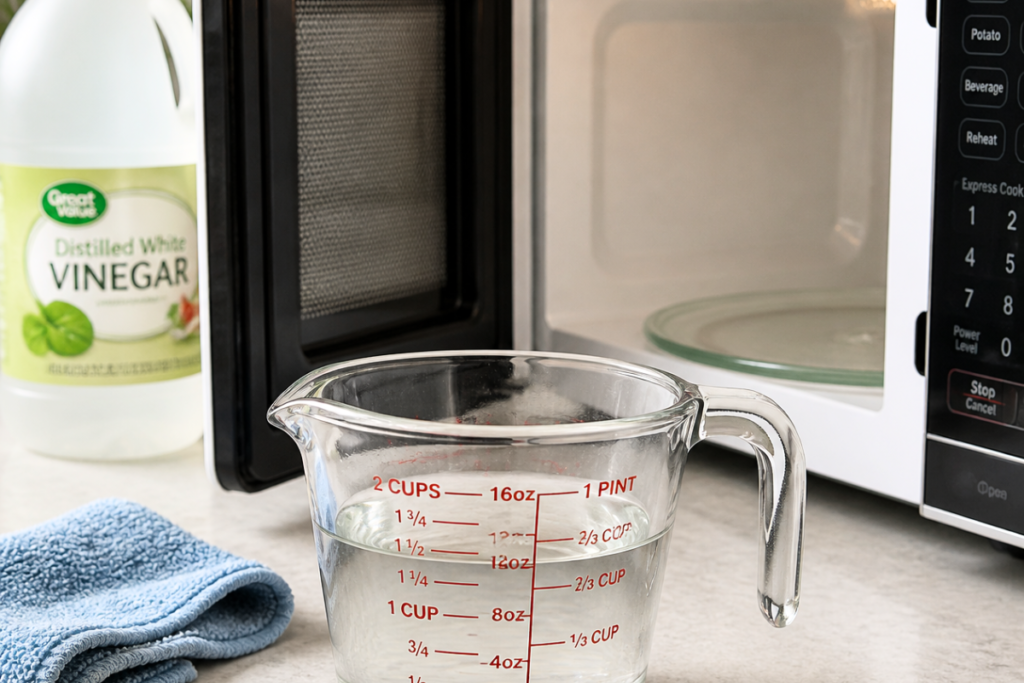
The microwave is often the quiet victim of Thanksgiving. You reheat gravy. Then mashed potatoes. Then someone covers a plate “loosely” and a tiny explosion of sweet potato casserole appears on the ceiling.
Thankfully, this is one of the easiest Thanksgiving kitchen cleanup with vinegar jobs.
In a microwave-safe bowl or measuring cup, combine:
- 1 cup water
- ½ cup distilled white vinegar
Place it in the microwave and heat for about 3 to 5 minutes, until the mixture is steaming. Keep the microwave door closed for another 3 to 5 minutes so the steam can loosen dried food splatters.
Then carefully remove the bowl—it will be hot—and wipe down the inside with a soft cloth or sponge.
Pay attention to:
- The ceiling and walls
- The turntable
- The door edges
- The inside of the microwave door
- The little corners where sauce seems to set up permanent residence
For the outside, spray your cloth lightly with the vinegar mixture and wipe the handle, buttons, and door. Do not spray directly into vents, seams, or the control panel.
It is amazing what a little steam can do. Suddenly, that dried gravy splatter that looked like it needed its own excavation team wipes away with one pass.
3. Remove Odors From Food-Storage Containers
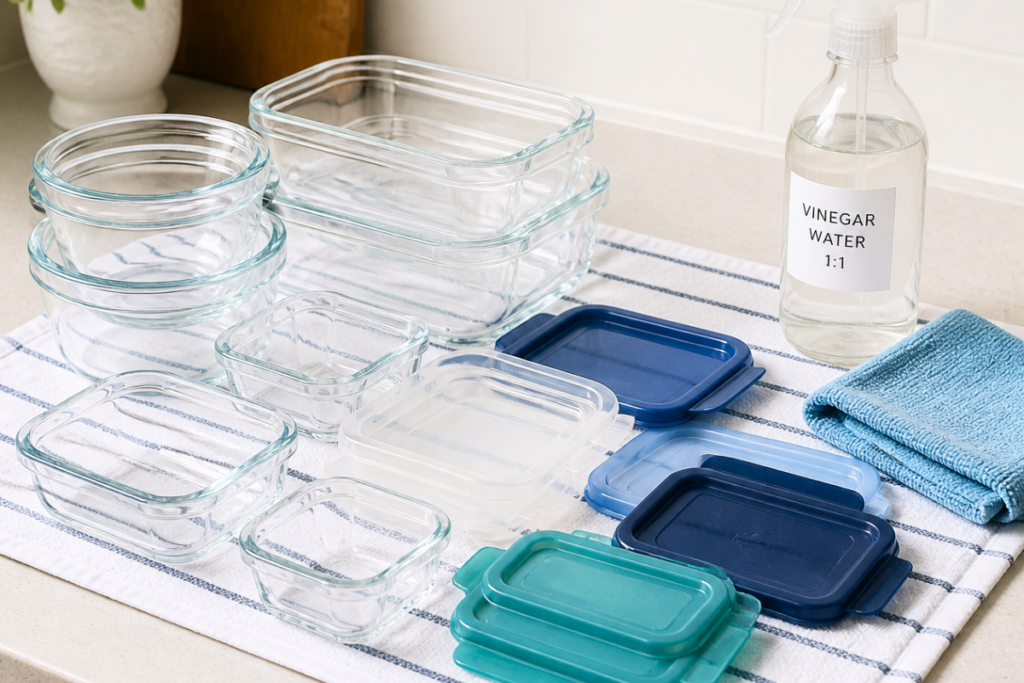
Thanksgiving leftovers are one of life’s great pleasures. Unfortunately, food-storage containers sometimes hold on to odors like they are building a family tradition around them.
Stuffing, onions, garlic, cranberry sauce, turkey, and gravy can leave plastic containers with a scent that lingers long after the leftovers are gone. Vinegar can help freshen them up.
For containers with mild odors:
- Wash the container first with warm water and dish soap.
- Fill it with warm water and add a splash of white vinegar.
- Let it sit for 10 to 15 minutes.
- Rinse well and air-dry with the lid off.
For more persistent odors, use a stronger soak for Thanksgiving kitchen cleanup with vinegar:
- 1 cup warm water
- ¼ cup white vinegar
Let the container soak for up to 30 minutes, then rinse thoroughly. Never seal a damp container with the lid on. That is how you accidentally create a tiny plastic swamp in your own kitchen cabinet.
If a container has deep stains, cracks, or an odor that refuses to move out, it may simply be time to retire it from food storage. It can still have a second career holding clothespins, craft supplies, or the pile of random kitchen gadgets we all pretend we will use someday.
4. Clean Refrigerator Shelves Before Storing Leftovers
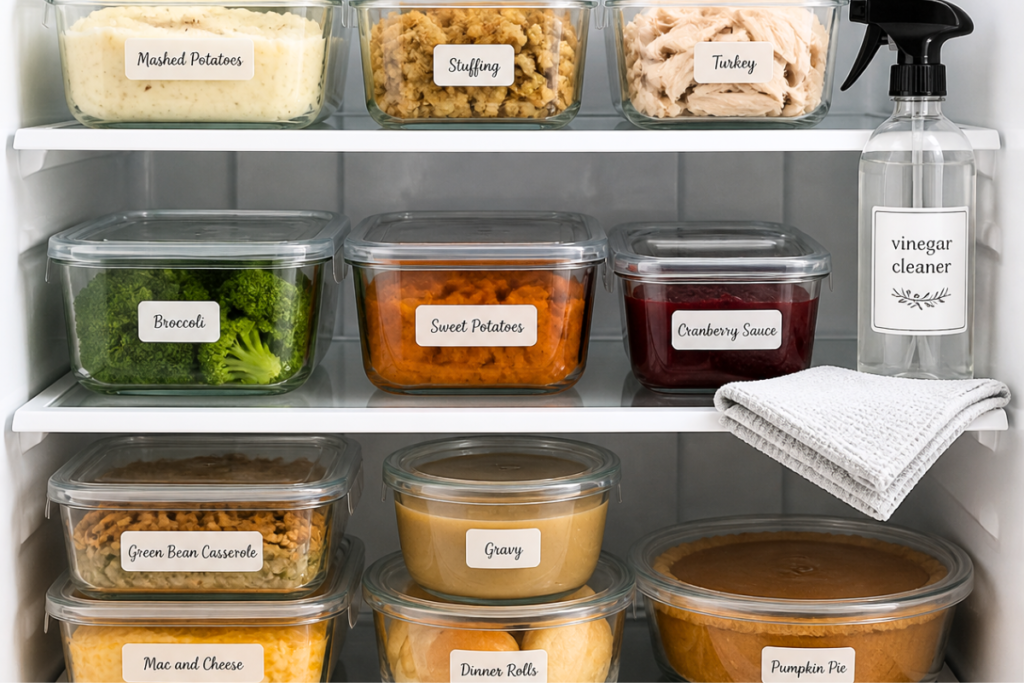
The refrigerator becomes Thanksgiving headquarters almost immediately. There are platters, foil-covered pans, pie boxes, half-used cream, cranberries, turkey containers, and at least one item you cannot identify but are afraid to throw away.
Before packing in the leftovers, take five minutes to make room.
There’s are usually a few items that you’ve stored but will be forgotten once you’re feasting on leftovers, pick through what’s already in the fridge and remove soon-to-expire items. Wipe up drips and pull out any loose crumbs. Then use a cloth dampened with a 1:1 vinegar-and-water solution to wipe refrigerator shelves, drawers, and interior walls. Follow with a clean, damp cloth if needed, then dry everything before stacking the shelves with leftovers.
I like to focus on the areas that get ignored during regular grocery-week cleanup:
- Shelf edges
- Drawer handles
- Door bins
- The bottom of the refrigerator
- The ledge beneath produce drawers
- Sticky condiment bottles
Do not spray vinegar directly into vents, light fixtures, sensors, or electronic controls. A lightly dampened cloth gives you much more control and less chance of turning a simple refrigerator wipe-down into an appliance repair story.
And while you are there, leave a little open space for leftovers. Future-you will be grateful when you are trying to slide in a casserole dish without performing refrigerator Tetris.
5. Freshen the Kitchen Sink and Faucet
After Thanksgiving prep, the sink has usually been through quite a bit. It’s had to deal with potato skins, vegetable scraps, coffee grounds, sauce splashes, and greasy pans all which leave traces of their existence behind.
Start by removing food debris and rinsing the basin with warm water. Then spray your vinegar-and-water mix onto the sink rim, faucet, handles, and surrounding counter. Let it sit for a minute or two before wiping with a cloth or soft brush.
For extra attention around the faucet base, use an old toothbrush to gently clean where mineral spots and grime tend to collect. Rinse with water and dry the faucet with a clean cloth for a little extra shine.
For a stainless-steel sink, always wipe in the direction of the grain when possible. It is a small detail, but it makes the surface look much better.
Avoid leaving vinegar sitting for a long time on delicate finishes, rubber seals, aluminum parts, or specialty sink materials. And if you have a natural-stone countertop around your sink, keep vinegar off the stone completely.
6. Wipe Sticky Countertops, Cabinet Fronts, and the Dining Table
Thanksgiving cleanup is not just about the obvious messes. It is also about the sneaky ones: fingerprints on cabinets, cranberry sauce dots on the table, butter smears on the counter, and the mysterious sticky patch that appears near the coffee station.
For laminate, tile, sealed wood, and other vinegar-safe surfaces, spray your vinegar solution onto a cloth and wipe gently. For sticky spots, let the damp cloth rest on the mess for 30 seconds or so before wiping.
Use a lighter mixture for everyday surfaces:
- 1 part vinegar
- 3 parts water
This is especially helpful for cabinet fronts, refrigerator doors, dining tables, and appliance exteriors. Spray the cloth—not the appliance itself—and avoid soaking seams or electronic controls.
Here is the big caution: do not use vinegar on marble, granite, limestone, soapstone, unsealed concrete, or other natural-stone surfaces. Vinegar is acidic and can dull, etch, or damage stone over time. If you are not sure whether your countertop is natural stone or a stone-look material, play it safe and use a pH-neutral cleaner instead.
7. Deodorize the Trash Can, Recycling Bin, and Sink Area
After a holiday meal, kitchen odors can linger even when the dishes are done. Turkey packaging, vegetable trimmings, onion skins, and forgotten scraps in the recycling bin can make the whole room smell like Thanksgiving overstayed its welcome.
First, empty the trash and recycling. Wash the bins with warm, soapy water if they need it. Then wipe the inside with a vinegar-and-water solution and let them dry completely before adding a fresh bag. Here’s a case where a scented oil or citrus peel added to the solution can provide refreshing smells.
For the sink area, wipe the drain basket, disposal splash guard (if you have one), and the counter around the sink. If your garbage disposal has an odor, follow the manufacturer’s instructions for cleaning it. Do not pour random mixtures down the drain and hope for the best—your plumbing deserves better than becoming a holiday science fair project.
A clean trash bin and a fresh sink area make a surprisingly big difference. It is one of those small jobs that makes the entire kitchen feel calmer.
Where Not to Use Vinegar in the Kitchen
Before you start spraying everything in sight, keep these basics in mind:
- Never mix vinegar with bleach or ammonia.
- Do not use vinegar on natural stone such as marble, granite, or limestone.
- Skip vinegar on cast iron. Clean cast-iron pans with hot water, a brush or scraper, and a light coating of oil afterward to protect the seasoning.
- Avoid vinegar on uncoated aluminum, delicate wood, electronics, and appliance parts unless the manufacturer specifically says it is safe.
- Do not spray directly into appliance vents, burners, buttons, or electrical components.
- Spot-test an unfamiliar surface first.
- Label every homemade cleaning bottle clearly and keep it out of reach of children and pets.
A Post-Thanksgiving Kitchen Reset That Fits Real Life
The goal after Thanksgiving is not to make your kitchen look like nobody cooked in it. Chances are with all the games still to be played over the weekend and the family or friends that will stop by and need entertaining, the place is not really going to be ready to a deep clean until the weekend is over. A few crumbs, a full refrigerator, and a leftover slice of pie are signs of a holiday well spent.
But taking a little time to wipe down the stovetop, steam-clean the microwave, freshen the containers, and reset the refrigerator makes the next few days easier. You can enjoy those leftovers without opening the fridge to a sticky shelf or reaching for a container that smells like last year’s chili.
With a bottle of vinegar, a few simple tools, and a realistic plan, you can get your kitchen back to feeling fresh—without turning the day after Thanksgiving into a full-time cleaning marathon.
Thanksgiving Kitchen Cleanup with Vinegar FAQs
Can I use vinegar to disinfect my kitchen after handling raw turkey?
Vinegar is useful for everyday cleaning and deodorizing, but it is not a registered disinfectant. After raw turkey juices touch a counter, sink, cutting board, or other food-prep surface, wash the area thoroughly with hot, soapy water. If disinfection is needed, use a kitchen-safe disinfecting product according to its label directions.
What should I not clean with vinegar in the kitchen?
Avoid using vinegar on natural stone such as marble, granite, limestone, and soapstone. It is also best to skip vinegar on cast iron, uncoated aluminum, delicate wood, appliance electronics, vents, burners, and any surface the manufacturer says should not be cleaned with acidic products. When in doubt, spot-test a hidden area or use a surface-specific cleaner.
How do I get the vinegar smell out of my kitchen after cleaning?
The vinegar smell usually fades as surfaces dry. Open a window for a few minutes, run the kitchen fan, and allow cleaned areas to air out. You can also use a vinegar-and-water solution with a small strip of citrus peel for a lighter scent, but do not store homemade citrus-infused sprays for long periods.