
Holiday Vinegar Desserts: 3 Festive Recipes to Try
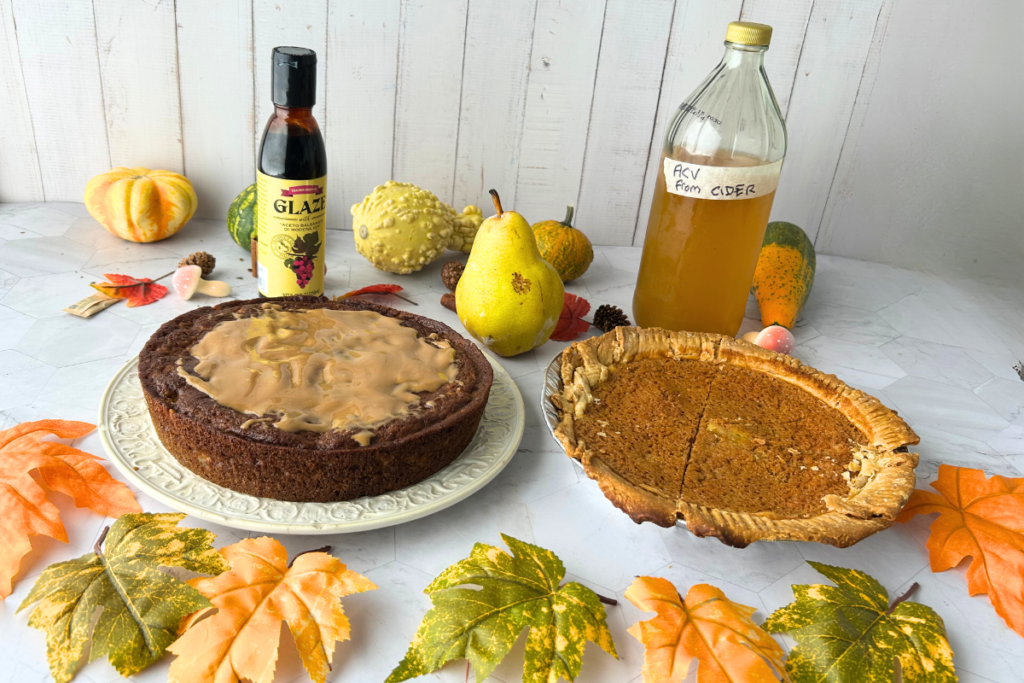
Bake a tangy apple cider vinegar pie, a crisp cranberry pavlova, and a warmly spiced pear cake—with simple tips for using vinegar in holiday desserts.
This post contains affiliate links to products and books I genuinely use and love. If you buy through my links, I may earn a small commission as an Amazon Associate or through my affiliation with other retailers from qualifying purchases that you make at no extra cost to you.
When most people think of vinegar during the holidays, they picture salad dressings, cranberry sauce, marinades, or perhaps a splash in a festive cocktail. Dessert is usually the last place vinegar comes to mind.
But a well-chosen vinegar can be one of the most useful ingredients in holiday baking and enjoying holiday vinegar desserts.
Why Bake with Vinegar During the Holidays?
Vinegar may be a pantry staple for savory holiday cooking, but it can also bring brightness, balance, and surprising depth to festive desserts.
Used in small amounts, vinegar does not necessarily make a dessert taste vinegary. Instead, it can sharpen fruit flavors, balance rich butter and sugar, support the texture of meringue, and provide the pleasant tang we often expect from citrus. In fact, before lemons and other citrus fruits were readily available year-round, home bakers often relied on vinegar to bring a bright note to pies and custards.
That does not mean vinegar is a perfect one-for-one stand-in for lemon or orange in every recipe. Citrus contributes its own fragrant oils, juice, and zest. But when a recipe needs acidity more than unmistakable lemon flavor, vinegar can be a delicious—and sometimes unexpected—solution.
These three holiday vinegar desserts highlight three different ways vinegar can shine: as the star in a historic custard pie, as a quiet helper in a festive pavlova, and as a fruit-friendly finishing touch in a tender pear cake.
Apple Cider Vinegar Pie: A Sweet-Tart Holiday Vinegar Dessert Classic
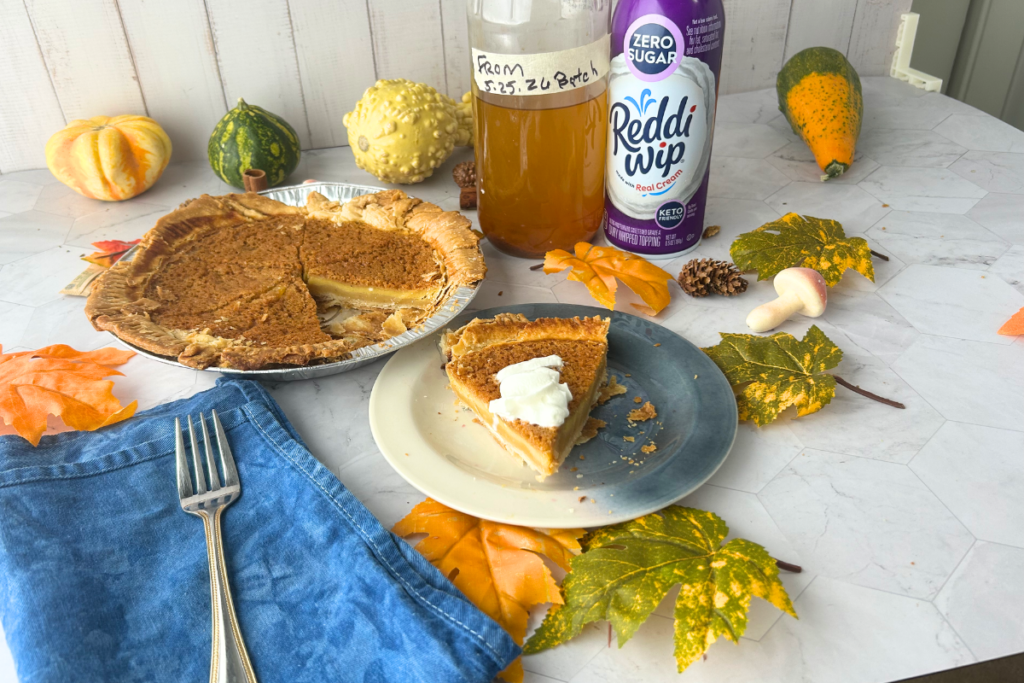
The vinegar factor: This is the holiday vinegar dessert for anyone who says, “Vinegar in pie?” before taking a second slice.
Vinegar pie is one of those humble, resourceful holiday vinegar desserts that deserves a place beside pumpkin, pecan, and apple pie. Its filling is simple: eggs, sugar, butter, warm spices, and vinegar baked into a tender, sweet-tart custard. Apple cider vinegar is especially lovely here because it has a softer, fruitier character than plain white vinegar.
The result is not a lemon pie imitation. Think of it instead as a warmly spiced custard pie with a clean, bright finish—comforting, old-fashioned, and just unusual enough to become a holiday-table conversation starter.
Old-Fashioned Apple Cider Vinegar Pie
Equipment
- 1 Mixing Bowl
- 1 Wire whisk
- 1 Pie tin
- 1 Pie slicer
Ingredients
- 1 Store-bought unbaked 9-inch pie crust
- 3 large eggs
- 1 cup granulated sugar
- 3 tbsp all-purpose flour
- 4 tbsp unsalted butter, melted
- 1/4 cup apple cider vinegar
- 1 tsp vanilla extract
- 1/2 tsp ground cinnamon
- 1/4 tsp freshly grated nutmeg
- 1/4 tsp fine salt
- Whipped cream, for serving
Instructions
- Heat the oven to 350°F. Fit the pie crust into a 9-inch pie plate, crimp the edges,and place the crust on a rimmed baking sheet.
- In a large bowl, whisk together the eggs, sugar, flour, melted butter, apple cider vinegar,vanilla, cinnamon, nutmeg, and salt until smooth.
- Pour the filling into the prepared pie crust.
- Bake for 40 to 50 minutes, until the edges are set and the center has only a slight wobble when the pie is gently moved.
- Cool completely before slicing. The filling will continue to set as it cools.
- Serve at room temperature or chilled, topped with softly whipped cream.
Holiday serving idea: Add a pinch of cinnamon to the whipped cream, or serve each slice with a few sugared cranberries.
Cranberry-Orange Pavlova with White Vinegar
The vinegar factor: Vinegar helps create that irresistible pavlova contrast: a crisp shell outside and a marshmallow-soft center within.
Pavlova is a wonderful holiday vinegar dessert because it looks dramatic but feels lighter than a heavy pie or cake after a large meal. Its snowy meringue base makes a beautiful backdrop for ruby-red cranberries, citrus, and a tumble of whipped cream.
Here, vinegar works behind the scenes. Just a small amount of white vinegar helps support the meringue’s tender, chewy interior. You will not taste it in the finished dessert. Instead, you get a crisp, delicate shell surrounding a soft center that is perfect for cream and tart fruit.
Cranberry-Orange Pavlova with White Vinegar
Equipment
- 1 Mixing Bowl
- 1 Wire whisk
- 1 Baking sheet
- 1 Sauce pan
- 1 Measuring cup
- 1 Measuring spoons
- Parchment paper
Ingredients
For the Pavlova
- 4 large egg whites, at room temperature
- 1 cup super fine or granulated sugar
- 1 tsp cornstarch
- 1 tsp distilled white vinegar
- 1 tsp vanilla extract
- Pinch of sale
For the Cranberry Topping
- 2 cups fresh or frozen cranberries
- 1/2 cup granulated sugar
- 1/3 cup orange juice
- 1 tsp finely grated orange zest
- 2 tbsp water
For Serving
- 1 1/2 cups heavy whipping cream
- 2 tbsp confectioners’ sugar
- orange zest or clementine segments, optional
- chopped pistachios, optional
Instructions
- Heat the oven to 250°F. Line a baking sheet with parchment paper and draw an 8-inch circle on the parchment; turn it ink-side down.
- Beat the egg whites and salt until soft peaks form. Slowly add the sugar, a spoonful at a time, beating until the meringue is thick, glossy, and holds stiff peaks
- Sprinkle in the cornstarch, then add the vinegar and vanilla. Fold gently just until combined.
- Spoon the meringue onto the parchment, using the drawn circle as a guide. Shape it into a round with a slight well in the center
- Bake for 75 minutes. Turn off the oven, crack the door open, and let the pavlova cool in the oven for at least 1 hour
- Meanwhile,combine cranberries, sugar, orange juice, orange zest, and water in a saucepan.Simmer for 10 to 12 minutes, until the berries soften and the mixture thickens slightly. Cool completely
- Whip the cream with confectioners’ sugar until soft peaks form. Just before serving,pile the cream into the pavlova’s center and spoon the cranberry topping over it. Finish with orange zest, clementine segments, or pistachios if desired
For a Christmas-ready version of this holiday vinegar dessert, use cranberries with orange or clementine. Their bright flavor keeps the dessert from becoming overly sweet, while the red berries make a naturally festive topping.
Spiced Pear Cake with Pear Vinegar Glaze
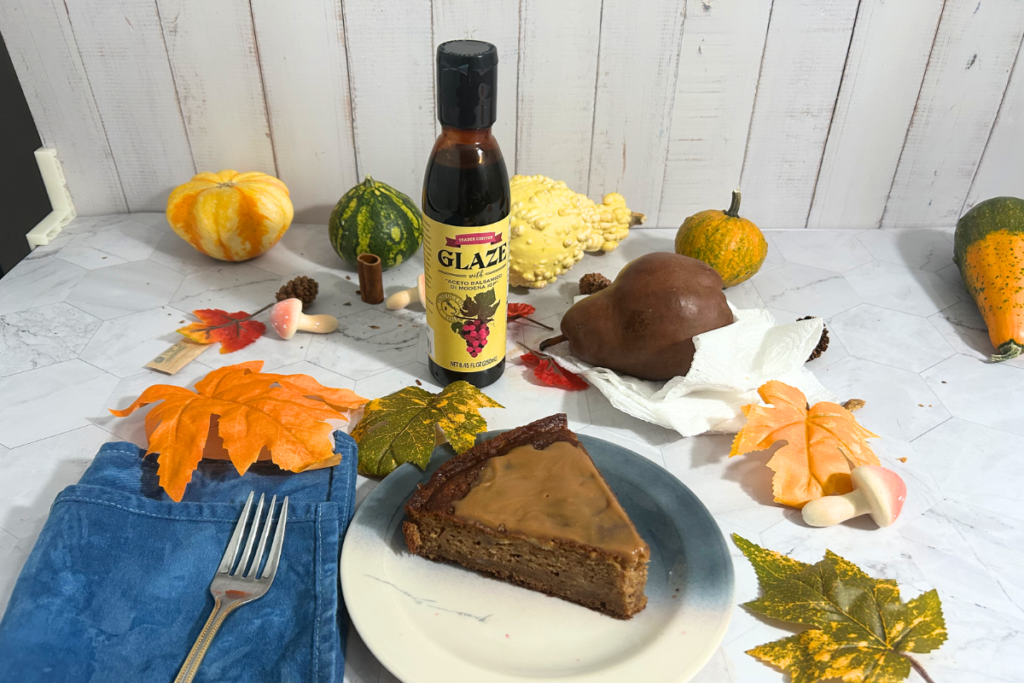
The vinegar factor: A fruit vinegar glaze gives this cozy cake the same balancing lift that lemon glaze gives a pound cake—without turning it into a citrus dessert.
Pears are one of the quiet stars of the holiday season. They pair beautifully with cinnamon, ginger, vanilla, toasted nuts, and brown sugar, but those warm flavors can become a little too sweet or heavy without something to brighten them.
That is where pear vinegar—or a mild grape vinegar—comes in.
A small amount in a simple glaze adds lift and contrast to a tender, spiced cake. Pear vinegar is especially nice because it reinforces the fruit without overwhelming it.
Spiced Pear Cake with Pear Vinegar Glaze
Equipment
- 1 9 inch cake pan
- Mixing bowls
- 1 Wire whisk
Ingredients
For the Pear Cake
- 1 1/2 cups all-purpose flour
- 1 tsp baking powder
- 1/2 tsp baking soda
- 1 tsp ground cinnamon
- 1/2 tsp ground ginger
- 1/4 tsp nutmeg
- 1/2 tsp fine salt
- 1/2 cup unsalted butter, softened
- 3/4 cup packed light brown sugar
- 2 large eggs
- 1 tsp vanilla extract
- 1/2 cup plain Greek yogurt or sour cream
- 1 1/2 cup peeled, finely diced ripe pear
- 1 1/2 cup chopped walnuts or pecans, optional
For the Glaze
- 3/4 cup confectioners’ sugar
- 1 – 2 tbsp pear vinegar or mild grape vinegar
- 1 tbsp milk or cream, as needed
Instructions
- Heat the oven to 350°F. Grease and line a 9-inch round cake pan
- Whisk together the flour, baking powder, baking soda, cinnamon, ginger, nutmeg, and salt
- In another bowl, beat the butter and brown sugar until light and fluffy. Beat in the eggs, one at a time, then add the vanilla and Greek yogurt
- Add the dry ingredients and stir just until combined. Fold in the diced pear and nuts, if using
- Spread the batter into the prepared pan and bake for 35 to 42 minutes, until a toothpick inserted in the center comes out clean
- Cool the cake in the pan for 15 minutes, then transfer to a rack to cool completely.
- Whisk together the confectioners’ sugar, vinegar, and enough milk or cream to make a pourable glaze. Drizzle over the cooled cake
If you have grape vinegar, its gentle wine-like character is also wonderful with pears, walnuts, and winter spices.
When Can Vinegar Replace Citrus in Dessert?
Use vinegar when the recipe needs brightness, acidity, or balance —not necessarily when it needs a bold lemon, lime, or orange flavor.
Apple cider, pear, grape, Champagne-style, and white wine vinegars are often the best choices for holiday vinegar desserts because they are lighter and more nuanced than strongly flavored vinegars. Distilled white vinegar is especially useful in meringue because its flavor disappears in such a small amount.
A good rule is to start small. You can add a splash of fruit vinegar to a berry sauce, caramel, fruit compote, or glaze, but too much can quickly overpower delicate ingredients.And one important distinction: this flexibility is for baking and cooking, not canning or food preservation. When preserving foods, always follow a tested recipe and use the specified acid.
This holiday season, let vinegar earn a place beyond the savory table. Whether it is the surprising centerpiece of a pie, the invisible secret to a beautiful pavlova, or the finishing note in a pear cake glaze, vinegar can make dessert taste brighter, more balanced, and memorably festive.
Important to remember: Vinegar can be useful in baking and cooking when a recipe needs acidity, but it is not an interchangeable substitute in canning or food preservation. Always use the acid and proportions specified in a tested preserving recipe.
Holiday Vinegar Desserts FAQs
Does vinegar make desserts taste sour or vinegary?
Not when it is used in the right amount. In most holiday vinegar desserts, vinegar works as a balancing ingredient: it cuts through sweetness, brightens fruit flavors, and can improve texture. Apple cider vinegar brings a gentle fruity tang to pie, while the small amount of white vinegar in pavlova is not noticeable in the finished meringue.
What type of vinegar is best for baking desserts?
The best vinegar depends on the recipe. Apple cider vinegar is a natural choice for pies, cakes, and apple or spice desserts. Distilled white vinegar works well in meringues because it has a neutral flavor. Pear, grape, Champagne-style, and white wine vinegars are lovely in glazes, fruit compotes, and desserts featuring pears, berries, or stone fruit.
Can I substitute vinegar for lemon juice in desserts?
Sometimes. Vinegar can replace lemon juice when a recipe mainly needs acidity or balance, such as in a glaze, fruit sauce, or baking recipe with baking soda. However, vinegar cannot provide lemon’s aroma or zest, so it is not a complete flavor substitute. Do not swap vinegar and citrus juice in canning or preservation recipes; follow a holiday vinegar dessert tested recipe exactly.