
Vinegar and Blood Sugar: What’s Hype and What’s Actually Helpful?
This post contains affiliate links to products and books I genuinely use and love. If you buy through my links, I may earn a small commission as an Amazon Associate or through my affiliation with other retailers from qualifying purchases that you make at no extra cost to you.

If you live with diabetes, prediabetes, insulin resistance, or you’re just watching carbs more closely, you’ve probably seen the claims:
- “Take a shot of apple cider vinegar and your blood sugar will stay low.”
- “Drink vinegar before meals to cure insulin resistance.”
- “ACV gummies replace meds—no side effects!”
That kind of marketing is everywhere, and it’s confusing at best and dangerous at worst.
Vinegar can gently help with blood sugar control for some people, but it is not a treatment for diabetes or prediabetes—and it can be unsafe if you treat it like a medicine instead of a small food tweak. Think of it as a supporting actor that works best alongside medication, monitoring, and all the boring‑but‑effective basics your doctor already talks about.
Here’s the honest middle ground:
- Some small studies have found that vinegar can modestly lower post‑meal blood glucose or improve insulin sensitivity in certain situations.
- The effects are not huge, not guaranteed, and definitely not enough to replace medication, monitoring, or diet changes.
- Vinegar has real safety limits—for your teeth, digestion, and medications—so more is not better.
The rest of this post is about what those studies tend to show, what that means (and doesn’t mean) in real life, and how to build a modest, doctor‑friendly vinegar habit if you decide it fits you.
If you’re interested in learning more about vinegar, check out The Science of Vinegar Fermentation on this site.
How Vinegar May Affect Blood Sugar (In Plain Language)
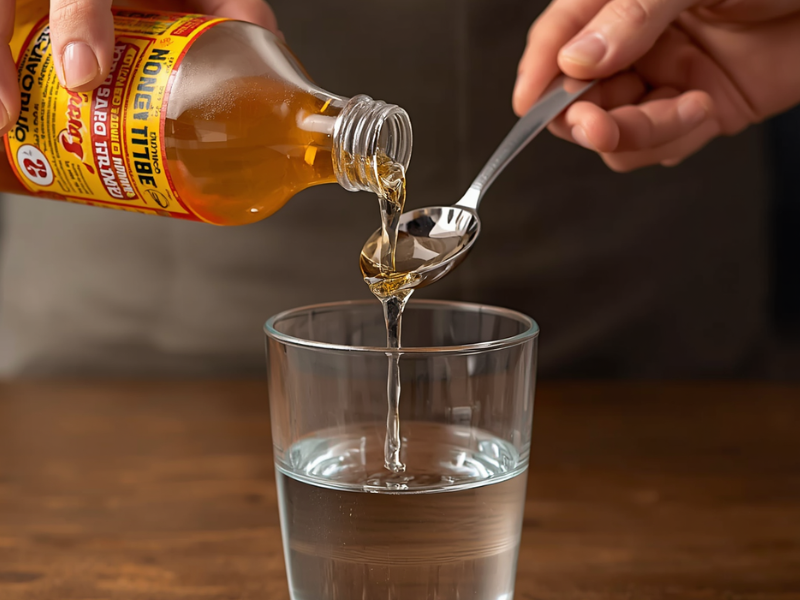
Most of the research looks at acetic acid, the main active component in vinegar, and how it interacts with carbohydrate‑heavy meals.
Slower Stomach Emptying
Vinegar may slow how quickly food leaves your stomach, which can blunt the speed of the blood sugar spike after you eat.
Improved Insulin Sensitivity
In some small studies, vinegar taken with a high‑carb meal appears to help the body use insulin more efficiently.
Carb Absorption Changes
Acidifying a meal may slightly affect how enzymes break down starch into glucose.
What This Does Not Mean:
- It does not “cancel out” a very high‑sugar or high‑carb meal.
- It does not fix underlying insulin resistance.
- It does not guarantee a specific number on your meter or CGM.
At best, vinegar is a tiny nudge in the right direction when your overall habits are already geared toward blood sugar management.
What Studies Tend to Look Like (And What That Means for You)

Most vinegar‑and‑blood‑sugar research shares a few features only a small groups of participants who dine on controlled meals (often very starcy) eaten in a lab setting. Vinegar doses often around 1–2 tablespoons (15–30 ml) diluted in water and taken just before or with the meal.
Common Findings
- People sometimes have a smaller spike after eating when they take vinegar with the meal compared to when they don’t.
- Some studies show improved insulin sensitivity in people with insulin resistance or type 2 diabetes under those conditions.
- Effects tend to be modest, and not everyone responds the same way.
What This Means For Your Kitchen
If vinegar affects your blood sugar, it’s most likely to show up as a slightly smoother curve, not a dramatic “flatline.” Timing matters as best results are shown when taking it with or just before a carb‑heavy meal has been the typical setup. You’d still need to watch your meter/CGM to see if it does anything for you, specifically.
Safety First: When Vinegar and Blood Sugar Don’t Mix Well
Before esablishing any “vinegar habit,” it’s critical to talk through the safety side. Vinegar is still an acid, and it can cause real problems:
Digestive Issues
Large or frequent doses of vinegar can irritate the esophagus and stomach, worsen reflux or heartburn, or cause nausea or discomfort if you’re sensitive.
Tooth Enamel
Sipping straight or strong vinegar regularly can slowly erode tooth enamel, especially if you take vinegar “shots” and fail to properly dilute the vinegar drink or sip acidic drinks all day. You may also create problems if you don’t rinse your mouth afterward. It’s recommended to use a reusable metal or silicone-tipped straw when drinking vinegar. I go into more detail about vinegar and tooth enamel in this post.
Low Blood Sugar (Hypoglycemia)
If you use insulin or certain diabetes medications, anything that changes how your body handles carbs can influence your numbers. For some people vinegar + the usual medication dose can contribute to lower‑than‑expected blood sugar, especially if you’re already on the edge. This is one reason any vinegar habit should be discussed with your healthcare team.
Medication and Kidney Considerations
Vinegar can interact with certain diuretics and other meds that affect potassium and fluid balance and may not be appropriate for conditions like advanced kidney disease, where extra acid load may not be wise.
Bottom line: “Natural” doesn’t mean “automatically safe.” If you have diabetes, prediabetes, kidney issues, or take multiple meds, always loop your clinician in before making vinegar a daily thing.
Simple Tools for a Safe Vinegar Habit
It’s easier to maintain a healthy vinegar regimen if you have these items on hand.
There are several other vinegars that you can incorporate into your vinegar diet to help control blood spikes, including balsamic or rice wine vinegar, but I usually reach for ACV first.
Guessing “about a spoonful” of vinegar is an easy way to overdo it. A clearly marked set of measuring spoons makes it simple to add the right amount recipe every time.
Great way to enjoy a just the right amount of a tasty vinegar shot.
Always nice to have on hand to create a healthy salad dressing and store it with an airtight lid.
A Doctor‑Friendly Vinegar Habit: Start Small, Track, and Tweak

If your healthcare provider gives you the green light to experiment with vinegar and blood sugar, here’s a cautious, realistic way to start.
Step 1: Choose Your Vinegar and Dilution
To Prepare:
- Use standard 5% vinegar (apple cider or white).
- Skip “cleaning vinegar” or extra‑strong products.
- Never take it straight—always dilute it.
A gentle starting point:
- 1–2 teaspoons vinegar in a large glass of water (8–12 ounces).
- Optionally sipped just before or with a meal.
If that feels fine, some people gradually move toward 1 tablespoon (15 ml) in water, but more is not necessarily better.
Step 2: Pick One Meal to Test
Choose:
- A meal you eat fairly often.
- Something with a known carb load (for you)—for example, oatmeal with fruit, or a portioned bowl of rice, or pasta with a side.
Test plan:
- Eat that meal without vinegar a couple of times and note your blood sugar pattern (finger sticks or CGM).
- On another few days, have the same meal, same portion, and add your diluted vinegar drink just before or with the meal.
- Compare the curves or readings.
This is about your personal response, not what an article says should happen.
Step 3: Build a Reasonable Routine (If It Helps)
If you and your healthcare team see a consistent, modest benefit and no safety issues, you might:
- Limit vinegar drinks to once or twice a day, tied to specific meals.
- Keep the dose modest (1–2 teaspoons to 1 tablespoon in plenty of water).
- Treat it as a support, not a license to eat anything in any amount.
And if you don’t see a clear benefit? It’s okay to let the vinegar stay in the salad dressing and focus energy on the big levers—carbs, fiber, movement, meds, sleep.
Food‑First Ways to Use Vinegar with Blood Sugar in Mind

You don’t have to think in terms of “shots” to explore vinegar and blood sugar safety. In fact, many clinicians would rather see vinegar used in food and meals instead of as a separate “supplement.”
Here are gentle, everyday options:
Vinegar‑Rich Salad with ‘Carbier’ Meals
- Have a big green salad with a vinegar‑forward dressing before or with meals that include bread, pasta, rice, or potatoes.
- The combination of fiber + acid + slower eating can all work in your favor.
Basic dressing template:
- 2–3 tablespoons vinegar
- 3–4 tablespoons olive oil
- ½–1 teaspoon mustard
- Pinch of salt and pepper
- Optional: finely minced garlic or shallot
Grain and Bean Bowls with Tangy Dressings
- Toss lentils, beans, or hearty grains with vinegar‑based dressings.
- Vinegar adds flavor so you rely less on sugar‑heavy sauces.
Pickled Veggies as “Extra Flavor”
- Use quick‑pickled onions, cucumbers, or radishes to add zing to tacos, sandwiches, and bowls instead of sugary condiments.
- The bonus: extra fiber from veggies, not extra carbs from sauces.
These approaches keep vinegar in the realm of food and cooking, which is where it belongs for most people.
Myths to Let Go Of (Gently)
“Vinegar Can Replace My Diabetes Meds”
There is no solid evidence that vinegar can safely replace prescribed diabetes medications. If you stop or lower meds on your own because you’re taking vinegar, you’re taking a real risk.
“More Vinegar = Better Control”
Beyond a modest amount, you’re more likely to run into side effects (tooth enamel, stomach upset) than more benefit. Think teaspoons to a tablespoon—not big glasses of intense vinegar.
“Vinegar Will Cancel Out Junk Food”
Nope. Vinegar might modestly affect the shape of your blood sugar curve after a meal, but it does not erase the impact of very high‑sugar or ultra‑processed foods.
A Realistic Vinegar and Blood Sugar Game Plan
If you want vinegar in your toolkit and your doctor is on board, here’s a grounded way to use it:
- Talk to your clinician first, especially if you use insulin, sulfonylureas, or have kidney or GI issues.
- Start low and go slow—test 1–2 teaspoons in plenty of water with a specific meal and see how you feel.
- Watch your meter/CGM data around that meal for a couple of weeks.
- If it seems helpful and you tolerate it well, keep it modest and tied to food (salads, dressings, grain bowls), not huge “shots.”
- Don’t change medications without professional guidance.
- Remember that carb quality, overall pattern, movement, sleep, and stress are still the main levers for blood sugar.
Used this way, vinegar becomes part of a doctor‑friendly routine: a flavorful helper in meals, maybe a tiny nudge on a curve here or there, but never the star of the show or the substitute for real treatment.