
Vinegar and Pets: Pet-Safe Vinegar Cleaning Tips for a Fur-Filled Home
This post contains affiliate links to products and books I genuinely use and love. If you buy through my links, I may earn a small commission as an Amazon Associate or through my affiliation with other retailers from qualifying purchases that you make at no extra cost to you.
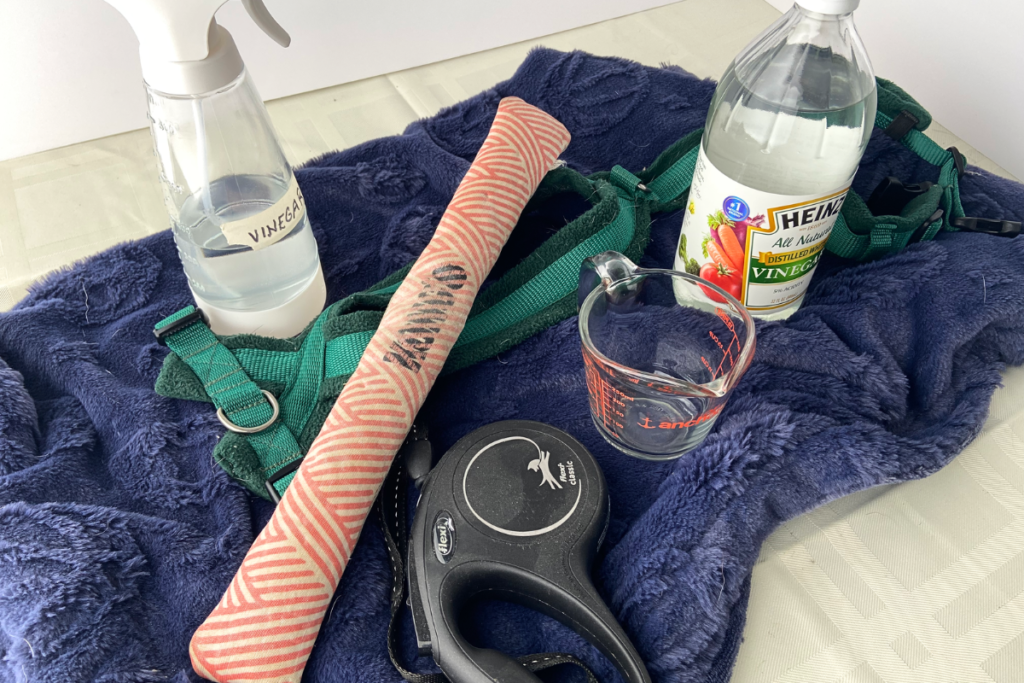
If you share your home with a dog, cat, or any species of furry companions, you know that as much as we love them, they come with paw prints…and hair…and smells. And, unfortunately, because accidents will happen, there’s the occasional “surprise” on the rug.
Is Vinegar Safe? Here’s What You Should Know
Vinegar won’t fix everything about living with pets. For instance, there have been many studies conducted about the benefits of adding apple cider vinegar into a pet’s diet, but no compelling evidence has been identified to recommend routinely feeding ACV or using it topically as a general health aid. In fact, most studies highlight the need for caution with acidity and dosing. Cats in particular are very sensitive to the acid in vinegar and undiluted vinegar can irritate the mouth and digestive tract.
However, vinegar does excel as one of the simplest, safest tools you can keep under your sink for cleaning up after your pets in a way that’s kinder to both your animals and your home.
Why Vinegar Makes Sense in a Pet Household
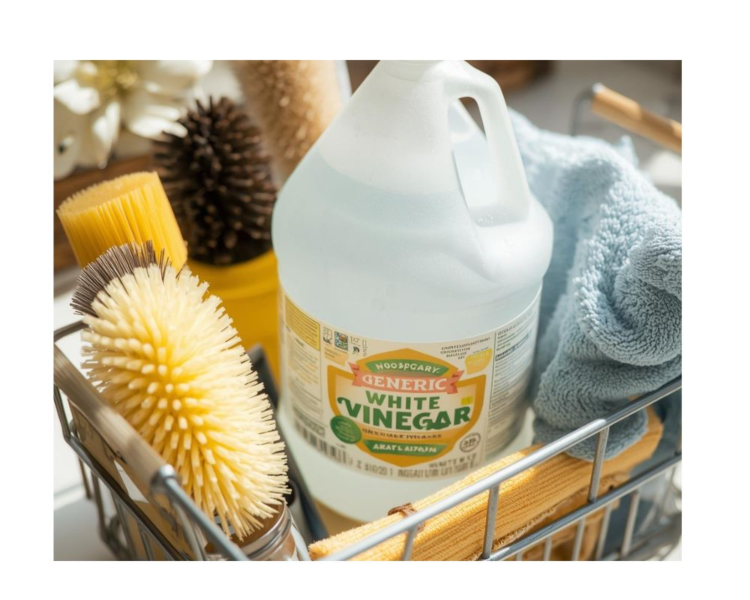
Vinegar has a long history as a natural cleaner and deodorizer, and it fits beautifully into a household that wants to cut down on strong chemical cleaners without giving up on a clean, fresh-smelling house. With a basic bottle of distilled white vinegar (and maybe some baking soda and a glass spray bottle), you can tackle a surprising number of pet messes and maintenance tasks.
The big appeal of vinegar for pet cleanup is its combination of effectiveness, simplicity, low cost, and relative safety when used correctly. Distilled white vinegar is acidic, which helps break down mineral deposits, cut through some greasy residues, and neutralize many odors instead of just masking them with fragrance. It also rinses clean and doesn’t leave behind that chemical “film” some conventional cleaners do.
If you’re trying to reduce the number of strong synthetic fragrances, dyes, and potentially irritating ingredients your pets encounter on the floors and fabrics they live on, vinegar is an easy win. Most animals spend a lot of time close to surfaces—lying on the floor, grooming their paws, rubbing on furniture—so anything you use on those surfaces becomes part of their environment in a very literal way. A vinegar-based cleaning routine won’t be perfect for every situation, but it’s a useful foundational tool.
Surfaces You Should Never Clean with Vinegar

While vinegar is a non-toxic powerhouse, its high acidity means it isn’t a “one-size-fits-all” solution. To help you avoid a “miss” that could lead to permanent damage, here are the surfaces you should never clean up pet messes with vinegar:
- Natural Stone (Marble, Granite, Limestone): The acid in vinegar will “etch” or eat away at the surface of natural stone, leaving permanent dull spots or pits.
- Finished Wood Surfaces: While great for some floors, the acid can eventually break down the protective finish on fine wood furniture or certain waxed floors, leaving them looking cloudy.
- Cast Iron & Aluminum: Vinegar can cause pitting and reactive damage to these metals. Stick to mild soap and water for your favorite skillet.
Your choice of vinegar also matters. White distilled vinegar (about 5% acetic acid) is the hero for these hacks. Cleaning‑strength vinegars (6–10%) and industrial 20–30% products exist, but those are much stronger and need heavy‑duty precautions—great for stripping mineral deposits outside, not so great for everyday kitchen counters.
Safety Cleaning Tips for Pet Households
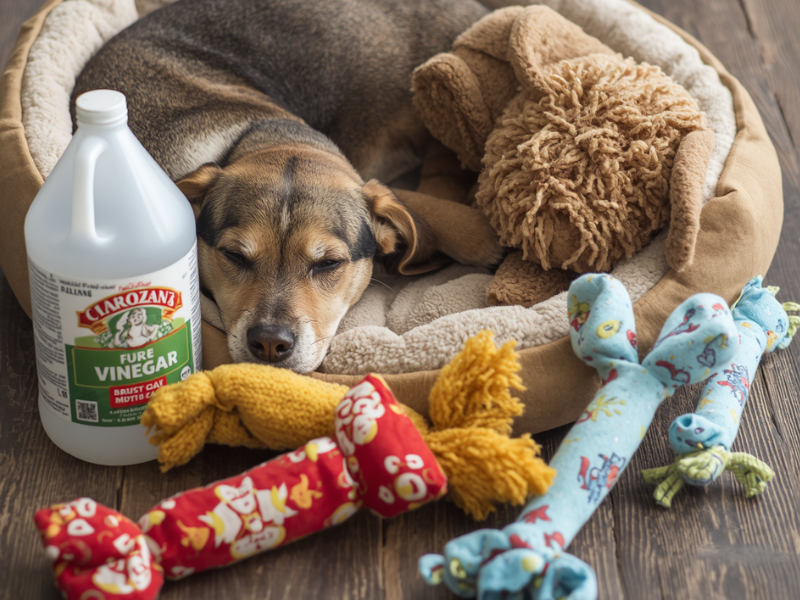
- Quick Safety Notes to Remember:
- Never spray vinegar near your pet’s eyes, nose, or mouth.
- Never apply straight vinegar to your pet’s skin or ears unless a veterinarian specifically recommends and guides you.
- Always dilute vinegar for cleaning, especially on surfaces your pets walk or lie on.
- Always remove pets (if possible) from areas being cleaned with vinegar until the area dries completely.
What You Need to Start
The workhorse of vinegar cleaning. Distilled white vinegar is affordable, safe, and can last practically forever if stored properly
Handy to have around for those really tough-to-clean pet messes that vinegar alone can’t conquer.
Washable and resuable.
I always have a spray bottle containing a vinegar cleaning mixture under my sink to have at the ready.
I always look for a detergent that is plant-based, hypoallergenic and removes stains and fights odors without leaving a scent.
This durable pet bed cover helps keep furniture free of dirt and hair and prevents stains from happening in the first place.
Stop your dog from tracking dirt and mud into the house before they spread it around your home.
Everyday Pet Messes Vinegar Can Help With
Let’s start with the realities: accidents, spills, and day-to-day grime. Equipment to have on hand includes enzymatic pet stain removers, microfiber cloths, and reusable mop pads.
Neutralizing Pet Urine Odors on Hard Surfaces
When a dog or cat has an accident on a washable hard surface (like tile or sealed vinyl), a simple diluted vinegar solution can help neutralize the smell after you wipe up the mess.
Basic approach:
- Blot up as much of the liquid as you can with paper towels or an microfiber cloth.
- Mix roughly equal parts white vinegar and water in a glass spray bottle.
- Spray the area generously, let it sit for a few minutes, then wipe clean and dry thoroughly.
Neutralizing Pet Urine Odors on Carpets, Rugs, and Cloth Surfaces
On carpets and cloth surfaces, things get trickier because urine soaks into fibers and padding. Vinegar can be part of the cleanup, but you’ll usually want to:
- Blot deeply with absorbent towels.
- Apply a diluted vinegar solution.
- Blot again.
- Follow up with an enzymatic cleaner designed for pet urine to break down odor-causing compounds at a deeper level.
That sequence uses vinegar for initial odor control and pH shift, then leans on enzymes for the heavy lifting. You get the best of both worlds.
Dealing With Pet Vomit and Other “Mystery Spots” on Hard Surfaces
For solid or semi-solid messes on hard surfaces:
- Scoop or scrape up what you can into the trash.
- Wipe the area with soapy water.
- Finish with a light spray of diluted vinegar, then wipe dry.
Dealing With Pet Vomit and Other “Mystery Spots” on Rugs and Mats
On washable rugs or mats, you can often:
- Remove as much of the mess as possible.
- Rinse the spot with cool water.
- Treat with a vinegar-and-water mixture.
- Then launder according to the fabric’s instructions.
Always test any vinegar solution on a small, hidden area of fabric or flooring first to make sure there’s no discoloration.
Freshening Pet Bedding and Soft Surfaces
Pet beds, blankets, and slipcovers can hold onto smells even when they look clean. Adding a cup of white vinegar to the rinse cycle (instead of fabric softener) can help cut lingering odors and residue in many washable items.
- Check care labels to make sure vinegar is safe for the fabric.
- Use unscented detergent if you’re trying to avoid fragrances.
- Dry thoroughly—sunlight on an outdoor line is a bonus when weather allows.
You can also lightly mist empty pet beds and fabric-covered furniture with a diluted vinegar solution, then allow to air dry, to help freshen between washes. Just be sure your pets are elsewhere while you spray, and let everything dry completely before they snuggle back in.
Pet-Safe Vinegar Floor Cleaner for Fur-Covered Homes
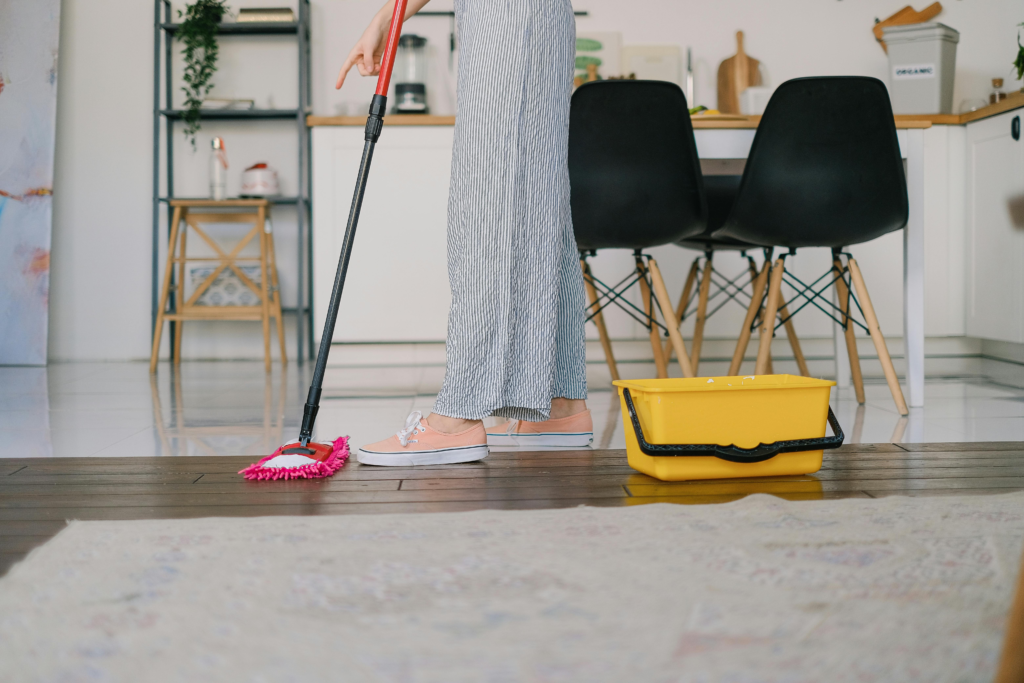
Floors are where everything ends up: fur, dander, outside dirt, and the occasional drool or paw-print trail. Vinegar is especially handy on many sealed, non-porous floors.
A simple pet-friendly floor wash:
- Fill a bucket with warm water.
- Add ½ to 1 cup of white vinegar (depending on bucket size).
- Mop as usual, wringing well so floors don’t stay overly wet.
- Let floors air dry before letting pets back into the area.
Important caveats:
- Avoid vinegar on natural stone (like marble, limestone, or some tiles) because the acid can etch and damage the surface.
- Always check the manufacturer’s recommendations for specialty flooring.
- Make sure paws stay off wet floors so no one slips.
If you normally use strong-scented commercial cleaners and switch to vinegar, you may notice your house smells a bit like a salad for a short while. The vinegar smell usually dissipates quickly as it dries, taking other odors with it.
Cleaning Pet Bowls, Crates, and Hard Gear
Anywhere you find mineral build-up, slime, or stubborn residue, vinegar can often help.
Some examples:
- Food and water bowls: After washing with soap and hot water, a soak in a vinegar-and-water solution can help dissolve mineral deposits (especially in water bowls).
- Crates and carriers: After removing bedding and wiping down with soapy water, you can follow with a diluted vinegar spray, let it sit briefly, then wipe or rinse and dry thoroughly before your pet goes back in.
- Litter box areas: Vinegar can be used on the floor and walls near the box (not on certain plastic surfaces that might be sensitive) to help tackle lingering smells after you scoop and wipe.
As always, rinse food- and water-contact items well and dry them before refilling.
A Word About Safety, Smell, and Respecting Your Pet’s Nose
Pets live in a world of scent, and vinegar is strong. While many people like vinegar as a “clean” smell, dogs and cats may find it intense. That doesn’t mean you can’t use it, but it’s worth taking simple steps to adapt vinegar cleaning practices to protect your pet.
If your pet has respiratory issues, skin sensitivities, or a history of allergies, it’s always wise to ask your vet before making big changes to your cleaning routine. “Natural” doesn’t automatically mean “risk-free,” and what’s safe for most animals may not be right for every individual.
Building a Cleaner, Kinder Routine With Vinegar
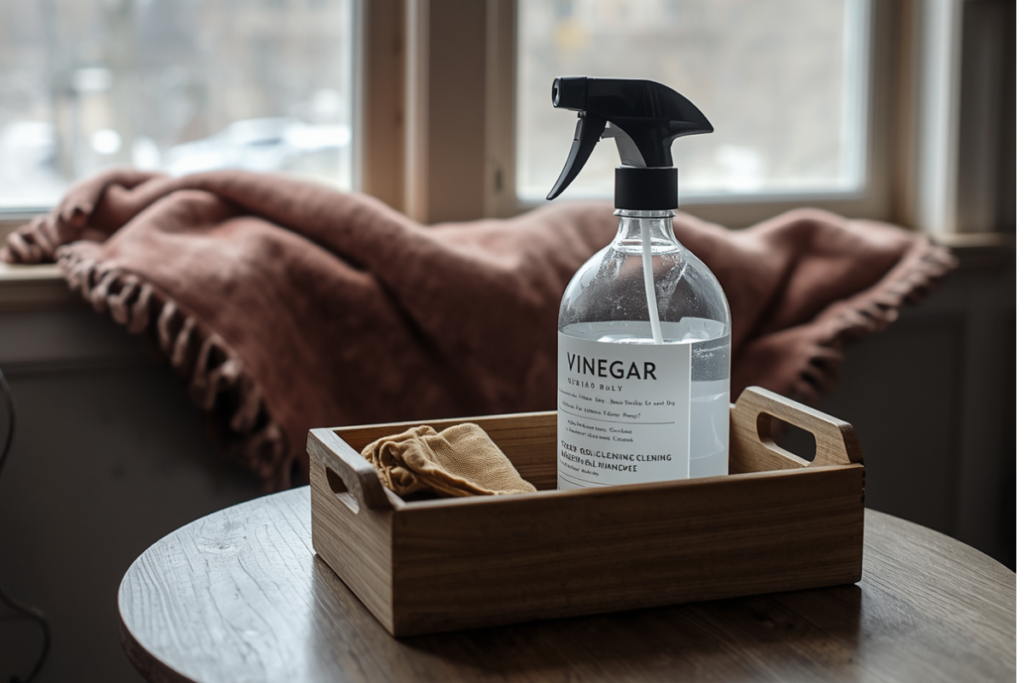
There’s something satisfying about knowing that one modest bottle of vinegar can help you deal with so many of the messes and maintenance chores that come with life alongside animals. It doesn’t replace every cleaner in the house, and it doesn’t take the place of good habits like regular vacuuming, grooming, and litter box care—but it does simplify your toolkit and dial down the chemical load a bit.
A few simple places to start:
- Keep a labeled spray bottle of diluted white vinegar under the sink for hard-surface wipe-ups.
- Add vinegar to the rinse cycle when you wash pet bedding and blankets (when the fabric allows).
- Use vinegar as a follow-up step after the initial cleanup of accidents, then pair it with an enzymatic cleaner for deep odor removal on carpets.
From there, you can experiment and see where vinegar fits best into your own rhythm. Every pet household is different, and part of the fun (and the reality) is finding the mix of tools and routines that work for you, your home, and the animals who share it.
If you decide vinegar earns a permanent spot in your pet-cleaning routine, you may find that your cleaning cupboard gets simpler, your house smells fresher, and your peace of mind goes up just a bit—knowing you’re doing your best to keep things clean and safe, without going overboard on harsh ingredients.