
Can Vinegar Really Kill Mold and Mildew?
This post contains affiliate links to products and books I genuinely use and love. If you buy through my links, I may earn a small commission as an Amazon Associate or through my affiliation with other retailers from qualifying purchases that you make at no extra cost to you.
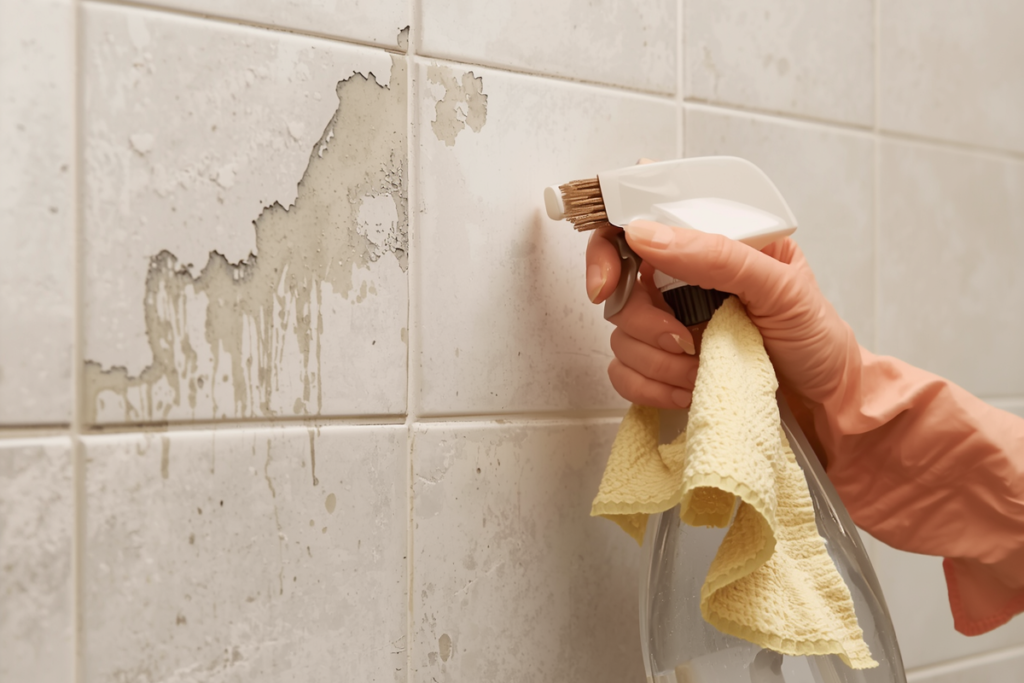
Vinegar can be useful against light mildew and everyday musty buildup, but it is not a cure‑all for serious mold problems and relying on it for the “black stuff” in damp walls or ceilings can leave you with a hidden, growing, and potentially dangerous mess.
In this post, we’ll walk through where vinegar mold cleaning makes sense, where it absolutely doesn’t, and how to tell the difference between “wipe it up yourself” mildew and “call in the big guns” mold.
What’s the Difference Between Mold and Mildew
When people talk about “killing mold with vinegar,” they’re usually thinking of two different things:
Light Mildew
The surface‑level, grayish or spotty film that shows up on shower grout, window sills, fridge seals, and other damp spots.
Serious Mold Growth
Thicker, fuzzy, or slimy patches that spread on drywall, subflooring, insulation, or behind cabinets—especially after a leak or flood.
Vinegar’s Cleaning Power
Vinegar does have mild antimicrobial properties, and it’s reasonably good at helping clean and control light mildew on hard, non‑porous surfaces. It can:
- Help loosen mildew staining on tile and grout.
- Cut soap scum and mineral film so you can scrub away surface growth more easily.
- Reduce musty odor in small, low‑risk areas like shower caulk or bathroom window tracks.
But vinegar is not a medical‑grade disinfectant, and it’s not designed to meet mold‑remediation standards for serious growth in porous materials like drywall, insulation, carpeting, or unfinished wood. It can’t reliably:
- Penetrate deeply into porous materials to get at the hidden roots (hyphae) of mold.
- Handle heavy contamination after roof leaks, plumbing failures, or flooding.
- Keep you safe from spores and toxins in large, established mold colonies.
So “Can vinegar really kill mold?” becomes a bit more of a focused question to determine it can help you clean up light mildew and mild surface mold. Keep in mind, it should never be your only line of defense for big or persistent mold problems.
Mildew vs. Dangerous Mold: How to Tell the Difference
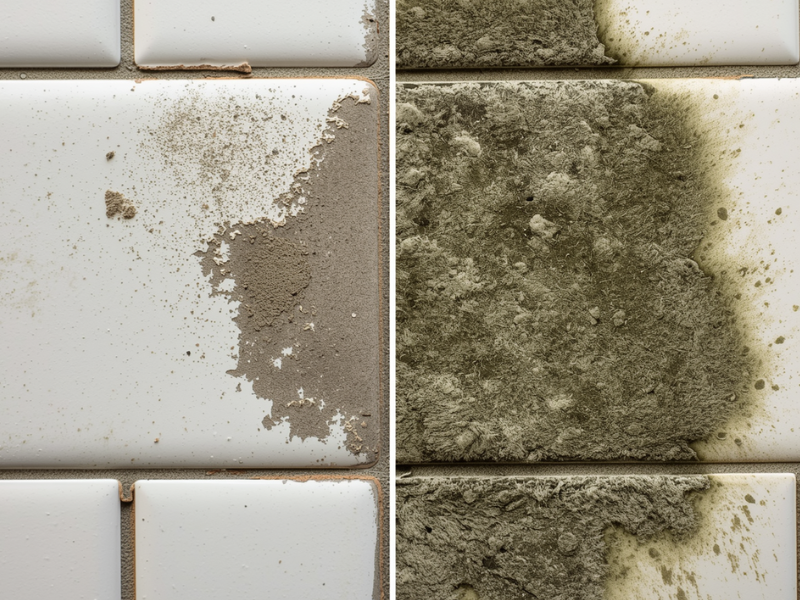
Before you reach for the vinegar, step back and look at what you’re dealing with.
Signs You’re Probably Seeing Light Mildew
Mildew tends to be:
- Thin, surface‑level, and flat.
- Grayish, light brown, or scattered black specks on grout, caulk, or bathroom tile.
- Found in predictable, high‑moisture spots: shower corners, sink caulk, fridge seals, around bathroom windows.
It usually comes with a light musty smell, but not a wall‑of‑odor that hits you when you enter the room. It often reappears slowly if you don’t improve ventilation.
Signs of More Serious Mold Growth
Mold that calls for more than “vinegar and a sponge” often appears as:
- Larger patches that keep spreading despite regular cleaning.
- Fuzzy, velvety, or slimy growth rather than a thin film.
- Dark streaks or blotches on drywall, ceilings, subfloors, or around baseboards.
- Moldy odor that lingers even when you can’t see obvious growth.
- Areas associated with leaks, floods, or chronic dampness (around a leaky roof, behind a washing machine, under a sink).
If you see mold larger than about a bath towel in total area, or if it keeps returning even after scrubbing, it’s time to move out of the “vinegar mold cleaning” zone and into “professional assessment” territory. And if anyone in the home has asthma, allergies, or a compromised immune system, you’ll want to be especially conservative.
When Vinegar Helps: Light Mildew on Hard Surfaces
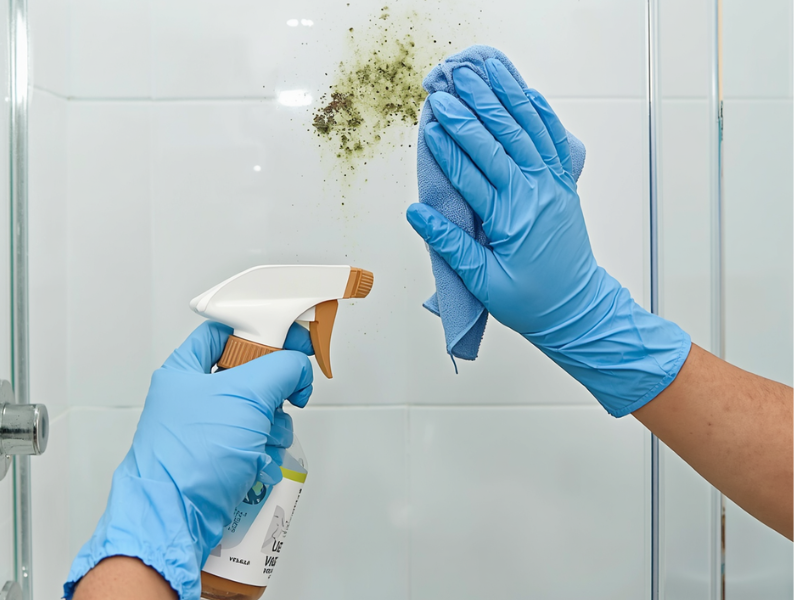
Let’s talk about where vinegar shines: small, surface‑level mildew on hard, non‑porous surfaces like tile, glass, and some sealed grout.
Good Candidates for Vinegar Mold Cleaning
- Shower tile and glass doors with light mildew spotting.
- Grout lines with early discoloration (not deeply stained, crumbling grout).
- Silicone caulk with mild surface mildew (not heavily blackened or deteriorated).
- Window tracks, sills, and frames (if they’re hard surfaces and the growth is small and recent).
- Fridge gaskets and other rubber seals with a little mildew film.
On these surfaces, vinegar is often strong enough to help break up growth and staining—but you still need mechanical scrubbing and good rinsing. It’s a cleaner and helper, not magic spray.
When Vinegar Is Not Enough (Or the Wrong Choice)
There are clear situations where vinegar should not be your main mold strategy:
- Large areas of mold (more than 10 square feet total).
- Porous materials: drywall, unfinished wood, insulation, carpet, ceiling tiles.
- Mold after a flood, roof leak, or plumbing disaster.
- Stubborn mold that keeps returning in the same area despite repeated cleaning.
- Situations where people in the home are getting sick, wheezy, or reactive.
This is not an issue to ignore. Exposure to mold can a range of health risks that include respiratory issues, allergic reactions, hypersensitivity pneumonitis, or toxic mold syndrome. In those cases, you need:
- A proper fix of the moisture source (leak, humidity, drainage).
- Removal and replacement of contaminated materials when appropriate.
- Clean‑up using protocols that go beyond household vinegar—often including containment, protective equipment, HEPA filtration, and sometimes stronger, mold‑specific products or professional remediation.
Vinegar can play a supporting role (for example, on bathroom tile after the underlying moisture issue is fixed), but it should not be the star of the show.
How to Use Vinegar Safely on Mildew (Step‑by‑Step)
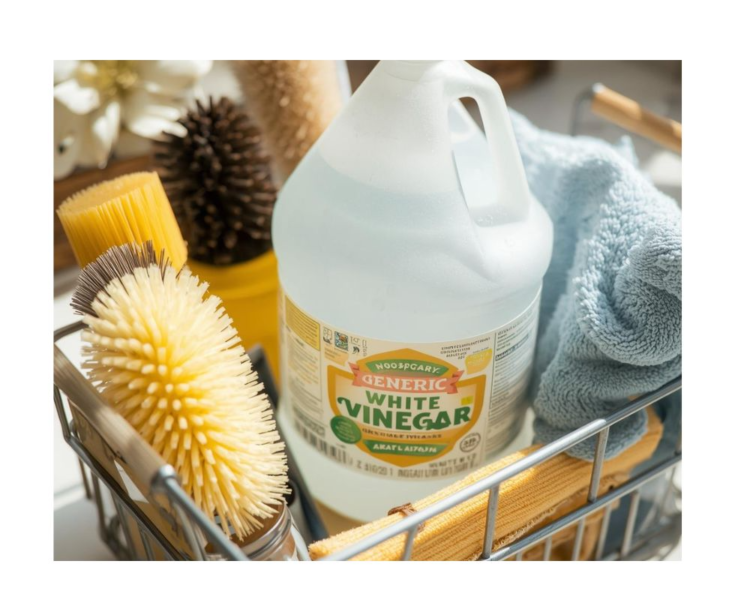
What You’ll Need
This is the workhorse I reach for when I’m tackling mild mildew and musty smells. Buying it by the gallon keeps costs low and means you’re not constantly running out mid‑laundry day.
Guessing “about a cup” of vinegar is an easy way to overdo it. A little measuring cup or a clearly marked pour bottle makes it simple to add the right amount to your rinse compartment every time without splashing all over the place.
Vinegar may only be mildly acidic, but I still like to protect my skin.
I like keeping a smaller, easy‑to‑grab spray bottle of my vinegar cleaning solution for special stains and uses.
Washable, sturdy, and made from eco-friendly materials.
Ideal for deep cleaning work.
Step‑by‑Step Vinegar Mildew Clean‑Up
- Ventilate the area.
Open windows or turn on the bathroom fan. Even though vinegar isn’t as harsh as many cleaners, you still don’t want to breathe mist in a small, closed space. - Put on gloves.
This protects your skin from both vinegar and mold or mildew particles. - Spray vinegar directly onto the mildew.
Use it undiluted for these small areas. Saturate the spots on tile, glass, or sealed grout. - Let it sit.
Allow the vinegar to sit for about 10–15 minutes. This gives it time to break up the film and help loosen staining. - Scrub the area.
Use a scrub pad or brush to agitate the surface. The physical scrubbing is doing a lot of the actual removal work here. - Rinse or wipe clean.
Wipe away loosened mildew and vinegar with a damp cloth or rinse with water (for showers and tubs). - Dry thoroughly.
Dry the area with a towel or let it air dry with good airflow. Dampness invites mildew right back. - Watch for regrowth.
If mildew keeps returning quickly in the same spot, look for the underlying moisture problem—poor ventilation, leaks, constantly wet caulk, etc.
Simple Vinegar Mold Cleaning “Recipe Cards”
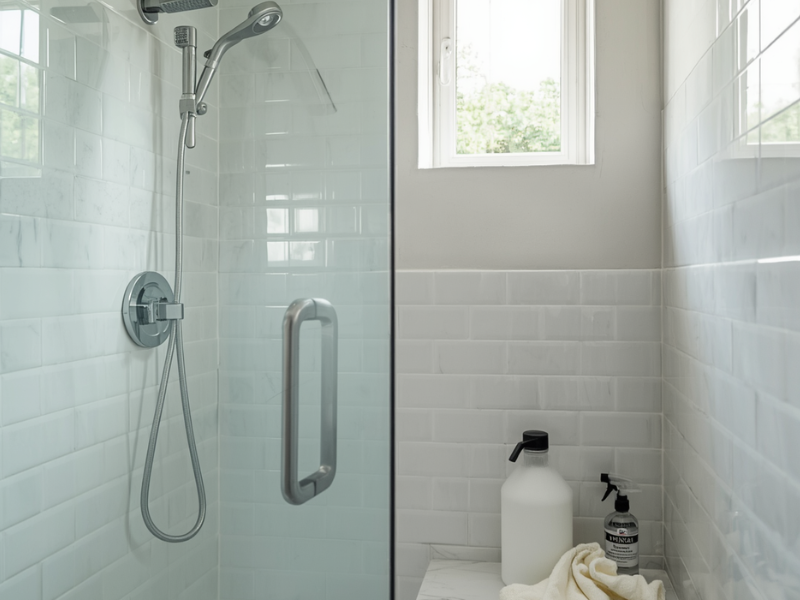
Recipe Card: Shower Tile and Grout (Light Mildew)
Best for: Small, surface mildew on ceramic or porcelain tile and sealed grout.
Ingredients:
- 1 cup white vinegar (5%)
- Spray bottle
Directions:
- Spray directly on mildew‑spotted areas.
- Let sit 10–15 minutes.
- Scrub with a brush, focusing on grout lines.
Use frequency:
Once a week in problem areas until under control, then as needed.
Recipe Card: Window Sills and Tracks
Best for: Light mildew on hard window sills, vinyl frames, and tracks.
Ingredients:
- White vinegar in a spray bottle
- Cotton swabs or a small brush
Directions:
- Lightly spray the affected area (avoid saturating wood).
- Let sit 10 minutes.
- Scrub gently, then wipe dry with a cloth.
- Follow with better ventilation or a dehumidifier if condensation is a recurring issue.
Use frequency:
- As needed, especially during damp seasons.
Recipe Card: Fridge Gaskets and Seals
Best for: Mildew film on refrigerator door gaskets.
Ingredients:
- Equal parts white vinegar and water
- Small brush or cloth
Directions:
- Dip cloth or brush in the solution, wipe and scrub seals.
- Wipe with a clean damp cloth and dry.
Use frequency:
- Monthly, or whenever you spot mildew.
Safety Tips: Protecting Yourself While Cleaning Mold and Mildew
Even light mildew is still mold, and you don’t want to be careless.
- Wear gloves whenever you’re scrubbing mold or mildew.
- Wear a ventilating mask
- Use eye protection if you’re working overhead or in tight spaces.
- Avoid dry brushing or aggressive scraping that sends visible dust into the air.
- Ventilate well; don’t sit in a steamy little bathroom breathing vinegar mist and mold spores.
- If you feel dizzy, tight‑chested, or unwell while cleaning, stop and get fresh air.
If you discover a larger area of mold than you expected while cleaning (for example, you remove baseboard trim and find the wall behind is covered), it’s time to stop, mask up, and reassess whether you need professional help.
Preventing Mold So You Don’t Have to Clean It (As Often)
Vinegar mold cleaning is easier when you’re not constantly fighting new growth. Mold and mildew thrive on moisture + still air + organic material, so prevention is all about changing those conditions. You probably know the areas where mildew tends to build up around your place and if you live in a climate that encourages mold and mildew growth be vigilant.
- Run exhaust fans during and after showers (15–30 minutes).
- Keep bathroom doors open when not in use to promote airflow.
- Use a squeegee on shower walls and glass to remove water after each use.
- Fix leaks promptly—under sinks, around toilets, behind washers.
- Use a dehumidifier in chronically damp basements or laundry rooms.
- Choose mold‑resistant caulk and paint in high‑moisture areas.
The less moisture you give mold, the less you’ll need to rely on any cleaner – vinegar or otherwise.
Quick FAQ: Vinegar Mold Cleaning
Is vinegar enough to kill black mold?
For small, superficial spots on tile or non‑porous surfaces, vinegar can help clean and reduce mildew‑level mold. For significant black mold growth on walls, ceilings, or porous materials, vinegar is not enough; you need proper remediation and moisture control.
Can I mix vinegar and bleach to clean mold?
No. Never mix vinegar (acid) and bleach (chlorine); this can release dangerous chlorine gas. Stick to one product at a time, and for larger jobs, follow mold‑removal guidance rather than improvising.
Is vinegar safer than commercial mold sprays?
Vinegar is gentler in some ways and has fewer harsh fumes than many commercial sprays, but it’s also less powerful for serious mold. Use it for light mildew on hard surfaces, and don’t let “natural” become an excuse to ignore bigger mold problems that need professional attention.