
Vinegar and Tender, Juicy Meat: How Acid Really Works in Marinades
This post contains affiliate links to products and books I genuinely use and love. If you buy through my links, I may earn a small commission as an Amazon Associate or through my affiliation with other retailers from qualifying purchases that you make at no extra cost to you.
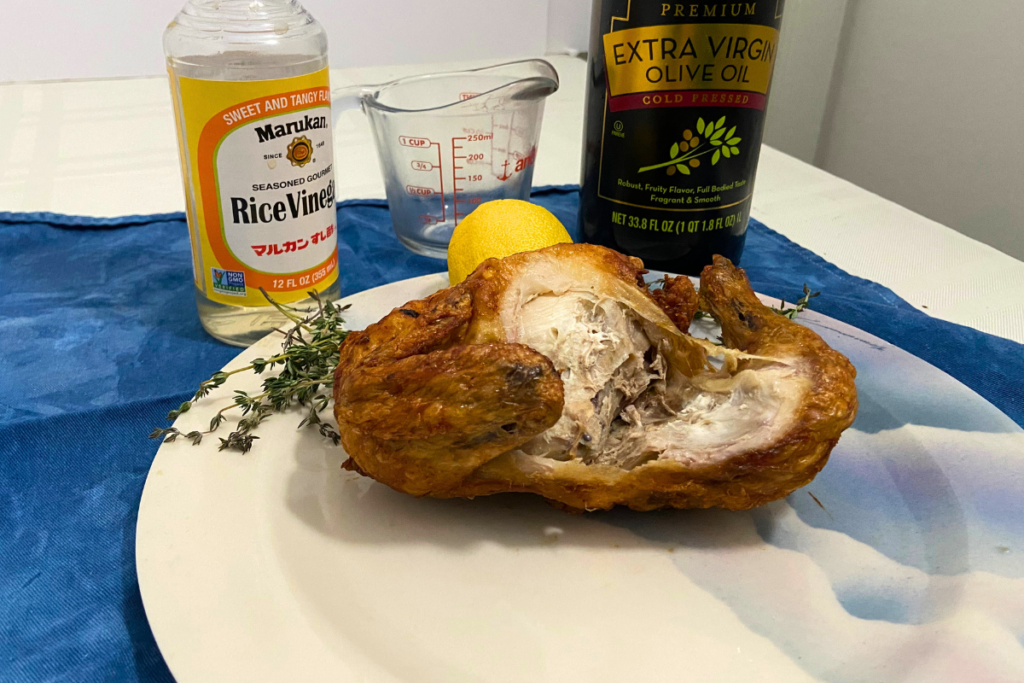
Here’s what may be a familiar situation when it comes to marinating with vinegar.
You’ve found a terrific vinegar marinade recipe to tenderize your meat or flavor your portobello mushroom. Then you wonder “How long should I marinate with vinegar and will marinating longer improve the taste of the meat?”
Vinegar can absolutely help you get tender, juicy meat, but only if you use it in the right amount, for the right time, and with the right supporting cast of salt, oil, and flavorings.
Vinegar’s reputation as a miracle tenderizer is well-earned, but vinegar is acetic and too much vinegar for too long can ruin dinner in its own special way. Use too much vinegar for too long, and you move from “flavorful and tender” to “tough outside, mushy inside” faster than you’d think.
This guide breaks down what vinegar really does in a marinade, how to keep your meat juicy, and exactly how long to soak different cuts so you get flavor, not sad, over‑marinated chew toys.
What Vinegar Actually Does to Meat (Science, But Simple)
Meat is mostly muscle fibers, connective tissue (collagen), and fat. When you pour vinegar into that environment, a few things occur. Acid starts to denature proteins on the surface. That means it changes their structure, causing them to tighten and then eventually start to break down.
The acid in the vinegar can loosen up connective tissue a bit and help certain cuts feel more tender but only up to a point. Acid also helps carry flavor deeper into the outer layers of the meat by slightly opening up the surface and working with salt.
The trouble starts when there’s too much acid for too long. The outside proteins tighten up and squeeze moisture out, making the surface feel tough and dry once cooked and with extended soaking, the outer layer can start to break down into a mushy or mealy texture.
So, vinegar is more of a surface conditioner and flavor booster than a magic potion that turns any cut into filet mignon. Used in balance, it gives you bright flavor and a slightly more tender bite; used carelessly, it does the opposite.
The Big Mistakes People Make with Vinegar Marinades
Let’s call out a few common myths and missteps.
“The Longer It Marinates, the Better”
This is the number‑one way to ruin meat with vinegar. Long, acidic marinades:
- Make the exterior tight and chewy.
- Turn the surface “crumbly” or mushy, especially with delicate meats like fish or thin chicken cutlets.
For most vinegar‑based marinades, you’re looking at 30 minutes to 12 hours, depending on the cut and certainly not days.
“Vinegar Alone Will Tenderize Any Cut”
Vinegar works best as a marinade in partnership with:
- Salt, which helps meat hold onto moisture and season throughout.
- Oil, which carries fat‑soluble flavors and protects the surface from drying.
- Aromatics like garlic, herbs, and spices, which provide the actual flavor profile.
A bowl of meat sitting in straight vinegar is basically on its way to becoming an unpleasant science experiment, not a delicious dinner.
“Marinade Penetrates All the Way Through”
Another myth. Marinades mostly affect the outer few millimeters of the meat. That’s enough for flavor and a pleasant surface texture, but don’t expect deep, uniform acidity in the center of a thick roast.
Simple Tools for Fantastic Vinegar Marinades
Apple cider vinegar gives marinades many of their health benefits and adds flavor and zest to the tonic.
Provides subtle flavor while infusing marinades with a mild tang.
Sturdy and easy to clean.
Easily combine ingredients without strain.
A durable glass measuring cup can last a lifetime.
Ideal for holding marinade and meat while also microwave and oven-safe to make clean up a snap.
Ideal for holding marinade and meat while also microwave and oven-safe to make clean up a snap.
The Ideal Structure of a Vinegar Marinade
Think of a good vinegar marinade as a little balancing act of acid + fat + salt + flavor. A simple, reliable ratio for most meats is:
- 1 part vinegar (acid)
- 2–3 parts oil (fat)
- Salt (enough to season well—generally 1–1½ teaspoons kosher salt per pound of meat, factoring in any salty ingredients like soy sauce)
- Flavorings: herbs, garlic, spices, a bit of sweetness (honey, sugar, fruit juice), mustards, etc.
You’re not trying to pickle the meat; you’re trying to brighten flavor, slightly relax the surface texture, and keep everything juicy with salt and oil, and you can use different vinegars (apple cider, red wine, rice, balsamic) for different cuisines, but the same structure holds. Use this Guide to Vinegar to find one to match your meat.
How Long to Marinate with Vinegar (By Meat Type)
Here’s where “tough vs. mushy” really gets decided. These are general guidelines for vinegar‑based marinades with a 1:2–1:3 acid‑to‑oil ratio.
Chicken
- Whole breasts or thighs (bone‑in or boneless):
- Ideal: 1–4 hours
- Max: 8 hours
- Thin cutlets or kebab pieces:
- Ideal: 30–90 minutes
- Max: 2–3 hours
Too long in vinegar, chicken goes from springy and juicy to rubbery on the outside and mushy just under the surface.
Beef
- Tougher cuts (flank, skirt, hanger, chuck for grilling):
- Ideal: 4–12 hours
- Max: 24 hours
- More tender steaks (sirloin, ribeye, strip):
- Ideal: 1–4 hours
- Max: 8 hours
For beef, vinegar shines in flavor‑driven marinades (think red wine vinegar + garlic + herbs) and can slightly help texture on tougher cuts. But even flank steak gets weird if you forget it in a very acidic bath overnight.
Pork
- Chops or tenderloin:
- Ideal: 1–4 hours
- Max: 8 hours
Pork plays nicely with vinegar (hello, classic vinegar‑based BBQ), but again, balance is key.
Fish and Seafood
- Most fish fillets:
- Ideal: 15–30 minutes
- Max: 1 hour
- Shrimp and shellfish:
- Ideal: 15–30 minutes
- Max: 45 minutes
Adding vinegar to fish gets into ceviche territory fast. That’s fine when you want “cooked” in acid, but not when you’re planning to grill or pan‑sear and still want a delicate texture.
Easy and Tasty Vinegar Marinade Recipes
These are some of my favorites marinades:
Simple All-Purpose Vinegar Marinade
Equipment
Ingredients
- 1/4 cup Raw Organic Apple Cider Vinegar
- 1/2 – 3/4 cup Olive Oil
- 2-3 cloves Garlic
- 1-2 tbsp Dijon mustard
- 1-1 1/2 tsp Kosher salt
- 1/2 tsp Ground black pepper
- 1-2 tsp Raw & Unfiltered Honey
Instructions
- Whisk everything together, taste (itshould be tangy but not sharp), then marinate:· Chicken:1–4 hours· Pork:2–6 hours
Classic Red Wine Vinegar Steak Marinade
Equipment
Ingredients
- ¼ cup Red Wine vinegar
- ½ cup Olive Oil
- 2 tbsp Soy sauce
- 3–4 cloves Garlic
- 1 tsp Dried oregano or Italian herbs
- 1 tsp Kosher salt
- 1/2 tsp Ground black pepper
Instructions
- Marinate:· Toughersteaks: 4–12 hours· Moretender steaks: 1–4 hours
- Pat dry before searing for goodbrowning.
Bright Herby Chicken (Grill or Oven)
Equipment
- 1 Wire whisk3
Ingredients
- 3 tbsp White Wine Vinegar or Rice Vinegar
- 1/2 cup Olive Oil
- 1 Lemon, juice and zest
- 3-4 cloves Garlic
- 2 tbsp Fresh, chopped assortment of herbs
- 1 1/2 tsp Kosher salt
- 1/2 tsp Ground black pepper
Instructions
- Marinate:· 2–4hours for pieces· Up to 8 hours for bone‑in cuts
Light Vinegar Marinade for Pork
Equipment
Ingredients
- 1/4 cup Raw Organic Apple Cider Vinegar
- 1/2 cup Olive Oil
- 2 tbsp Raw & Unfiltered Honey
- 2 cloves Garlic
- 1 tsp Smoked Paprika
- 1- 1 1/2 tsp Kosher salt
- 1/2 tsp Ground black pepper
Instructions
- Whisk ingredients together in bowl.
- Marinate chops 1 to 4 hours and tenderloin or strip for 2 to 8 hours
How to Fix Common Vinegar Marinade Problems
Problem: Meat Came Out Tough
Likely causes:
- Marinade too acidic (too much vinegar vs. oil).
- Marinated for too long.
- Overcooked meat on top of those two.
Fix it next time by:
- Reducing vinegar to 3–4 tablespoons per cup of marinade.
- Shortening marinating time.
- Cooking to proper internal temperature (and letting it rest).
Problem: Texture Is Mushy or Mealy
Likely causes:
- Thin cuts soaked too long in a strong acidic mix.
- Fish or shrimp left in vinegar marinade beyond 30–60 minutes.
Fix it next time by:
- Using shorter times for thin, delicate cuts.
- Reserving vinegar‑heavy mixes for quick marinades or for basting near the end of cooking rather than long soaks.
Quick Tips for Successful Vinegar Marinades
Once you get the vinegar marinade basics down, you’ll find yourself saving money on less expensive cuts of meat and enjoying your favorite meats even more.
- Use vinegar as part of a marinade, not the whole thing.
- Aim for a 1:2 or 1:3 ratio of vinegar to oil.
- Shorter marinating times for delicate cuts; longer (but not endless) for tougher ones.
- Always keep meat in the refrigerator while marinating.
- Pat meat dry before cooking for better browning.
- When in doubt, reduce the acid and the time—you can always finish with a splash of vinegar in a glaze or sauce.