
Vinegar Cleaning Routine for the Kids’ or Guest Bathroom
Keep kids’ and guest bathrooms feeling cared for instead of chaotic with a simple vinegar spray, a short weekly reset, and small daily habits that keep toothpaste splatters, damp or dirty bath and hand towels, and little messes from taking over.
This post contains affiliate links to products and books I genuinely use and love. If you buy through my links, I may earn a small commission as an Amazon Associate or through my affiliation with other retailers from qualifying purchases that you make at no extra cost to you.
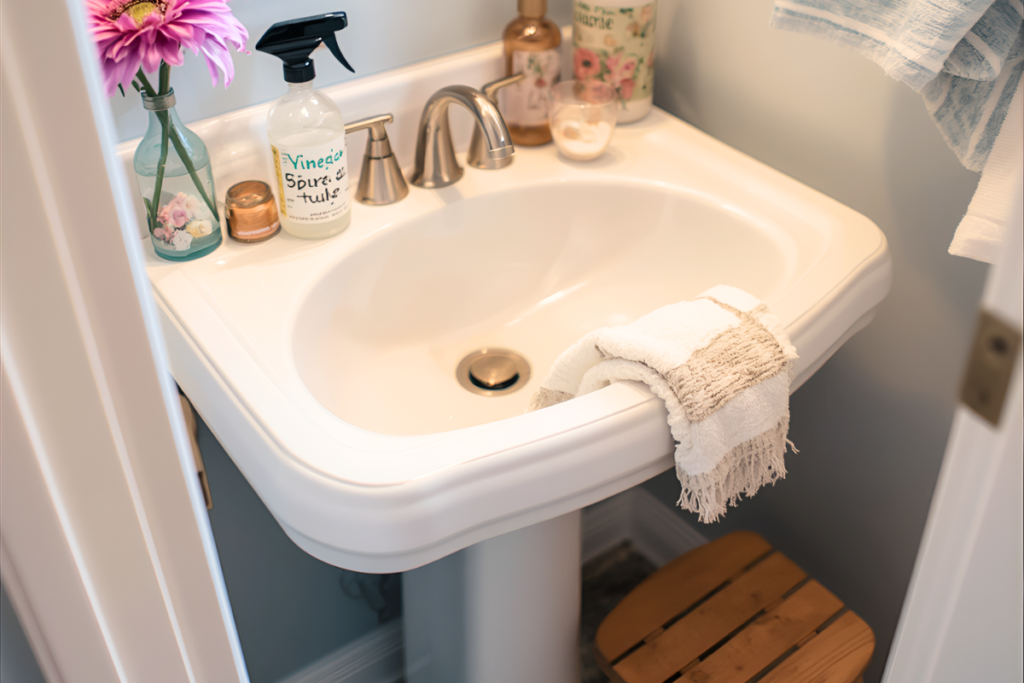
Kids’ and guests’ bathrooms have a quiet way of getting away from you until you can no longer put it off and tell yourself “I’ll get to it later.”
It’s understandable and only natural. The main bath, which you frequent most, gets the bulk of your attention. In the meantime, the kids’ bathroom or guest bath seems to collect toothpaste blobs around sinks, damp towels gather in corners, specks on the mirror appear, and there’s a ring in the sink that you suddenly notice only when someone’s coming over.
The good news is you don’t need a deep clean every day to keep these spaces feeling fresh. A gentle, vinegar‑based routine once or twice a week, plus a few tiny daily habits, can keep a kids’ bathroom or guest bath from sliding into “please don’t open that door” territory.
Why Kids’ and Guest Bathrooms Need Their Own Vinegar Cleaning Routine
Second bathrooms are sneaky. Because they’re not always monitored the way the main bath is, problems can build up quietly:
- Toothpaste splatters on the chrome faucet and counter.
- Soap scum on the sink and around the drain.
- Hard‑water spots and fingerprints on the mirror.
- Damp towels and washcloths that never fully dry in the smaller spaces.
Having a simple routine just for this space means you:
- Catch messes early, when they’re easy to wipe.
- Keep the room ready for surprise guests.
- Avoid the “oh no, I need an hour to make this look respectable” feeling and guests are on their way.
And because the room is smaller, the routine stays short.
Why Vinegar Fits Kids’ and Guest Bathroom Cleaning So Well
Distilled white vinegar is a natural fit for small bathrooms because it:
- Cuts through light soap scum and hard‑water spots.
- Helps deodorize sinks and small trash cans.
- Wipes away everyday grime on counters, fixtures, and tiles.
Vinegar is excellent and safe for cleaning throughout a household with children because it doesn’t leave heavy synthetic fragrance behind, which is nice in a guest bath and especially comforting in a kids’ bathroom. For fresh, natural scents you can add a few drops of an essential oil to the vinegar cleaning solution.
I like to keep one dedicated vinegar spray bottle in the second bathroom. That way I have my cleaner on hand to tackle problems that show up. Paired with a cloth or small stack of cleaning rags and pair of rubber gloves, it becomes part of my under the sink arsenal, always there, ready to help.
Surfaces to Never Clean with Vinegar
Is vinegar perfect for every single surface? No. You’ll want to avoid natural stone like marble and some unsealed grout because acids can etch them. But for much of the everyday bathroom grime – faucets, tile, glass, and porcelain – vinegar is a simple, effective, and more earth‑friendly option.
- Natural Stone (Marble, Granite, Limestone): The acid in vinegar will “etch” or eat away at the surface of natural stone, leaving permanent dull spots or pits.
- Finished Wood Surfaces: While great for some floors, the acid can eventually break down the protective finish on fine wood furniture or certain waxed floors, leaving them looking cloudy.
- Electronic Screens: Never use vinegar on your smartphone, tablet, or laptop screen. It can strip away the oleophobic (oil-resistant) coating that prevents fingerprints.
- Egg Messes: This is a classic “screw-up.” If you drop an egg, don’t reach for the vinegar. The acid causes the egg proteins to coagulate, turning the mess into a sticky glue that is much harder to clean.
- Cast Iron & Aluminum: Vinegar can cause pitting and reactive damage to these metals. Stick to mild soap and water for your favorite skillet.
- Rubber Parts (Long-term Exposure): While great for a quick rinse in the dishwasher or washing machine, avoid soaking small rubber gaskets or seals in high-concentration vinegar for extended periods, as it can cause some types of rubber to become brittle.
Your Vinegar Bathroom Cleaner Tool Kit
It’s easy and affordable to set yourself up for vinegar cleaning success in the kids and guest bathrooms.
This is the workhorse I reach for when I’m cleaning around the house, and especially in the bathroom where there’s alway a spray bottle on hand under the sink.
Guessing “about a cup” of vinegar is an easy way to overdo it. A little measuring cup or a clearly marked pour bottle makes it simple to add the right amount to your rinse compartment every time without splashing all over the place.
Have fun experimenting with different oils that can lift your spirits and give your bathroom a pleasing scent.
I like keeping a smaller, easy‑to‑grab spray bottle of vinegar in the bathroom for special stains and uses.
These absorbent cloths are non-abrasive and can tackle most cleaning jobs.
Protect your hands from the mild acetic nature of vinegar.
Single-use linen-feel guest towels are great for drying hands and absorbing small messes.
Fits around toilet bases but is also perfect to help reach the sink
Foot pedal keeps hands free while the lid fits closely to the mouth of the small trash can to avoid garbage exposure and contains odors.
Ideal for storing vinegar cleaning spray bottles, cleaning supplies and other essentials.
Simple Vinegar Bathroom Spray for Kids’ and Guest Baths
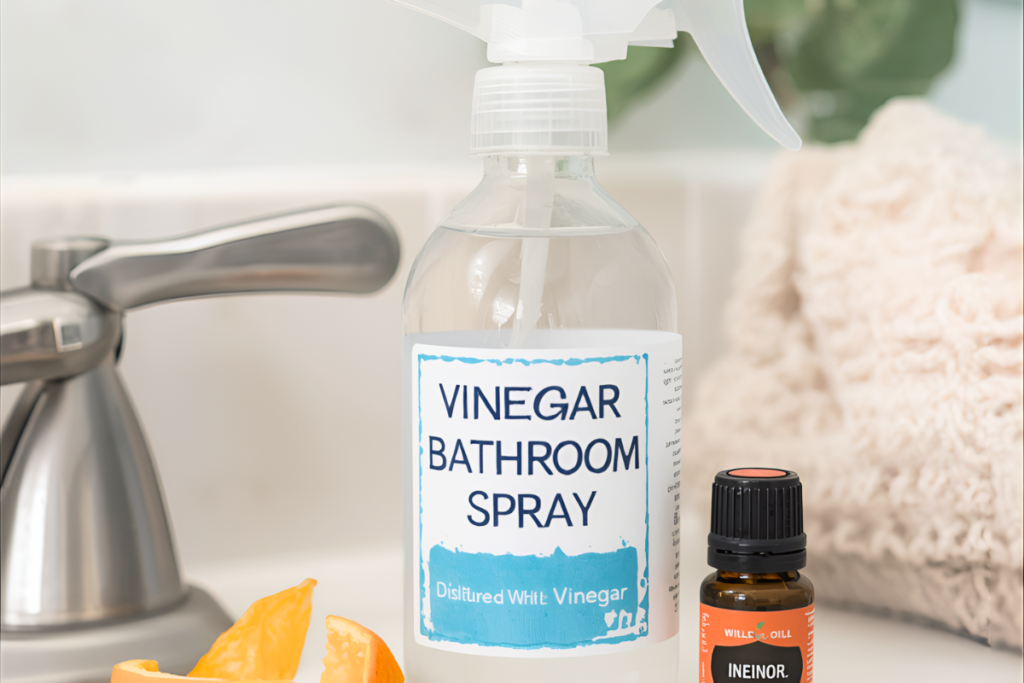
You don’t need a special product for this routine, just a basic homemade mix.
Kids’/Guest Bathroom Vinegar Spray
- 1 cup distilled white vinegar
- 1 cup water
- Optional: 5–10 drops of essential oil (like lemon, orange, or lavender) or a small strip of citrus peel
Add everything to a clean spray bottle, shake gently, and label it clearly. Keep it on the counter or a small shelf so it’s easy to grab.
- Sink basins and surrounding counters.
- Faucet handles and spouts (non‑stone surfaces).
- Tiles and backsplashes around the sink.
- Small trash can interiors and exteriors.
- Door handles and light switches.
Avoid using it directly on natural stone (marble, granite, limestone) or delicate surfaces that might be etched by acid. If your guest bath has stone, reserve vinegar for non‑stone areas and choose a stone‑safe cleaner for those surfaces.
Weekly Vinegar Cleaning Routine for the Kids’ or Guest Bathroom
Once or twice a week, depending on how heavily the bathroom is used, run through this quick routine. It’s designed to take 10–15 minutes in a small space.
Step 1: Clear Surfaces in the Kids’ or Guest Bathroom
- Pick up toys, cups, and stray items from around the sink and tub.
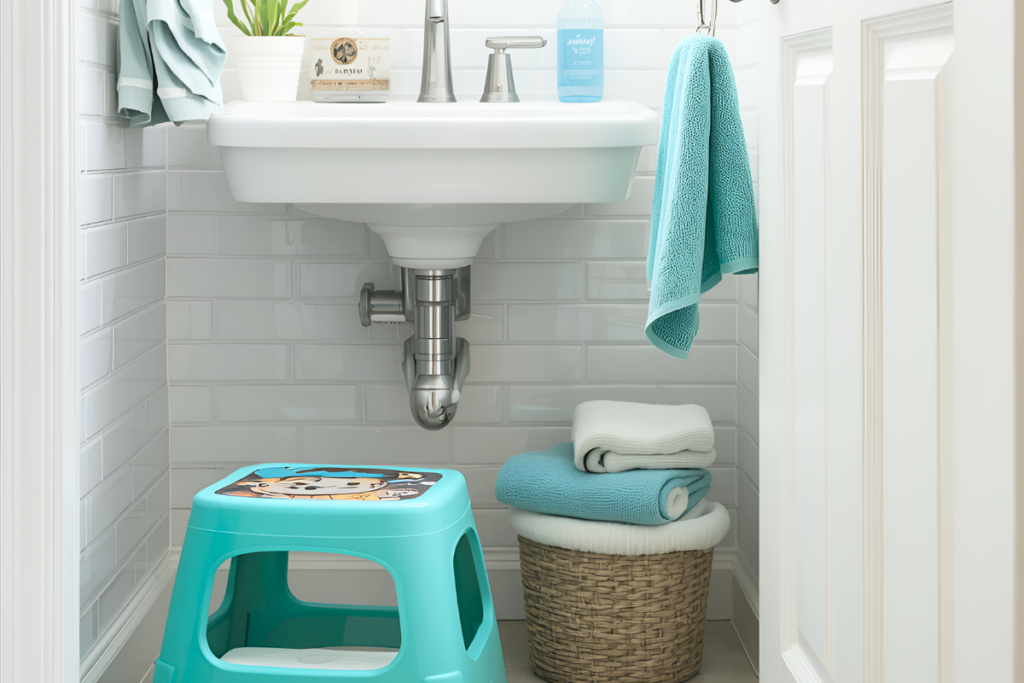
- Straighten the step stool so it’s safe and stable.
- Swap out obviously damp or dingy towels for fresh ones.
You’re not decluttering the entire bathroom—just clearing enough space so you can wipe without working around obstacles.
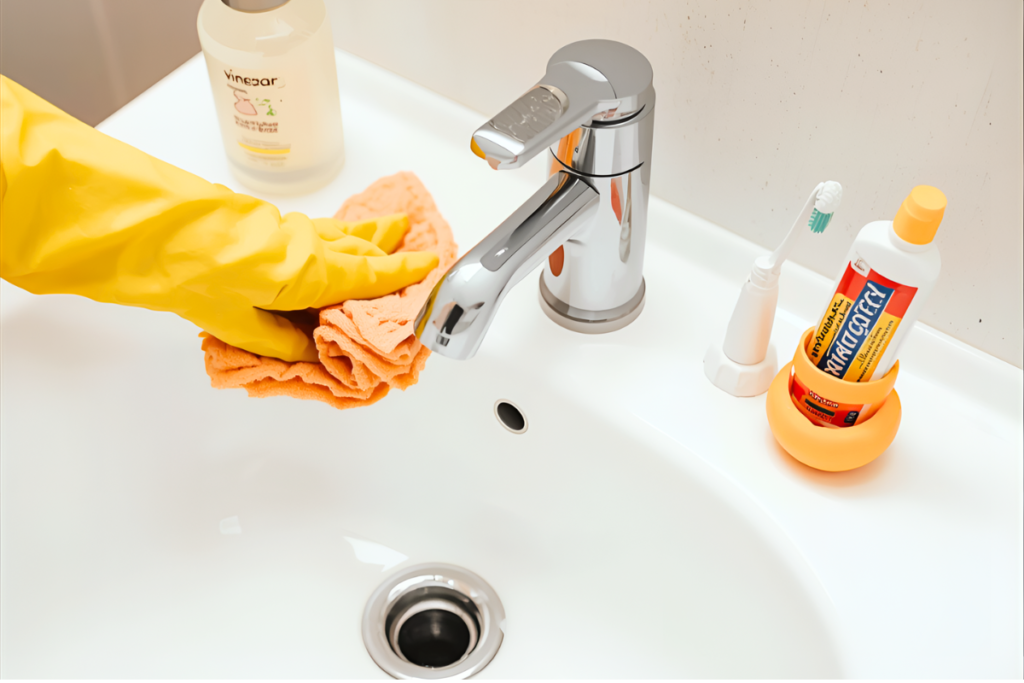
Step 2: Reset the Sink and Counter with Vinegar Spray
The sink and surrounding counter are the heart of any kids’ or guest bathroom. They’re also where most of the visible mess lives.
- Rinse away loose toothpaste blobs and soap residue.
- Spray the sink basin, faucet, and counter with your vinegar mix, focusing on splatter zones.
- Let it sit for a minute on stubborn spots.
- Wipe with a cloth or sponge, paying attention to the base of the faucet and around the drain.
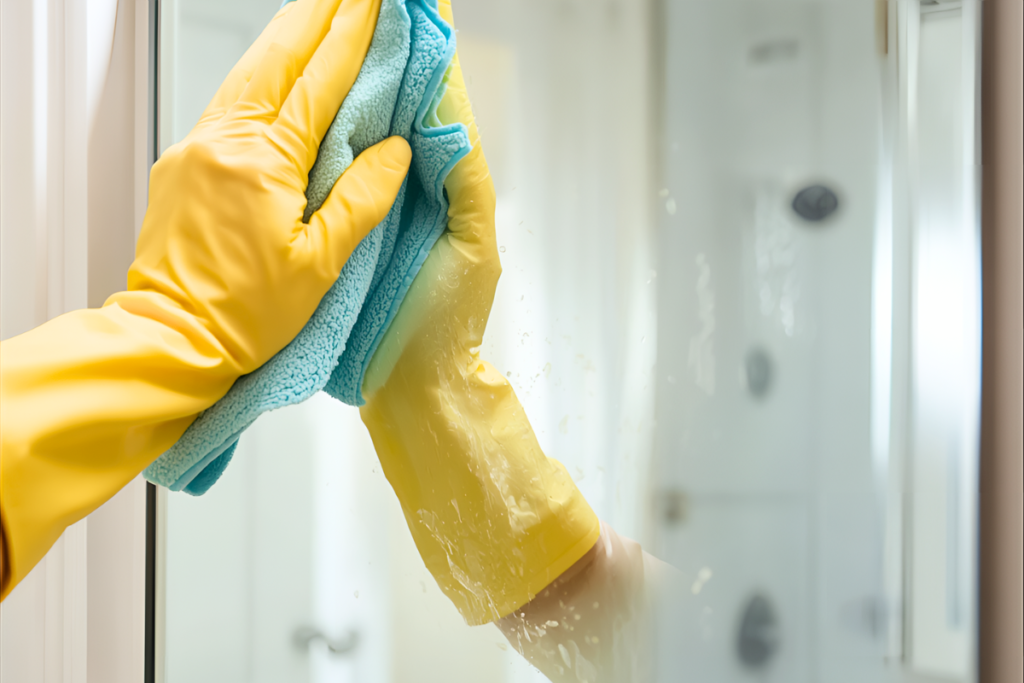
Step 3: Spruce Up the Bathroom Mirror and Backsplash
Water spots, fingerprints, and mist can make a mirror look tired even when the rest of the bathroom is fine.
- Lightly mist a cloth with vinegar spray (rather than spraying directly onto the mirror to avoid drips onto the frame or counter).
- Wipe the mirror from top to bottom in smooth strokes.
- Wipe tiles or backsplash around the sink to catch sneaky splashes.
This takes under a minute but changes the whole feel of the room.
Step 4: Tidy the Toilet View and Small Trash Can
In a small bathroom, you often see the toilet the moment you walk in. Even a quick pass helps.
- Wipe the top of the tank, handle, and surrounding areas with a vinegar‑dampened cloth.
- If you have a small trash can nearby, empty it and give the inside a light spray and wipe if needed.
You can use your usual toilet bowl cleaner for the inside. Vinegar is more about exterior surfaces and smell control.
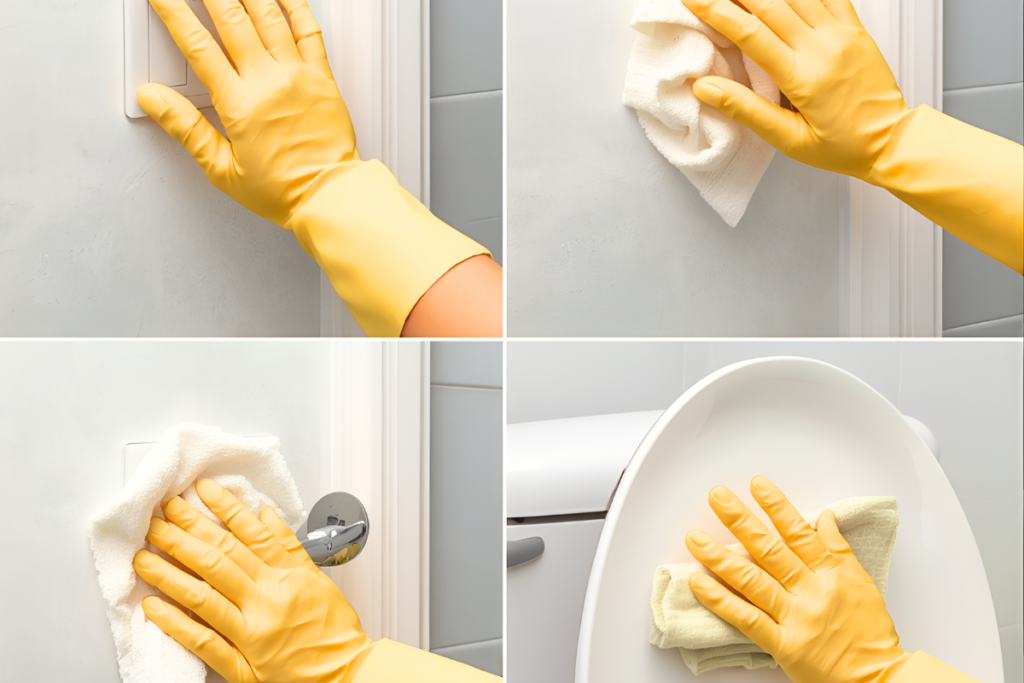
Step 5: Freshen High‑Touch Bathroom Spots with Vinegar
High‑touch areas matter especially in shared bathrooms.
- Door handle.
- Light switch.
- Cabinet knobs.
Mist your cloth with vinegar spray and quickly wipe each one. In a guest bath, this helps the space feel cared for even if it hasn’t seen much use. In a kids’ bathroom, it keeps sticky fingerprints from accumulating.
Tiny Daily Bathroom Habits That Help Kids’ and Guest Spaces Stay Fresh
The weekly routine does most of the work, but a few small habits keep everything easier in between.
For Kids’ Bathrooms
- Encourage kids to hang their towel properly after use so it can dry.
- Show them how giving the sink a quick splash‑down after brushing can wash away the worst toothpaste blobs.
- Keep the step stool or toys in a safe, consistent spot so they doesn’t become a tripping hazard.
For Guest Baths
- After a guest leaves, swap towels and check the sink for obvious splashes.
- Keep a small stack of guest towels folded and visible so you’re not scrambling last‑minute.
- Give the room a quick walk‑through when you clean the main bath while you’re in cleaning mode. A fast mirror helps the room sparkle and sink check can stop soap scum from seeming like a part of the porcelain.
These little touches keep the second bathroom from ever feeling “surprise messy” when someone needs to use it.
Making a Vinegar Bathroom Routine Feel Light, Not Heavy
The goal of a vinegar routine for kids’ or guest bathrooms is not to add a whole new chore list to your life. It’s to swap one occasional overwhelming clean‑up for a series of easy, predictable steps.
A few tips:
- Keep the spray and cloth on hand. If they’re right there by or under the sink, you’re more likely to use them.
- Attach the routine to something you already do. For example, check the kids’ bathroom right after bedtime stories or give the guest bath a quick pass after you clean the main bathroom.
- Embrace “good enough.” You’re aiming for “presentable and cared for,” not magazine‑perfect.
Over time, the bathroom itself becomes less dramatic. It doesn’t surprise you with mystery rings or hardened toothpaste artwork. It just quietly stays ready.
Keeping Kids’ and Guest Bathrooms from Becoming Big Cleaning Projects
When you treat kids’ and guest bathrooms as “real rooms” instead of “extra rooms,” they stop surprising you. A dedicated vinegar spray, a short weekly reset, and a few tiny daily habits keep them in the “easy to maintain” category rather than the “I need a free afternoon to fix this” category. Vinegar helps you get there gently, one small bathroom at a time.
Kids’ and Guest Bathroom Vinegar Cleaning FAQs
How often should I clean a kids’ or guest bathroom with this vinegar routine?
Most families do well with a quick vinegar‑based reset once or twice a week, plus tiny touch‑ups in between. If the bathroom sees heavy daily use (lots of tooth‑brushing, bath time, or frequent guests), aim for two weekly passes; if it’s truly occasional, one weekly pass and a quick check before guests arrive is usually enough to keep things looking fresh.
Is vinegar safe to use in bathrooms that kids share with guests?
Distilled white vinegar is generally safe and gentle for everyday bathroom surfaces like sinks, faucets, tiles, trash cans, and high‑touch spots—especially when diluted with water. It’s also a good fit when you’d rather avoid heavy synthetic fragrances around kids or sensitive noses. Just avoid using vinegar on natural stone such as marble, granite, or limestone, and be sure children aren’t directly handling stronger undiluted solutions without supervision.
Can I use vinegar to clean every surface in the bathroom?
Not quite. Vinegar is wonderful on many everyday surfaces, but it’s not invited everywhere. Skip it on natural stone, some specialty finishes, or any material that can be etched by acid, and use a stone‑safe cleaner there instead. You can still rely on your vinegar spray for sinks, chrome or stainless faucets, tiles around the sink, trash cans, door handles, and light switches, letting your usual toilet bowl cleaner handle the inside of the toilet.