
Vinegar Cleaning Solutions for Small Spaces and Apartments
Keep small kitchens, bathrooms, and living areas cleaner and calmer with a few vinegar sprays, kid‑ and pet‑aware routines, smart storage, and a tiny toolkit that earns its spot in tight quarters
This post contains affiliate links to products and books I genuinely use and love. If you buy through my links, I may earn a small commission as an Amazon Associate or through my affiliation with other retailers from qualifying purchases that you make at no extra cost to you.
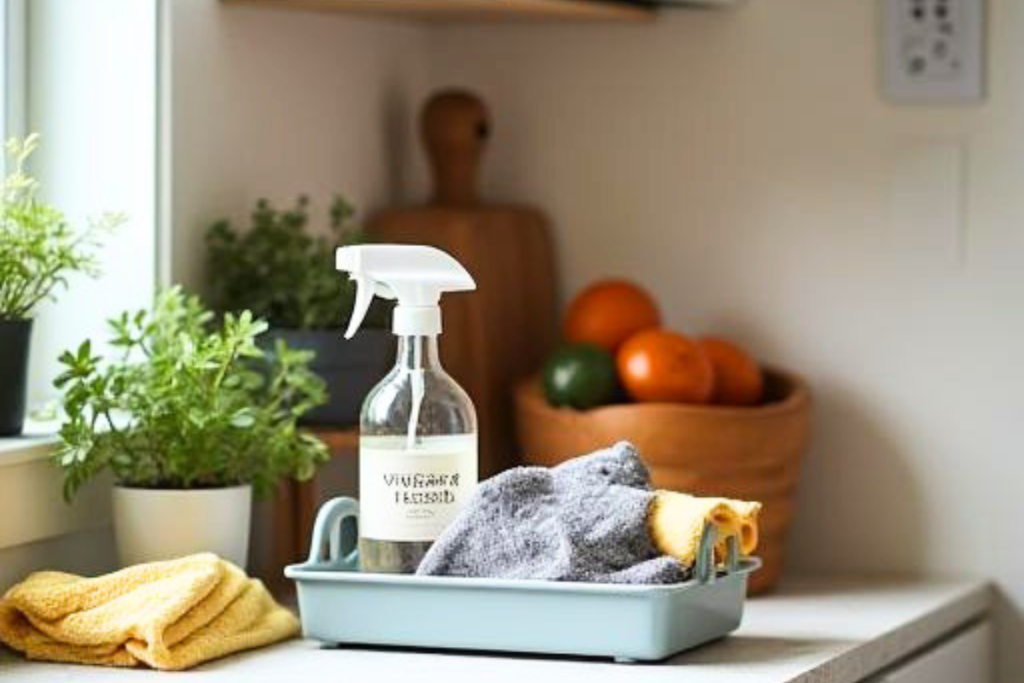
I’ve lived in more than my share of small apartments. Kitchens usually have galley-style design, always are a tight fit for more than one person, and spare counter space is a rarity. The bathroom doubles as a laundry corner or cat‑litter zone. The living area might be a playroom, dining room, and guest room all in one.
When space multitasks like that, your cleaning routine can’t rely on a dozen specialty products and closet space that you don’t have.
That’s where vinegar comes in. Distilled white vinegar is one of the simplest ways to keep small spaces clean, fresh, and reasonably organized without filling your cabinets with a collection of bottles and without loading the air with strong fragrances that linger in tight quarters.
Used thoughtfully, it can help with everyday messes in small kitchens, bathrooms, and living areas, and it’s usually compatible with kid‑ and pet‑aware routines when you store and dilute it properly. In fact, vinegar is one of the few cleaners that actually makes more sense as your square footage goes down. It pulls double (or triple) duty, plays nicely with tight budgets, and doesn’t turn a small apartment into a cloud of harsh fumes.
Unique Cleaning Challenges in Small Apartments and Tiny Homes
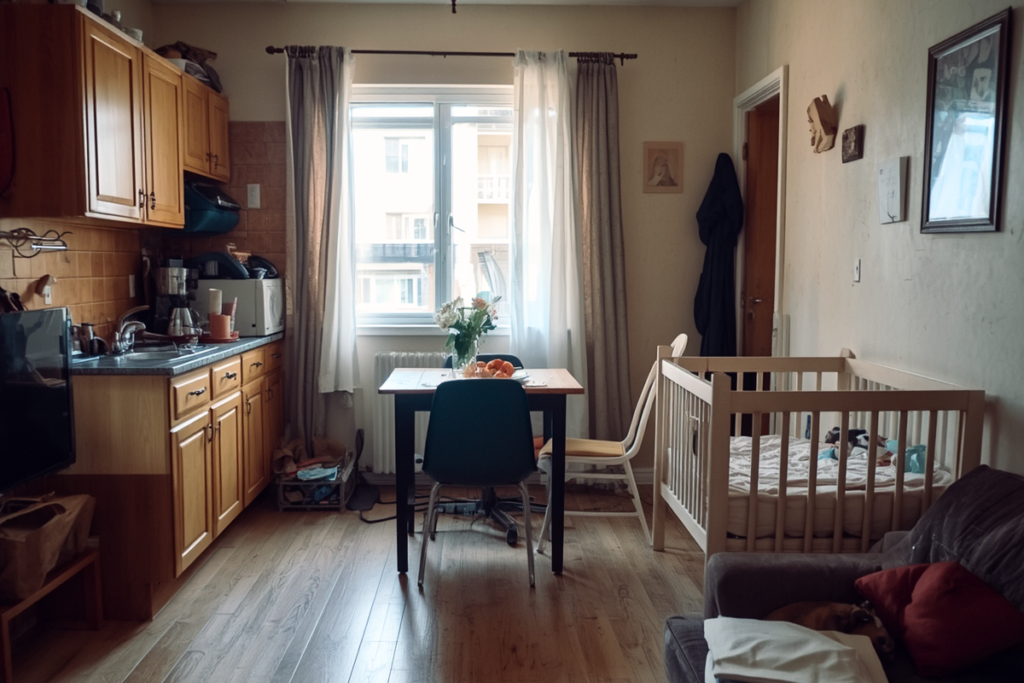
Before talking about solutions, it helps to name the problems you’re most often confronting. Small apartments come with a specific set of cleaning challenges:
- Limited storage: There isn’t “a cleaning closet.” There’s a slim cabinet, the back of a door, and maybe under‑bed space.
- Shared air: Strong fumes travel quickly from the kitchen to the crib or pet bed. What you spray in one corner is effectively sprayed everywhere.
- High‑traffic surfaces: A few key counters, tables, and floors see almost all the action and have messes from cooking, crafts, snacks, pet bowls, and toys.
Vinegar doesn’t fix all of that, but it does help simplify your toolkit. Instead of one product per task, you’re leaning on a small handful of mixes that can handle multiple jobs.
My Small Space Cleaning with Vinegar Toolkit
Small spaces make having the right vinegar cleaning tools on hand:
This is the workhorse I reach for when I’m cleaning around the house, and especially in the bathroom where there’s alway a spray bottle on hand under the sink.
Guessing “about a cup” of vinegar is an easy way to overdo it. A little measuring cup or a clearly marked pour bottle makes it simple to add the right amount to your rinse compartment every time without splashing all over the place.
Have fun experimenting with different oils that can lift your spirits and give your bathroom a pleasing scent.
I like keeping a smaller, easy‑to‑grab spray bottle of vinegar in the bathroom for special stains and uses.
These absorbent cloths are non-abrasive and can tackle most cleaning jobs.
Protect your hands from the mild acetic nature of vinegar.
Single-use linen-feel guest towels are great for drying hands and absorbing small messes.
Ideal for storing vinegar cleaning spray bottles, cleaning supplies and other essentials.
Small Kitchens: Vinegar for Counters, Sinks and Fridge Doors in Tight Spaces
In a compact kitchen, you usually have one main counter, one small sink, and a fridge door that works as half bulletin board, half snack station. Vinegar shines here for everyday wipe‑downs.
All‑Purpose Non‑Stone Counter Spray for Small Kitchens
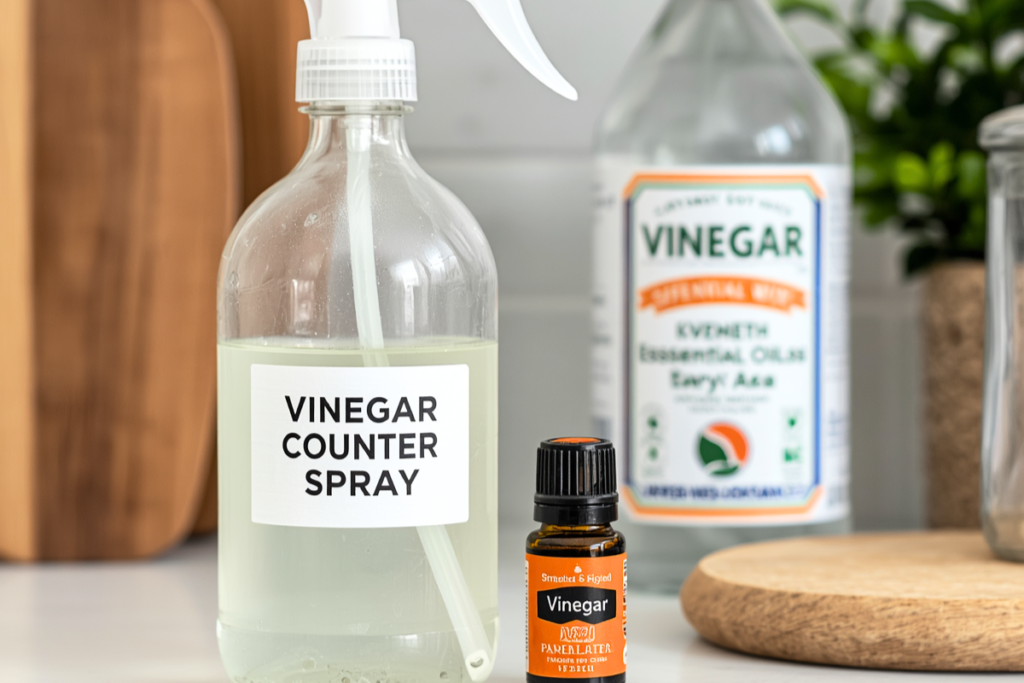
For laminate, tile, and many sealed surfaces:
- 1 cup distilled white vinegar
- 1–2 cups water (start more diluted for regular daily use)
- Optional: a strip of citrus peel or 3–5 drops of essential oil in human‑only areas (skip strong oils around pets)
Use it for:
- Post‑meal crumb and smear wipe‑downs.
- Splashes near the stove.
- Drawer fronts and cabinet faces.
Avoid using vinegar on natural stone counters like granite or marble; acid can etch and dull them over time.
Vinegar Sink and Dish‑Rack Freshener for Compact Kitchens
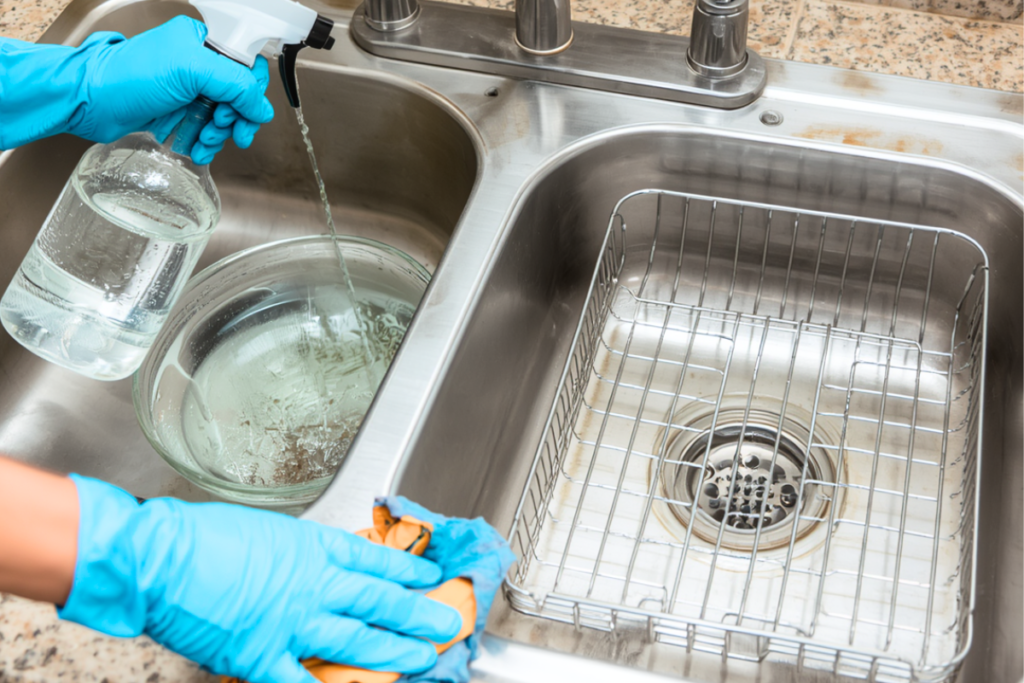
- Spray a 1:1 vinegar‑water mix around the sink rim and faucet, let it sit briefly, then wipe—this helps with soap film and hard‑water specks.
- For compact dish racks, you can spray vinegar on mineral spots and rinse after a short dwell.
Because the kitchen is so close to everything else, ventilate while you clean (crack a window or run the stove fan) and keep kids and pets out of the area until surfaces are dry.
Small Bathrooms: Vinegar Wipe‑Downs Without a Chemical Cloud
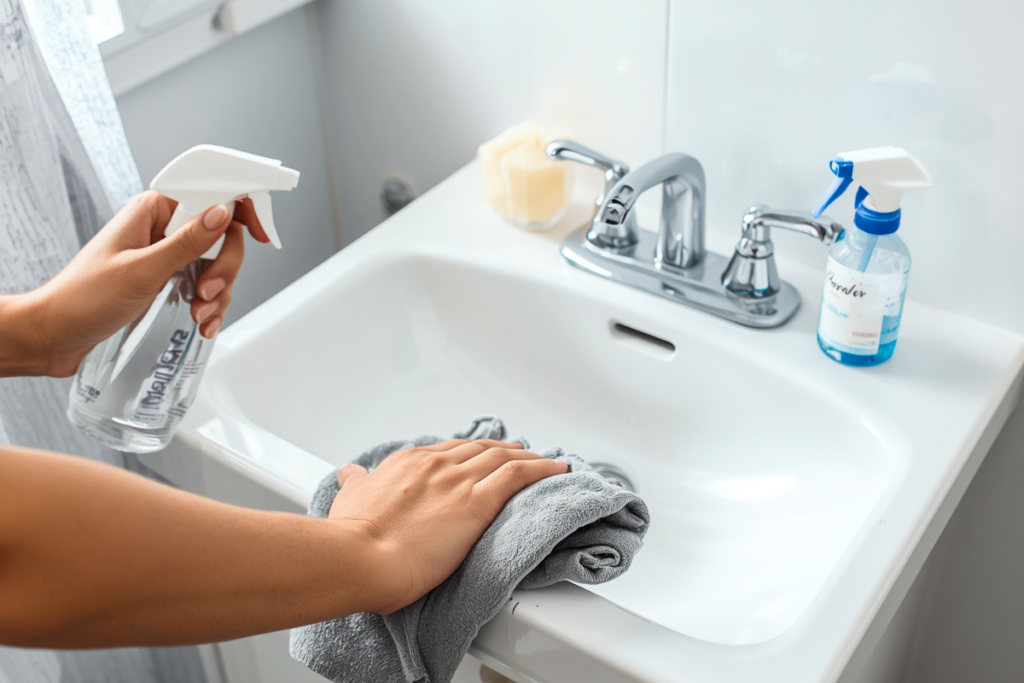
Tiny bathrooms concentrate smells. A strong bleach‑based clean can feel like a wall of fumes in a room that’s barely big enough to turn around in. Vinegar helps with:
- Soap scum and mineral spots in sinks and tubs.
- Daily wipe‑downs of counters and non‑stone tile.
- Freshening trash cans and toilet exteriors.
Use a 1:1 vinegar‑water mix on:
- Ceramic sinks and tiles (spot‑test grout).
- Acrylic or fiberglass tub surrounds (as long as the manufacturer doesn’t forbid acid).
- Toilet tank lid, handle, and nearby surfaces.
Keep vinegar away from:
- Marble or stone vanity tops.
- Specialty finishes that specifically warn against acid.
For households with kids or pets, label your spray bottle clearly, store it out of reach, and avoid adding heavy essential oil fragrances in spaces animals spend time in. Some oils are not pet‑safe.
Living Areas: Using Vinegar on Floors, Tables and Pet Corners in Small Spaces
In a small living room, the coffee table is often the craft table and snack station. The floor doubles as play space and pet hangout. Vinegar fits here too—but with more nuance.
Tables and Non‑Stone Surfaces: Light Vinegar Wipe‑Downs
For sticky rings and everyday residue on wood‑look or laminate tables:
- Use a light vinegar solution (1 part vinegar to 3–4 parts water) sprayed onto a cloth, not directly onto the surface.
- Wipe and dry promptly to avoid leaving water sitting on seams or edges.
On natural wood with delicate finishes, it’s safer to use a manufacturer‑recommended cleaner and keep vinegar for harder, more forgiving surfaces.
Pet Corners and Small Accidents: Vinegar Plus Enzymes
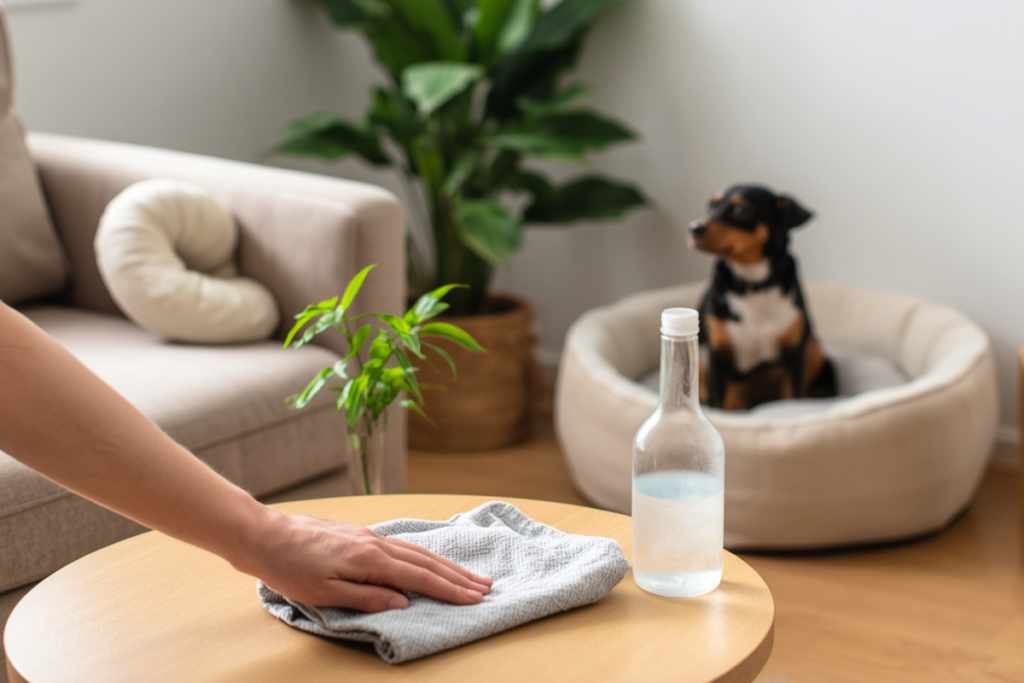
For hard floors (tile, vinyl, some sealed wood) near pet beds or litter boxes:
- Blot accidents quickly.
- Treat the area with a 1:1 vinegar‑water mix, let it sit briefly, then wipe and dry.
Vinegar can help with odor, but it doesn’t fully replace enzymatic cleaners for repeated pet accidents. Consider pairing it with a pet‑safe enzyme product if you’re dealing with chronic spots.
On floors with unknown or delicate finishes, always check guidance before using acids and spot‑test.
Safety and Precautions for Kids, Pets and Vinegar Cleaning in Small Apartments
Vinegar is often framed as “natural = automatically safe,” but small spaces with kids and pets still need clear safety rules. Key points:
- Vinegar is not a registered disinfectant; use EPA‑registered products when disinfection is needed (bathroom high‑touch points, post‑illness surfaces) and follow label directions.
- Store all cleaners, including DIY sprays, locked and out of reach, especially in homes with crawlers, toddlers, and curious animals.
- Never mix vinegar with bleach or ammonia; it can produce dangerous gases in tight quarters.
- Essential oils may be unsafe for pets or children in high concentrations; go unscented or use minimal fragrance and keep animals away until surfaces are dry.
A small apartment doesn’t leave much room for error. Label bottles, keep ingredients simple, ventilate, and keep kids and pets out of the cleaning zone until things are dry.
Storage Strategies for Vinegar Cleaning When You Don’t Have a Cleaning Closet
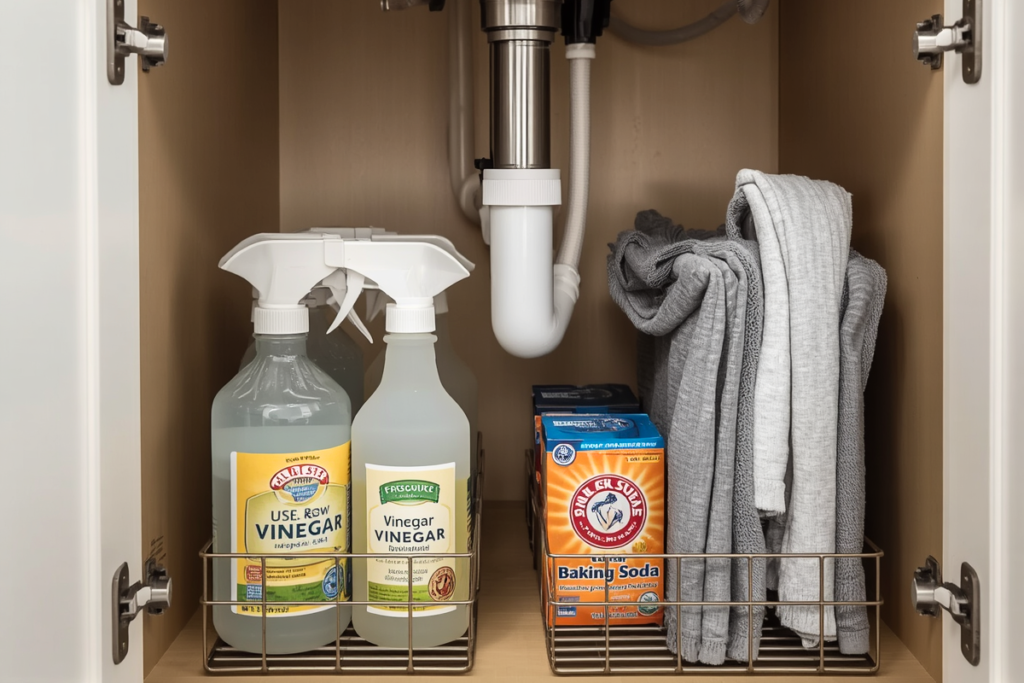
The storage challenge is just as real as the cleaning challenge. There’s no garage space or often even a laundry room to put things, so economy is the rule. Fortunately, a vinegar‑based routine needs relatively few items. You can store them creatively rather than dedicating an entire cabinet. Ideas:
- Under‑sink organizer: Use stackable bins or a small caddy under the kitchen or bathroom sink to hold vinegar, spray bottles, cloths, and baking soda.
- Over‑door organizers: Hang mops, brooms, and a small caddy on the back of a closet or bathroom door to keep floors clear.
- Rolling cart: In larger studios, a small rolling cart can hold your cleaning essentials and live in a corner or closet; pull it out only when needed.
- Hidden bins: Clear, labeled bins under beds or sofas can store rarely used supplies, leaving only your everyday vinegar spray visible.
One nice bonus. You can store homemade vinegar solutions look relatively appealing in glass bottles on an open shelf. If you label them well, they can almost pass as decor.
In the end, vinegar cleaning in small spaces is about making the most of what you have. All it takes is one bottle, a couple of mixes, and a thoughtful routine that respects surfaces, storage, and the people (and animals) living within those close walls.
Vinegar Cleaning in Small Spaces FAQs
Is vinegar safe to use for cleaning in small apartments with kids and pets?
Distilled white vinegar is often a good fit for small homes with kids and pets because it’s effective on everyday messes and doesn’t leave heavy synthetic fragrances behind. When diluted properly and used on appropriate surfaces, it helps with counters, sinks, tables, and some floors without turning the whole apartment into a chemical cloud. That said, it’s still a cleaner: store sprays out of reach, avoid using strong essential oils in areas pets spend time in, and keep children and animals out of the cleaning zone until surfaces are dry.
Can vinegar replace all my cleaning products in a tiny kitchen and bathroom?
Vinegar can dramatically simplify your toolkit, but it shouldn’t replace everything. It’s excellent for many wipe‑downs and mineral spots on non‑stone surfaces, but it’s not a registered disinfectant and it can damage natural stone or some specialty finishes. In small spaces, a realistic approach is to rely on vinegar for daily counters, sinks, and tables, keep one or two surface‑specific cleaners for stone or delicate materials, and use EPA‑registered disinfectants only when needed for high‑risk situations like illness or certain bathroom tasks.
How should I store vinegar and cleaning supplies when I don’t have a closet?
In small apartments, storage is part of the cleaning strategy. A simple under‑sink organizer, over‑door caddy, small rolling cart, or labeled bin under the bed can hold vinegar, spray bottles, cloths, baking soda, and a pet‑safe enzyme cleaner without eating up precious space. The key is keeping everything contained, clearly labeled, and out of reach of kids and pets, so your cleaning routine stays easy to grab but doesn’t compete with everyday living in tight quarters.