
5 Autumn Vinegar Marinades for Meat, Fish, and Vegetables
Brighten cozy autumn meals with five balanced vinegar marinades for pork, chicken, beef, lamb, salmon, tofu, and roasted vegetables.
This post contains affiliate links to products and books I genuinely use and love. If you buy through my links, I may earn a small commission as an Amazon Associate or through my affiliation with other retailers from qualifying purchases that you make at no extra cost to you.
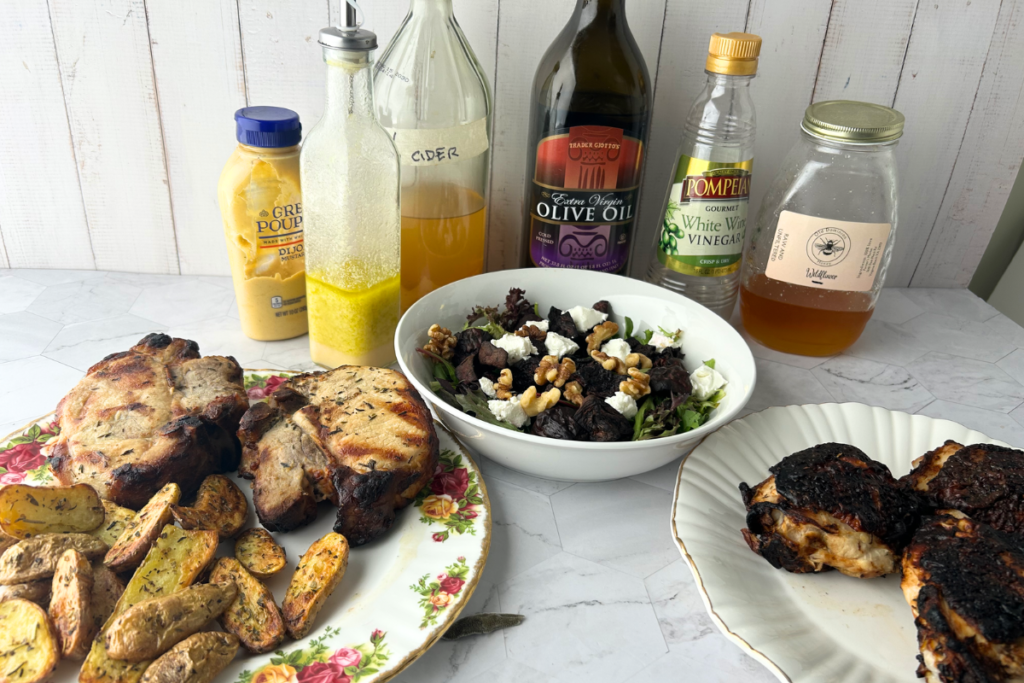
When the air starts turning cool, my cooking instincts shift almost overnight. The grill is still calling my name, but I also start eyeing the Dutch oven, roasting pan, air fryer, and every sweet potato, squash, onion, and pork chop in sight. That is where these autumn vinegar marinades come in.
Autumn cooking can get wonderfully cozy, but it can also get a little heavy. Roasts, potatoes, creamy sauces, rich meats, cheese, butter, and all the caramelized things are exactly what we want when temperatures drop. The problem is that, by the third forkful of a substantial fall meal I can start feeling a little ‘nappish’.
That is where vinegar comes in.
A good autumn vinegar marinade does more than tenderize meat. It brings brightness to rich cuts, wakes up roasted vegetables, helps herbs and spices travel across the surface of food, and imparts flavors from late summer and early fall harvests into fall meals to keeps you coming back for one more bite. The best part? A vinegar marinade seems to lighten a meal and zest things up.
These five autumn vinegar marinade recipes bring brightness, herbs, spices, and seasonal sweetness to meat, fish, tofu, and roasted vegetables. Think of this as grilling-marinade season with a sweater on.
Why Vinegar Marinades Belong in Autumn Cooking
Summer marinades tend to be light, citrusy, and quick: lime with shrimp, white wine vinegar with chicken, rice vinegar with vegetables. Autumn vinegar marinades can take on a little more depth. They welcome apples, maple, mustard, rosemary, sage, thyme, garlic, warming spices, and richer vinegars such as red wine vinegar, apple cider vinegar, and balsamic.
Vinegar earns its spot in the autumn pantry for three simple reasons:
- It balances rich food. A splash of acidity cuts through pork shoulder, chicken thighs, roast beef, mushrooms, squash, and all those deeply caramelized roasting-pan juices.
- It helps flavor cling. Oil carries herbs and spices, while vinegar gives the mixture a bright backbone that seasons the surface of meat and vegetables.
- It can gently tenderize. Vinegar’s acetic acid begins changing proteins at the surface of meat, which can help tougher cuts become more tender and flavorful when used with sensible timing.
The important phrase there is “sensible timing.” More vinegar and more hours do not automatically equal more deliciousness. An overly acidic marinade left too long can turn thin chicken breasts, fish, shrimp, or tender vegetables unpleasantly soft. We want cozy, not mushy.
The Basic Formula for an Autumn Vinegar Marinade
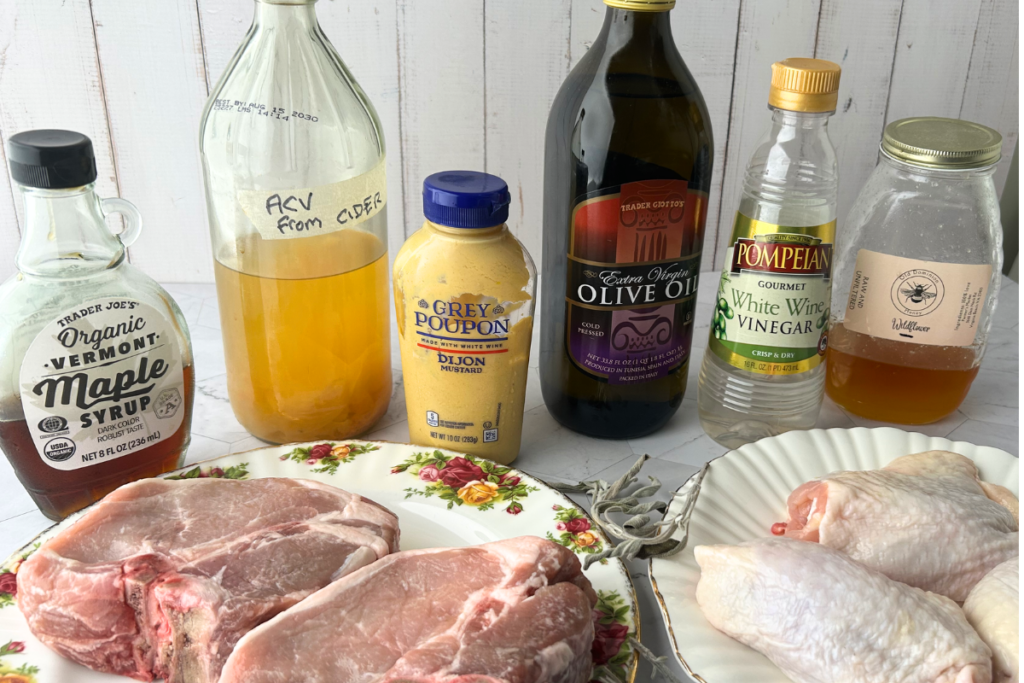
You do not need to memorize a dozen recipes to make a useful autumn vinegar marinade. Start with this flexible formula:
The Basic Vinegar-to-Oil Ratio
- 1 part vinegar
- 2 to 3 parts oil
- A savory element: mustard, soy sauce, Worcestershire, miso, garlic, onion, or herbs
- A little sweetness: maple syrup, honey, apple juice, brown sugar, or cider
- Salt and pepper
For a simple autumn vinegar marinade batch that handles about 1 1/2 to 2 pounds of meat or 2 to 3 pounds of vegetables, try:
- 1/4 cup vinegar
- 1/2 cup olive oil
- 1 tablespoon Dijon mustard
- 1 to 2 cloves garlic, minced
- 1 tablespoon maple syrup or honey
- 1 tablespoon chopped herbs
- Salt and pepper
Whisk it in a glass bowl or jar, reserve a clean portion for later brushing or sauce-making, then add the rest to your food.
Why You Should Reserve Some Marinade
That “reserve a clean portion” part matters. Once your autumn vinegar marinade has touched raw meat or poultry, it should not become a finishing sauce unless you boil it thoroughly first. I find it easier to make a little extra from the start and set some aside before anything raw gets involved.
Choosing the Best Vinegar for Fall Marinades
Different vinegars bring different moods to an autumn meal.
Apple cider vinegar
Apple cider vinegar is the friendly, versatile choice for autumn vinegar marinades. Its fruity tang works beautifully with pork, chicken, sweet potatoes, squash, apples, cabbage, carrots, and mustard. If a dish feels like it might wear flannel, ACV will probably get along with it.
Red wine vinegar
Red wine vinegar has enough depth for beef, lamb, mushrooms, onions, lentils, eggplant, and sturdy greens. It is especially good with rosemary, garlic, black pepper, oregano, and Worcestershire sauce.
White wine vinegar
White wine vinegar keeps things crisp and bright. Use it with chicken, turkey, cauliflower, fennel, Brussels sprouts, apples, pears, and herbs like thyme and sage. It is a terrific choice when you want an autumn meal to feel warm but not overly dark or sweet.
Balsamic vinegar
Balsamic is the rich, dramatic one. It pairs beautifully with roasted carrots, beets, squash, onions, mushrooms, pork, and chicken. Because it contains natural sweetness and can scorch, keep the heat moderate and save some of the balsamic mixture for a finishing glaze instead of leaving a thick layer on food over intense flames.
Rice Vinegar
Rice vinegar is the light, clean one. It pairs beautifully with salmon, tofu, mushrooms, cabbage, carrots, and delicata squash. Its gentle acidity works especially as an autumn vinegar marinade well with ginger, miso, garlic, sesame oil, and maple when you want autumn flavor without adding too much weight.
Summary of Vinegar Uses for Autumn Marinades
| Vinegar | Best with | Flavor profile |
| Apple cider vinegar | Pork, chicken, squash, apples | Fruity and versatile |
| Red wine vinegar | Beef, lamb, mushrooms, onions | Bold and savory |
| White wine vinegar | Chicken, turkey, cauliflower, herbs | Crisp and bright |
| Balsamic vinegar | Vegetables, pork, chicken, squash | Rich and sweet |
| Rice vinegar | Salmon, tofu, cabbage, carrots | Mild and clean |
How Long Should You Marinate Food?
Autumn vinegar marinades work from the outside in. They do not magically travel to the center of a giant roast, but they do season the surface, help with browning, and give food a flavorful head start.
Here is the timing guide I keep in mind:
Marinating Meat and Poultry
Marinate meat and poultry from between 1 to 4 hours. Don’t marinate too much longer or the flesh of the meat may turn a bit mushy. For tougher beef or lamb cuts to be roasted marinate for 2 to 6 hours. Pork chops or pork tenderloin can be marinated between 30 minutes to 4 hours depending upon the thickness of the cut.
Marinating Fish and Seafood
You only need to marinate shrimp, fish, and even thin chicken cutlets from 15 to 30 minutes.
Marinating Vegetables
For sturdier vegetables like carrots, beets, turnips you can marinate before cooking for about 15 to 30 minutes. For more delicate vegetables sprinkle vinegar and toss veggies immediately after roasting to a wonderful spark of flavor.
| Ingredient | Suggested marinating time |
| Thin chicken pieces | 1–4 hours |
| Pork chops | 30 minutes–2 hours |
| Steak or lamb | 1–4 hours |
| Large roasts | 4–6 hours |
| Salmon | 15–30 minutes |
| Tofu | 30 minutes–1 hour |
| Sturdy vegetables | 15–30 minutes |
How to Adapt Marinades for the Grill, Oven, and Roasting Pan
This is the real autumn trick: you do not have to stop making vinegar marinades because the weather turns or dinner moves indoors.
Roast on a Sheet Pan
For chicken thighs, pork chops, or vegetables, let excess autumn vinegar marinade drip off, then arrange food in a single layer on a parchment-lined sheet pan. Roast at 400–425°F until browned and cooked through.
If you crowd the pan, the food steams. If you give it breathing room, it browns. I know which version I want beside mashed potatoes.
Use a Two-Stage Method for Large Roasts
For beef roasts, pork shoulder, or lamb, marinate first, then sear the meat in a hot skillet or Dutch oven. Add broth, wine, aromatics, or apples/cider, cover, and cook low and slow until tender.
Autumn vinegar marinades brings flavor up front, while the slow roast gives connective tissue time to become tender. This is an especially good approach for chuck roast, brisket, lamb shoulder, and pork shoulder.
Grill First, Then Finish in the Oven
Early fall is perfect for this. Sear chicken, pork chops, sausages, vegetables, or steak on the grill for smoky flavor, then move them to indirect heat or a 375–400°F oven or air fryer to finish gently. The two-zone grilling principle still applies: hot direct heat for color, gentler indirect heat for cooking through.
5 Autumn Vinegar Marinades for Cozy Meals
1. Apple Cider–Maple Mustard Marinade for Pork Chops
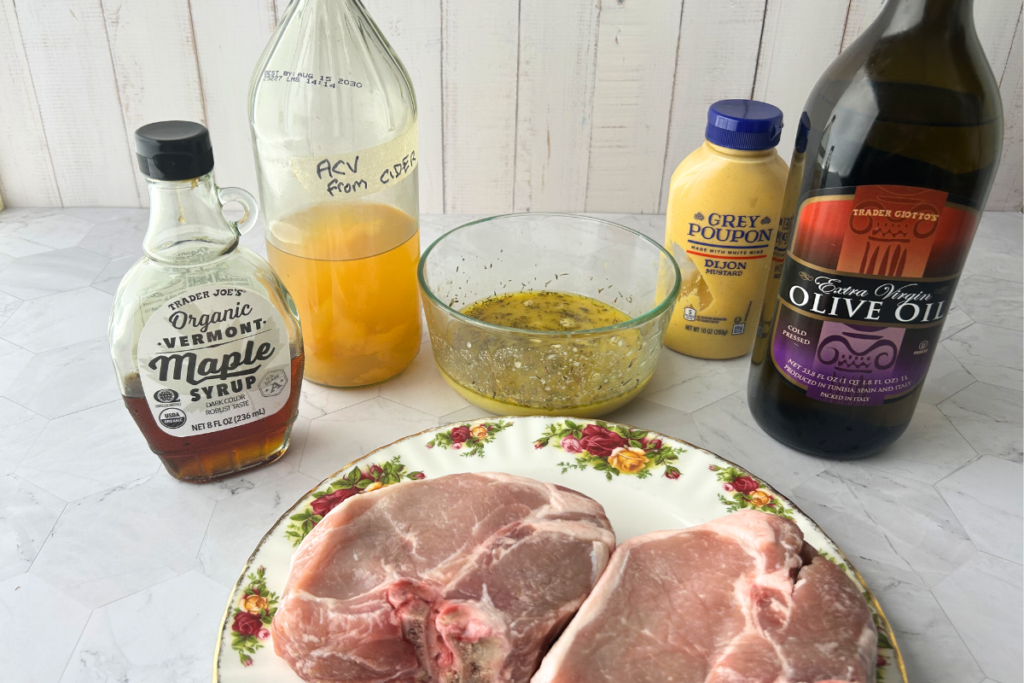
This is fall in a bowl, minus the leaf blower.
Ingredients
- 1/4 cup apple cider vinegar
- 1/4 cup olive oil
- 2 tablespoons apple juice or cider
- 1 tablespoon Dijon mustard
- 1 tablespoon maple syrup
- 2 garlic cloves, minced
- 1 teaspoon chopped thyme
- Salt and black pepper
Use this autumn vinegar marinade for: Thick-cut pork chops, pork tenderloin, or chicken thighs.
Marinate pork chops for 30 minutes to 2 hours. Roast at 400°F or grill over medium heat until the internal temperature reaches 145°F, then rest for five minutes. Serve with roasted apples, onions, or sweet potatoes.
2. Red Wine Vinegar–Rosemary Marinade for Beef or Lamb
This is the autumn vinegar marinade for roast beef sandwiches, grilled lamb chops, tri-tip, skirt steak, or a cozy Sunday dinner.
Ingredients
- 1/4 cup red wine vinegar
- 1/3 cup olive oil
- 1 tablespoon Worcestershire sauce
- 1 tablespoon Dijon mustard
- 3 garlic cloves, minced
- 1 tablespoon chopped rosemary
- 1 teaspoon black pepper
- 1 teaspoon honey or brown sugar
Use this autumn vinegar marinade for: Flank steak, skirt steak, tri-tip, lamb shoulder chops, or a small beef roast.
Marinate thinner cuts for 1 to 4 hours; allow larger roasts 4 to 6 hours. Pat the meat relatively dry before searing so it browns instead of steams. Slice steak against the grain after resting.
3. White Wine Vinegar–Sage Chicken Marinade
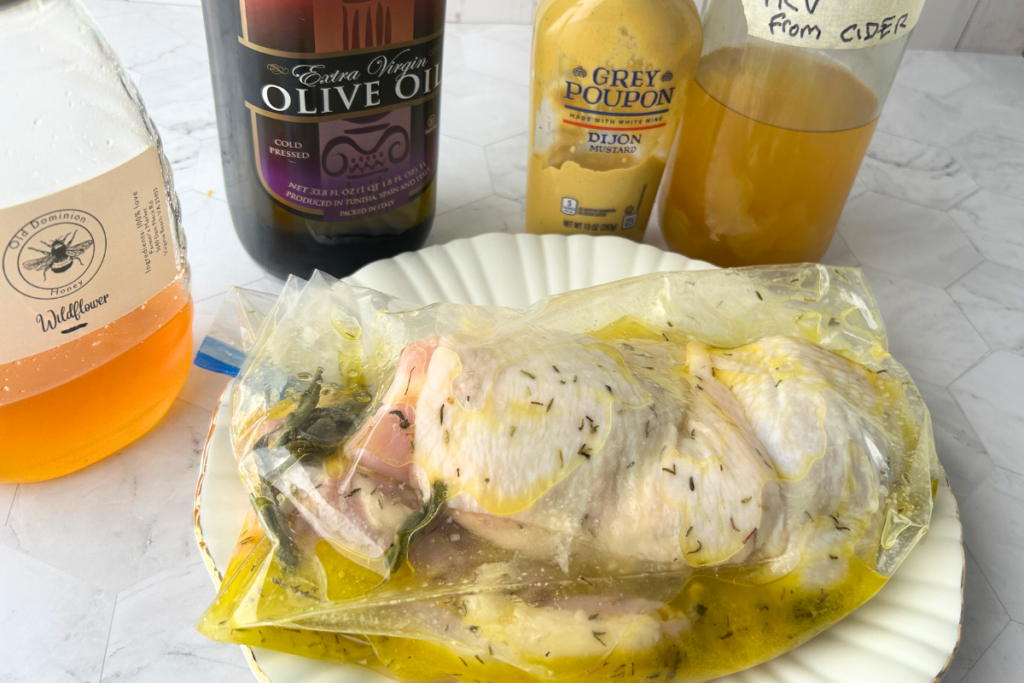
This is lighter than a balsamic chicken dish but still feels like autumn dinner.
Ingredients
- 1/4 cup white wine vinegar
- 1/3 cup olive oil
- 1 tablespoon Dijon mustard
- 1 tablespoon honey
- 6 sage leaves, finely chopped
- 1 teaspoon thyme leaves
- 2 garlic cloves, minced
- Salt and pepper
Use this autumn vinegar marinade for: Bone-in chicken thighs, chicken breasts, turkey tenderloins, or cauliflower steaks.
Marinate chicken for 1 to 4 hours. Roast at 425°F until the thickest part reaches 165°F. Add halved Brussels sprouts, red onion wedges, or apple slices to the pan for the last 25 to 30 minutes.
4. Balsamic–Garlic Marinade for Roasted Vegetables
This one turns a sheet pan of vegetables into something that may mysteriously disappear before dinner is ready.
Ingredients
- 3 tablespoons balsamic vinegar
- 1/4 cup olive oil
- 1 teaspoon maple syrup or honey
- 2 garlic cloves, minced
- 1 tablespoon chopped rosemary or thyme
- Salt and pepper
Use this autumn vinegar marinade for: Butternut squash, carrots, parsnips, red onions, mushrooms, Brussels sprouts, or cauliflower.
Toss vegetables with the marinade for only 15 to 30 minutes, then roast at 425°F until caramelized. For maximum browning, do not pour every last puddle of marinade onto the pan. Reserve a teaspoon or two of the clean mixture, then toss it with the vegetables after roasting.
5. Rice Vinegar–Miso Ginger Marinade for Fall Vegetables or Salmon
Rice vinegar may not wear a pumpkin-colored sweater, but it is excellent for autumn meals when you want a break from heavy flavors.
Ingredients
- 3 tablespoons rice vinegar
- 2 tablespoons neutral oil or sesame oil
- 1 tablespoon white or yellow miso
- 1 tablespoon maple syrup or honey
- 1 tablespoon grated fresh ginger
- 1 garlic clove, grated
- Optional: 1 teaspoon soy sauce
Use this autumn vinegar marinade for: Salmon, tofu, mushrooms, cabbage wedges, roasted carrots, or delicata squash.
Marinate salmon for 15 to 30 minutes, then roast at 400°F until it flakes easily. For vegetables, toss just before roasting or use it as a finishing sauce afterward.
How to Marinate and Roast Vegetables
Vegetables do not need tenderizing, so do not treat them like meat. Their autumn vinegar marinade has a different job: add flavor, help them brown, and protect their surfaces as they roast or grill.
A few rules make a big difference:
- Marinate sturdy vegetables for 15 to 30 minutes, not all afternoon.
- Use enough oil to encourage browning.
- Cut pieces to similar sizes so everything finishes together.
- Roast vegetables in a single layer.
- Add tender herbs late or use them as a garnish; rosemary can take heat, but delicate parsley and basil would rather not be roasted into oblivion.
- If you want more vinegar flavor, add a final splash after cooking.
That final splash is one of my favorite autumn cooking tricks. Roasted vegetables can take a tiny bit of red wine vinegar, cider vinegar, or balsamic at the end and suddenly taste like they have been thinking deep thoughts about flavor all afternoon.
Tips for Grilling With Vinegar Marinades
Autumn does not mean putting the grill away the minute the first leaf hits the driveway. Cool-weather grilling is wonderful for pork chops, chicken thighs, sausages, steak, cabbage wedges, squash, mushrooms, and sturdy vegetables. You may need a slightly longer preheat, a closed lid, and more patience when the wind picks up, but the basic rules remain the same: keep a hot zone and a cooler zone, monitor doneness with a thermometer, and do not let sugary marinades burn over direct heat.
For chicken, cook to 165°F. For pork chops, aim for 145°F, followed by a rest. For beef and lamb, cook to your preferred doneness and let the meat rest before slicing.
Food Safety and Autumn Vinegar Marinade Tips
- Always marinate meat, poultry, and seafood in the refrigerator.
- Do not reuse marinade that has touched raw protein unless you bring it to a full boil before using it as a cooked sauce.
- Thin, delicate foods need less time; strong vinegar marinades left too long can make shrimp, fish, chicken cutlets, and tender vegetables mushy.
- If you want more vinegar flavor, the smartest move is often a small clean splash or reserved marinade after cooking, rather than increasing the acid or marinade time beforehand.
The Bright Finish Cozy Meals Need
Autumn food does not need to be heavy to be comforting. A roast chicken with sage, a pan of balsamic vegetables, pork chops with apples, or a rosemary-scented steak can all feel deeply cozy—and a little vinegar is often the ingredient that keeps them lively.
So, take the habits you already love from summer grilling: build a balanced marinade, respect timing, reserve a little sauce, and cook with attention. Then give them an autumn upgrade with cider, maple, sage, rosemary, mushrooms, squash, apples, and a roasting pan.
Your meals will still be warm and hearty. They will just have enough brightness to keep the whole table awake.
Here are five ready-to-paste autumn vinegar marinades for you to enjoy. Each makes enough for roughly 1½–2 pounds of protein or 2–3 pounds of vegetables. Reserve a few tablespoons before adding raw meat or poultry if you want a clean finishing sauce or glaze.
Frequently Asked Questions About Autumn Vinegar Marinades
How long should you marinate meat in vinegar?
Marinating time depends on the food and the strength of the marinade. Thin cuts of chicken, pork, beef, or lamb usually need about 1 to 4 hours, while larger cuts can often handle 4 to 6 hours in a balanced autumn vinegar marinade. Fish, seafood, and tender vegetables need much less time—often 15 to 30 minutes. Always keep food refrigerated while it marinates.
Can you reuse autumn vinegar marinade after it touches raw meat?
Do not reuse an autumn vinegar marinade that has touched raw meat, poultry, fish, or seafood as a finishing sauce unless you bring it to a full boil first. The easiest and safest approach is to reserve a clean portion of the marinade before adding the raw food.
What vinegar is best for autumn marinades?
Apple cider vinegar is a versatile choice for pork, chicken, squash, apples, and sweet potatoes. Red wine vinegar works well with beef, lamb, mushrooms, and hearty vegetables. White wine vinegar is lighter for chicken, turkey, cauliflower, and herbs, while balsamic vinegar pairs especially well with roasted vegetables and pork. Rice vinegar is a mild option for salmon, tofu, cabbage, carrots, and ginger-based marinades.